For decades, the North American economic order rested on a near-unchallenged assumption: when Washington applied pressure, Canada would be the side forced to adjust. Previous trade disputes usually ended the same way, with Ottawa making concessions to preserve regional stability. This time, that script did not hold. Instead, a quiet but systemic chain of developments suggests the opposite outcome — it is the United States that is increasingly absorbing the consequences of its own pressure strategy.
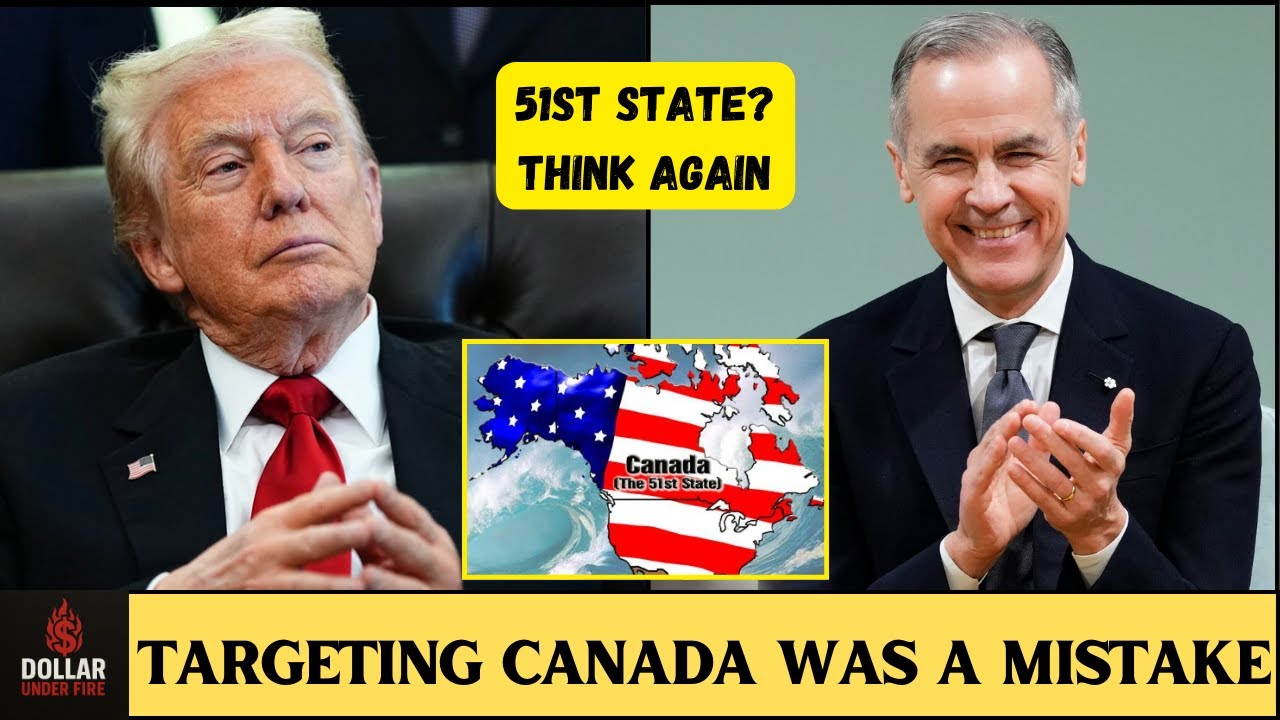
The shift did not begin with a loud announcement, but with a series of coordinated policy signals from Washington. Remarks by the U.S. Trade Representative about reviewing — and even allowing — the USMCA to lapse after 2026 shattered the long-held belief that the North American trade framework was permanent. Those comments were soon followed by sharper rhetoric from Donald Trump, including remarks that stunned observers and raised questions about Canada’s standing in the bilateral relationship. Diplomatic channels tightened, and markets began reacting to a level of uncertainty they had not priced in for years.
The prevailing expectation was straightforward: Canada would take the hit. Yet events moved in the opposite direction. Rather than panicking or retaliating publicly, Ottawa maintained a calm posture, focusing on internal coordination with businesses, labor groups, and investors. Within that restraint, critical economic decisions were being made. Capital did not flee as many predicted. Instead, investment flows increasingly favored Canada, signaling confidence rather than retreat.
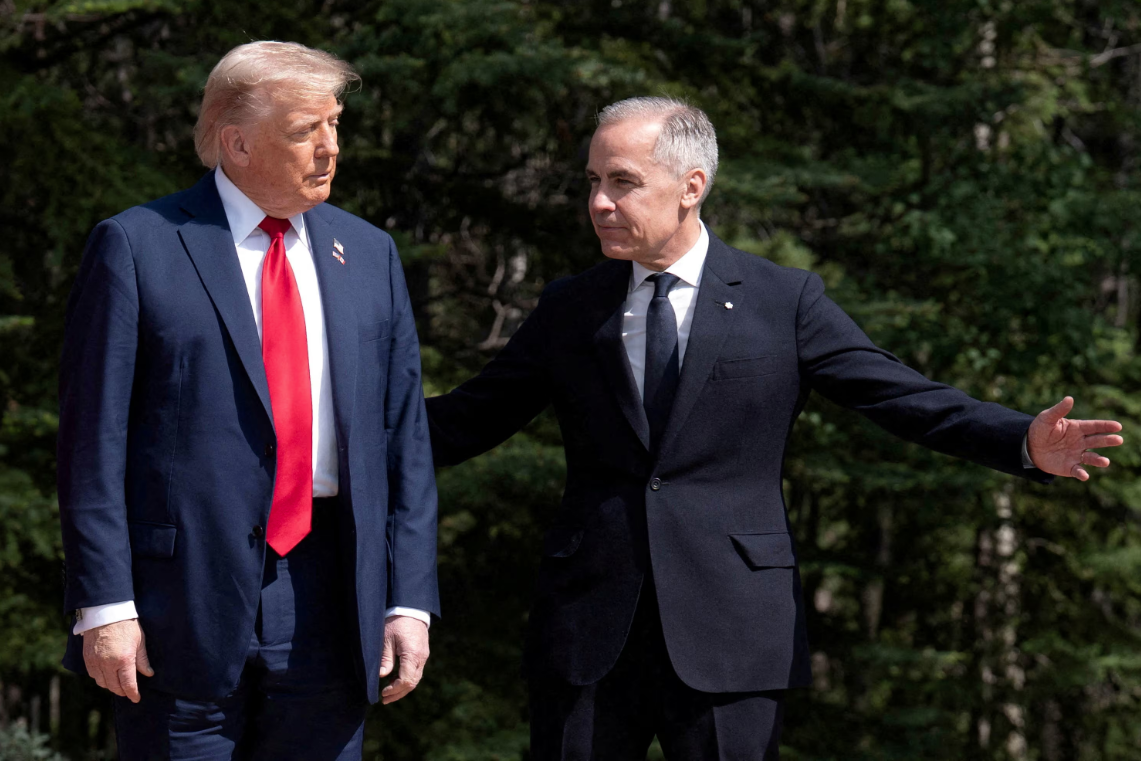
Subsequent economic data reinforced that surprise. Despite trade tensions and political noise, Canada recorded a sharp rise in foreign direct investment, exceeding several internal projections in Washington. Multinational corporations — highly sensitive to supply-chain reliability and policy predictability — began treating Canada as a safer anchor within the region. These were not symbolic gestures. They involved factory placements, long-term contracts, and infrastructure commitments measured in decades, not quarters.
At the same time, Canada’s trade structure began to shift decisively. Long dependent on near-exclusive access to the U.S. market, Canadian firms accelerated diversification efforts. Trade links with Europe, India, and South America expanded, while logistics routes were redesigned to reduce exposure to policy volatility. In some resource-rich regions, export maps were fundamentally redrawn, with large portions of output redirected beyond North America. This was not a temporary adjustment, but a structural recalibration.
South of the border, strain became increasingly visible. U.S. manufacturing activity softened, consumer confidence showed signs of fatigue, and corporate leaders publicly flagged policy uncertainty as a growing risk. Several American firms quietly moved portions of their investment north as a hedge, underscoring a reversal in how regional risk was being assessed. What had once been viewed as leverage for Washington was beginning to function as friction within its own economy.

The most striking element of this story is not confrontation, but contrast. One side relied on pressure and unpredictability to maintain dominance. The other leaned into stability, patience, and long-term restructuring. Over time, markets and capital made their preference clear. Canada did not declare independence or escalate tensions, but through data, contracts, and infrastructure decisions, it steadily built a higher degree of economic autonomy.
As the USMCA review approaches, the central question is no longer whether Canada can withstand pressure from Washington. The deeper issue is whether the regional balance of economic power has already shifted quietly beyond the control of policymakers. In modern economics, power does not always announce itself through forceful statements. Sometimes it moves silently through investment flows and supply chains — and once that center of gravity has shifted, reversing it becomes exceedingly difficult.