Bombshell Dedication: Why Venezuelan Nobel Winner María Corina Machado Honored Trump
In a stunning twist that has sent shockwaves through global politics, Venezuelan opposition leader María Corina Machado has clinched the 2025 Nobel Peace Prize—a prize many speculated would go to U.S. President Donald Trump for his Middle East ceasefires. Yet, in a move that flipped the narrative, Machado dedicated her victory partly to Trump himself, praising his “decisive support” for Venezuela’s democratic struggle. The announcement on October 10, 2025, left the world buzzing: What prompted this bold gesture from a woman who has spent years evading arrest under Nicolás Maduro’s regime? As Maduro’s state media dismissed the award as a “coup plot,” Machado’s words ignited debates on alliances, strategy, and the true cost of freedom. This isn’t just an honor—it’s a calculated lifeline in the fight against dictatorship.

The Norwegian Nobel Committee hailed Machado as a “brave and committed champion of peace,” awarding her for her tireless work promoting democratic rights and pursuing a just transition from dictatorship to democracy. At 56, the economist-turned-activist has unified Venezuela’s fractured opposition, leading massive protests and the Vente Venezuela party despite being banned from office since 2014. Her 2023 primary win—securing a record 92% of votes—positioned her as the presidential frontrunner, only for Maduro’s regime to disqualify her and force her into hiding. After a brief detention in January 2025, she continued rallying international support against Maduro’s fraudulent July 2024 election. The prize, the first for a Venezuelan and sixth for a Latin American, shields her further, echoing laureates like Aung San Suu Kyi who survived repression through global acclaim.
Then came the bombshell: Machado’s dedication to Trump. In a video call with the Nobel Institute and a subsequent social media post, she declared, “We are on the threshold of victory and today, more than ever, we count on President Trump, the people of the United States, the peoples of Latin America, and the democratic world.” She thanked Trump for his “decisive support,” accepting the award in honor of her suffering compatriots and the U.S. leader. Trump, reveling in the moment, told reporters Machado called him post-announcement, insisting he “deserved” the prize. He shared a screenshot of her, captioning it, “I am happy because I saved millions of lives.” The White House, however, had earlier slammed the Committee for “placing politics over peace” by snubbing Trump.

So, why this big decision? It’s a masterstroke of realpolitik. Trump’s administration has been a bulwark against Maduro, imposing crippling sanctions, recognizing opposition leader Edmundo González as the legitimate 2024 winner, and providing covert aid to dissidents. Nominated for the Nobel last year by Florida Republicans, including now-Secretary of State Marco Rubio, Machado’s gesture cements U.S. backing at a critical juncture. With Maduro clinging to power amid economic collapse and an exodus of over 7 million Venezuelans since 2015, she needs Washington’s muscle to pressure for free elections. Analysts note Maduro’s fury at the award, predicting it could spark protests and force concessions. By flattering Trump’s ego—he’s long coveted the Nobel—Machado ensures his “maximum pressure” campaign endures, potentially unlocking resources like frozen Venezuelan assets.
Critics see irony. Machado, once open to foreign intervention, now navigates a delicate dance: praising a leader whose “America First” ethos could waver. Yet, her move mirrors historical plays—nations aligning with U.S. power for survival. The United Nations and Council of Europe lauded her win as a nod to “civilian courage,” while former President Barack Obama called it a reminder to “defend our democratic traditions.” In Venezuela, opposition ally González deemed it “well-deserved,” fueling viral support online.
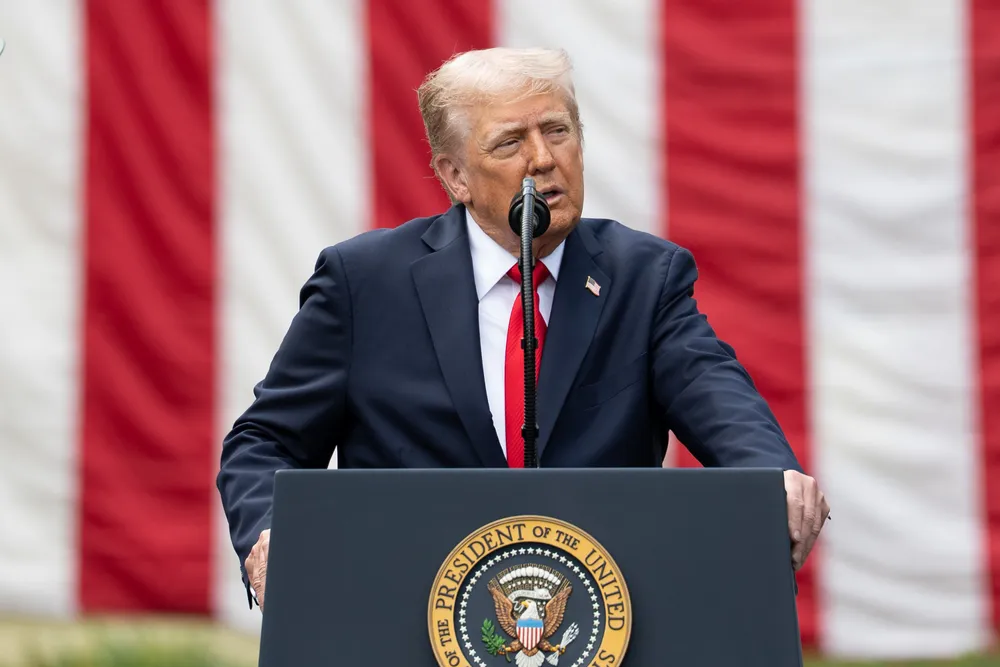
Trump’s reaction blends magnanimity and self-praise. “Very nice thing to do,” he said of Machado’s call, touting his “peace deals” from Gaza to Ukraine. For Machado, hiding in Caracas’s shadows, the dedication is survival—harnessing Trump’s clout to amplify her fight. Her Nobel, shared symbolically with him, spotlights the U.S.-Venezuela axis as key to toppling tyrants. Will it hasten Maduro’s fall, or entangle her in Trump’s orbit? One thing’s clear: in the arena of peace, alliances are forged in fire—and Machado’s just lit a match.