NATO Signals a Shift in How It Responds to Moscow’s Strategic Warnings
For much of the past two years, officials in Brussels, Washington and other Western capitals have operated under a familiar assumption: that caution was itself a form of stability. Policy decisions were calibrated carefully, language was weighed meticulously, and each step of support for Ukraine was accompanied by assurances that certain boundaries would not be crossed.

That approach now appears to be changing.
At an emergency meeting of the North Atlantic Council in Brussels this week, NATO leaders agreed on a message that marked a notable departure from their earlier posture. The alliance, officials said, would no longer allow repeated warnings from Moscow about extreme consequences to determine the scope or pace of its assistance to Ukraine. Western intelligence assessments, they added, had led governments to conclude that such statements were intended to influence policy rather than to signal imminent action.
The announcement was brief and carefully phrased. But among diplomats and analysts, it was widely understood as a turning point — not because it introduced an entirely new policy, but because it publicly acknowledged what many Western governments had already been debating privately.
Since the beginning of the conflict, Russian officials, including President Vladimir P.u.t.i.n, have regularly framed Western support for Ukraine as a direct challenge to Russia’s core security interests. Each new weapons system, each expansion of operational flexibility, was met with language warning of serious consequences. For months, NATO governments responded by adjusting their policies incrementally, hoping to avoid miscalculation while sustaining Ukrainian defenses.
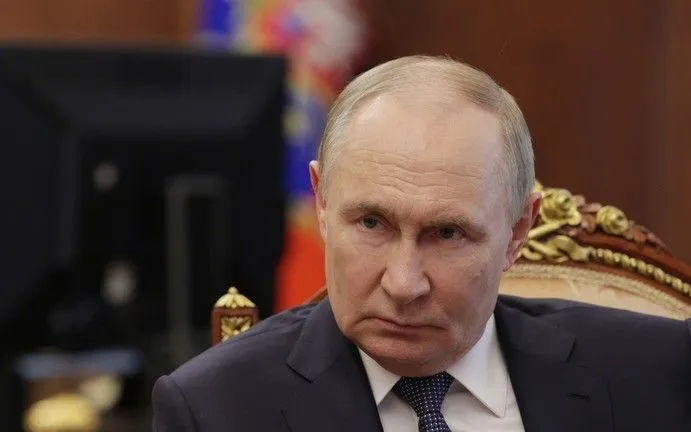
Yet according to officials familiar with the Brussels discussions, a growing number of alliance members came to believe that accommodation was producing diminishing returns. Repeated warnings were followed by little visible change in Moscow’s behavior, while Western hesitation appeared to invite further pressure rather than restraint.
“The pattern mattered,” said one senior diplomat, speaking on condition of anonymity. “When the same type of warning is issued again and again, and the response never materializes, governments start to reassess what those warnings are actually designed to achieve.”
Intelligence agencies across the alliance contributed to that reassessment. Analysts examined public statements alongside indicators such as military readiness, command activity, and broader political signaling. Their shared conclusion, according to officials briefed on the findings, was that Moscow’s rhetoric was primarily a tool of influence — aimed at shaping Western debate, amplifying internal divisions, and reinforcing public anxiety in democratic societies.
That judgment carried significant weight, but it did not eliminate concern. Several NATO members, particularly those geographically closer to Russia, urged continued restraint, arguing that even a small risk of misinterpretation carried consequences too severe to ignore. Others countered that allowing policy to be constrained indefinitely by rhetorical pressure would establish a precedent with implications well beyond the current conflict.
The debate was described as unusually direct.
“This was not about slogans or symbolism,” said a European official involved in the talks. “It was about whether deterrence still works if one side believes the other will always step back first.”
In the end, consensus emerged around a recalibrated approach. NATO would continue to emphasize defensive intent, but it would also make clear that its decisions would be based on its own assessments rather than on external warnings alone. Future statements from Moscow, officials said, would be addressed publicly rather than treated as implicit vetoes on alliance policy.
The immediate practical effects are likely to be gradual rather than dramatic. NATO leaders were careful to avoid language suggesting unlimited escalation or abrupt shifts. But the broader signal was unmistakable: Western governments are increasingly confident in their understanding of Russian behavior and less inclined to allow ambiguity to dictate outcomes.
Moscow’s response has been measured. Russian officials criticized NATO’s position as irresponsible and dismissive of Russia’s concerns, but stopped short of issuing new, specific warnings. Analysts noted the absence of detailed follow-through, interpreting it as further evidence that rhetorical pressure may be approaching its limits.
For President P.u.t.i.n, the moment presents a dilemma. Having relied heavily on strategic ambiguity to influence Western decision-making, the Kremlin now faces an alliance that appears more willing to test the boundaries of that ambiguity rather than defer to it. Escalating the language further risks diminishing its impact; de-escalating risks appearing to concede ground.
For NATO, the stakes are equally high. Officials acknowledge privately that intelligence assessments are not guarantees, and that confidence does not eliminate risk. But many now argue that the greater danger lies in allowing repeated warnings — credible or not — to define the outer limits of democratic decision-making.
The shift unfolding in Brussels is therefore less about any single policy choice than about a broader judgment: that long-term stability depends not only on restraint, but also on clarity about which pressures will — and will not — shape Western action.
How durable that judgment proves to be will depend on events still unfolding. For now, it signals an alliance testing a new balance between caution and resolve, in a landscape where words themselves have become a central instrument of power.