Ottawa — The exchange unfolded in a way that felt at once improvised and carefully revealing. What began as a defense of a high-profile advertising campaign aimed at the United States quickly widened into a broader argument about trade, federalism and how Canada builds in an era of economic uncertainty.
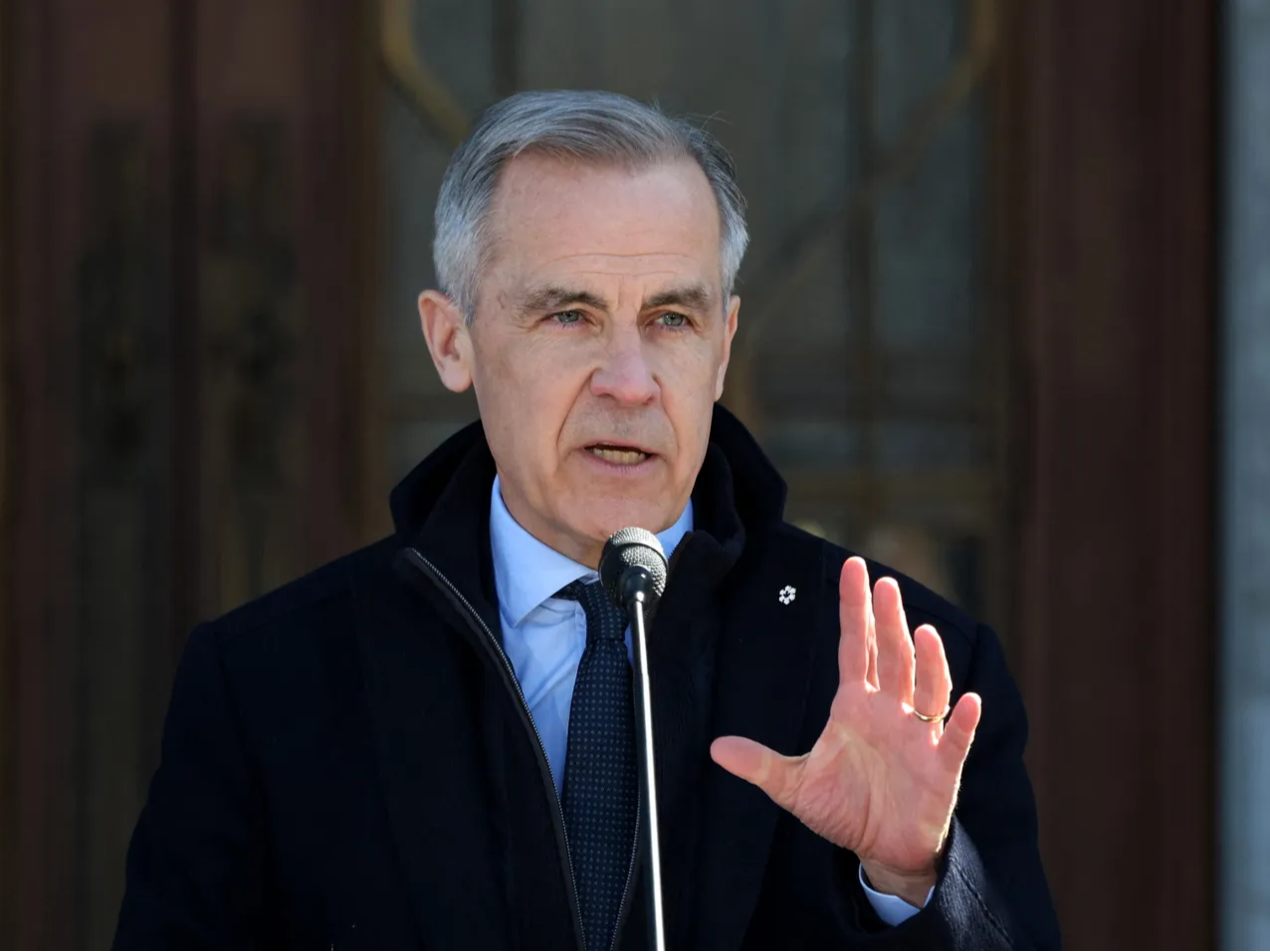
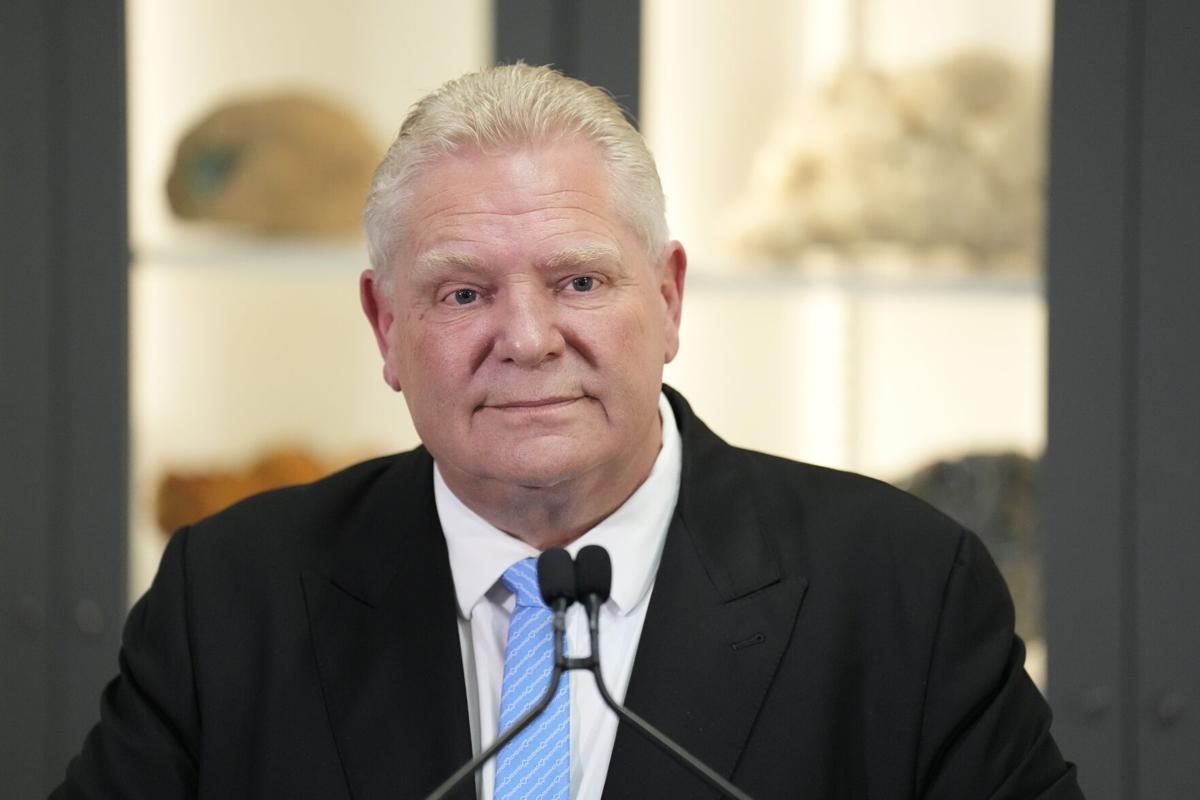
At the center of the moment were two figures with different roles but converging interests: Mark Carney, newly installed as prime minister and intent on projecting competence and coordination, and Doug Ford, the combative Ontario premier who has positioned himself as a frontline defender against American tariffs.
Mr. Ford was unapologetic in his assessment of the ad campaign criticizing U.S. protectionism, calling it the most effective of its kind and arguing that its reach was amplified by reaction from Donald Trump himself. Protectionism, Mr. Ford insisted, “does not work,” framing Canada and the United States as mutually dependent partners whose economies are strongest when aligned. He invoked Ronald Reagan as an emblem of that philosophy, a nod to a strain of North American economic integration that predates today’s tariff disputes.

Yet Mr. Ford also drew a sharp distinction between his role and that of the prime minister. Where Mr. Carney must negotiate directly with Washington, Mr. Ford said, he could afford to be more blunt. Ontario, he argued, has borne the brunt of tariff pressure, with steel, automotive manufacturing, pharmaceuticals and life sciences all exposed. “My job,” he said, “is to protect the people of Ontario,” even if that requires public confrontation.
Mr. Carney’s approach was noticeably different. Rather than engaging directly with Mr. Ford’s rhetoric, he shifted the focus to process — specifically, how governments can move faster to build infrastructure without lowering standards. The centerpiece of the event was the signing of a federal-provincial cooperation agreement on environmental and impact assessments, designed to reduce duplication between Ottawa and Queen’s Park.
Under the new framework, projects will follow a “one project, one review” model. Where Ontario has primary jurisdiction, the federal government will rely on provincial assessments; where federal authority applies, Ottawa will lead. In cases of shared responsibility, timelines and information will be aligned through a harmonized process. Both governments emphasized that standards would be maintained, even as approvals are accelerated.
For Mr. Carney, the agreement served multiple purposes. It signaled a departure from years of intergovernmental friction over major projects. It addressed business complaints about regulatory uncertainty. And it fit neatly into his broader message that Canada’s competitiveness depends not only on what it builds, but on how it builds — deliberately, predictably and in partnership with provinces.
The economic stakes are substantial. Studies cited by officials show that regulatory requirements in Canada have grown sharply over the past two decades, dampening investment. In a moment when global supply chains are being re-engineered and allies are racing to secure resources, delays carry opportunity costs.
Ontario stands to benefit immediately. Mr. Ford highlighted the Ring of Fire, a vast but largely undeveloped critical-minerals region in the province’s north. With agreements already in place with several First Nations, he said, the streamlined approval process could allow construction to begin years earlier than previously expected, unlocking billions in economic activity and tens of thousands of jobs.
The federal government, for its part, pointed to the Darlington nuclear project near Bowmanville, where a new small modular reactor is expected to power hundreds of thousands of homes and support thousands of jobs. Officials also underscored plans to accelerate development of critical minerals needed for electric vehicles, renewable energy and defense applications.
Throughout the event, both leaders stressed partnership with Indigenous communities, including commitments to uphold the United Nations Declaration on the Rights of Indigenous Peoples and to provide funding for Indigenous participation in assessment processes. The emphasis reflected lessons learned from past projects, many of which faltered in court after inadequate consultation.
The contrast in tone between Mr. Ford and Mr. Carney was striking but not contradictory. Mr. Ford’s remarks were rooted in immediacy — tariffs, job losses, the need to “fight like I’ve never fought before.” Mr. Carney’s were structural, aimed at reshaping the machinery of government to deliver results over time.
Political analysts say the pairing may be intentional. Mr. Ford channels the anger of regions and sectors under pressure, while Mr. Carney projects steadiness and institutional control. Together, they offer a picture of a country responding to external shocks with internal coordination rather than fragmentation.
The backdrop to the announcement is a fraught Canada–U.S. relationship. Tariffs and trade threats have underscored Canada’s vulnerability as a mid-sized, export-dependent economy. While Ottawa cannot dictate American policy, it can influence how quickly and confidently projects move at home. In that sense, the agreement is as much about resilience as growth.
Still, questions remain. Environmental groups have expressed concern that faster approvals could weaken scrutiny, despite assurances to the contrary. Provinces without Ontario’s administrative capacity may struggle to match the pace envisioned by the new framework. And federal authority over interprovincial and international trade ensures that Ottawa will retain a decisive role in some of the most contentious projects.
What is clear is that the symbolism of the moment matters. For years, Canada’s inability to deliver large projects has become a punchline in international business circles. By standing together and promising to cut duplication, Ottawa and Ontario are attempting to reset that narrative.
Mr. Ford framed the agreement as transformational, arguing that it restores certainty for investors at a time when speed is essential. Mr. Carney echoed that sentiment, describing the new approach as a way to “turbocharge” construction while maintaining social and environmental obligations.
Whether the promise is realized will depend on implementation. Coordination agreements are easier to sign than to execute. But the political alignment on display — between a federal government seeking to establish credibility and a province eager to assert leadership — suggests a shared recognition that the old approach is no longer sufficient.
As the news conference concluded, the message was less about confrontation than capacity. Canada, both leaders implied, cannot control global volatility, but it can control its own readiness. In an era of tariffs, technological change and energy transition, that readiness may prove decisive.