JUST IN: TRUMP THREATENED TO BLOCK CANADA’S $5.6B BRIDGE — CARNEY’S FOUR-SENTENCE RESPONSE STUNNED WASHINGTON
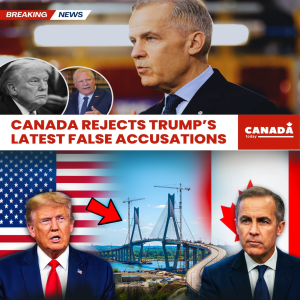
Donald Trump’s latest trade threat was meant to rattle Ottawa, but instead it exposed a stunning misunderstanding of U.S.–Canada infrastructure and handed Prime Minister Mark Carney one of the cleanest strategic wins of the trade war. After Trump claimed he could block the opening of the Gordie Howe International Bridge, Carney responded with four calm, factual sentences that left Washington with no leverage — and no credible reply.

The Gordie Howe Bridge is a $6.4 billion project fully financed by Canada, built with both American and Canadian steel, and constructed by union workers on both sides of the border. Under a 2012 public agreement, the state of Michigan received 50% ownership of the bridge at zero cost and is entitled to half of all future toll revenues once construction costs are recovered. The deal was approved by the U.S. State Department, endorsed by Trump himself in 2017, and later supported by U.S. customs funding signed into law by his administration.
Trump’s threat was never really about the bridge. It was retaliation. Ontario had banned American alcohol in response to U.S. tariffs, Canadian officials criticized Trump’s trade policy publicly, and Carney had just returned from Beijing with a deal that slashed Chinese tariffs on Canadian canola and unlocked billions in new exports. The bridge became a hostage — not because it was flawed, but because it was visible and nearing completion.
The backlash came not from Canada, but from Michigan. Republican former governor Rick Snyder, who negotiated the original agreement, publicly corrected Trump point by point, calling the blockade threat harmful to Michigan workers and businesses. Michigan’s governor, U.S. senators, business groups, and labor leaders all warned that blocking the bridge would raise costs, disrupt supply chains, and punish the very state Trump claims to defend. Their message was blunt: stopping the bridge helps no one — except the private owners of the aging Ambassador Bridge monopoly.

That monopoly is the real subtext. For decades, nearly all commercial truck traffic between Detroit and Windsor flowed through a single privately owned bridge, generating tens of millions annually. The new public bridge breaks that choke point, cuts up to 20 minutes from each crossing, saves billions in long-term logistics costs, and adds redundancy to one of North America’s most critical trade corridors. Blocking it would lock in risk, not strength.
Carney did not escalate. He did not threaten retaliation. He stated four facts, assigned the U.S. ambassador from Michigan to help smooth talks, and publicly said he looked forward to the bridge opening. The White House responded by repeating claims already disproven by its own allies. The result was unmistakable: the bridge moved forward, Michigan stood its ground, and Trump’s leverage evaporated. Canada paid, America benefits, and the bridge is opening anyway — a reminder that facts, not threats, decide real-world power.