Federal Judge Rebukes T.r.u.m.p Justice Department Over Missed Deadlines and Handling of Sensitive Records
Washington — A federal judge sharply criticized the Department of Justice this week after government lawyers failed to meet a court-ordered deadline in a case tied to the attempted prosecution of former F.B.I. Director James Comey, raising fresh questions about internal disarray inside the T.r.u.m.p administration’s legal apparatus.

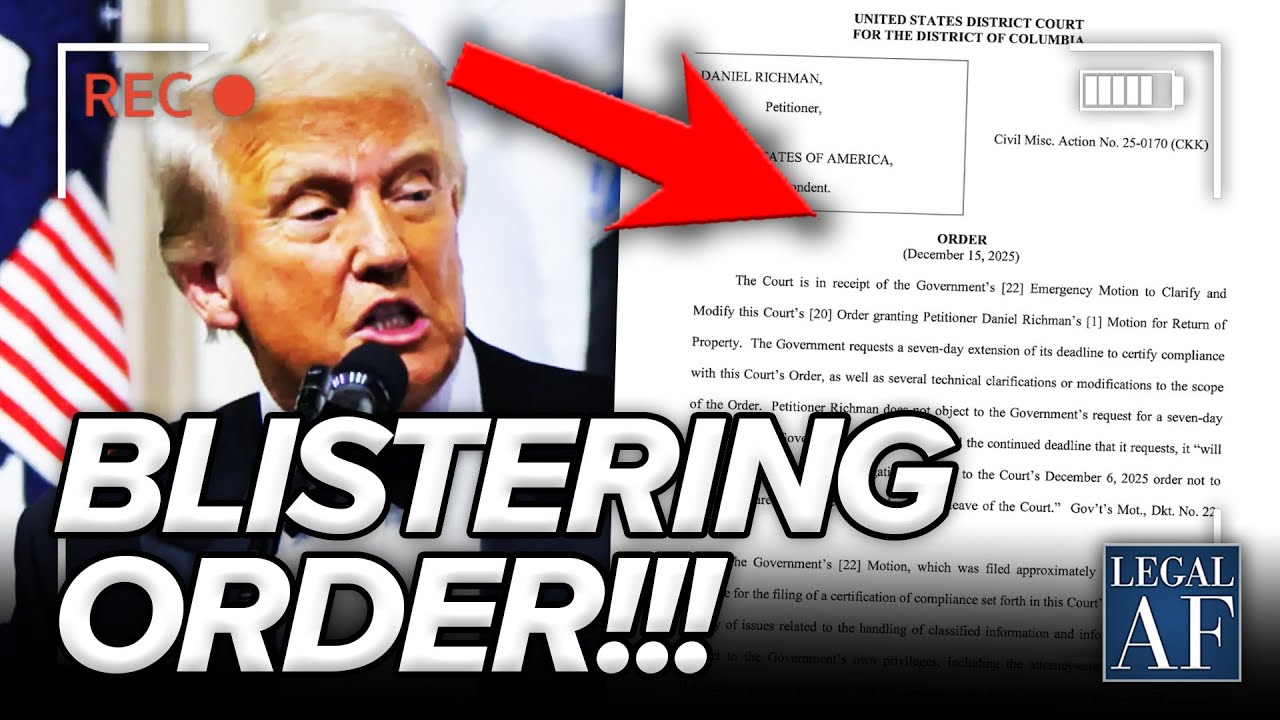
In a detailed order, Judge Colleen Kollar-Kotelly found that the Justice Department did not comply with her directive requiring the complete transfer of materials seized from Daniel Richman, a lawyer for Mr. Comey, to the clerk of the U.S. District Court for the Eastern District of Virginia. The materials are central to determining whether federal investigators violated Mr. Richman’s Fourth Amendment rights through what the court described as potentially unlawful search and seizure.
The judge had ordered the government to deposit a full copy of all seized materials with the court while returning non-classified originals to Mr. Richman. Instead of certifying compliance by the deadline, prosecutors submitted a last-minute filing — less than an hour before the cutoff — requesting additional time and claiming ambiguity in the court’s instructions.
Judge Kollar-Kotelly was unmoved.
In her ruling, she noted that many of the concerns raised by the Justice Department, including the handling of classified information and privilege claims, could and should have been addressed earlier. The court emphasized that Mr. Richman had already consented to the deletion of classified materials and that the order did not require the disclosure of derivative or government-created files.
“The government could have and should have raised many of these issues in its initial response,” the judge wrote, signaling skepticism about the department’s explanations and its late attempt to reframe the dispute.
The case stems from the government’s effort to revive a criminal prosecution of Mr. Comey, whose tenure as F.B.I. director ended abruptly during T.r.u.m.p’s presidency. Investigators previously seized Mr. Richman’s emails, hard drives, and server data dating back to 2017 and 2020, material that prosecutors have argued is relevant to their inquiry. Defense lawyers contend the searches were conducted without valid warrants and violated constitutional protections.

Judge Kollar-Kotelly ordered that one complete copy of the seized materials — reportedly stored on a Blu-ray disc — be lodged with the Virginia court for potential future litigation over warrants, subpoenas, or motions to suppress. All other non-classified materials were to be returned to Mr. Richman.
The Justice Department’s failure to meet that deadline, and its inability even to file a routine notice of appearance for a lead attorney, underscored what the judge and legal observers described as procedural breakdowns. The court also took note of ongoing confusion surrounding the status of senior prosecutors assigned to the case, including questions about whether certain officials were properly authorized to act on behalf of the government.
In response to the missed deadline, Judge Kollar-Kotelly granted a limited extension — retroactively acknowledging the lapse while setting a firm new deadline of December 22. By that time, the attorney general or a designated official must certify, with specificity, that the government has fully complied with the court’s clarified order.
The judge stressed that her ruling did not permit prosecutors to access or review the seized materials in the interim, effectively freezing the government’s ability to rely on them for any renewed indictment effort against Mr. Comey. Legal analysts noted that this restriction, combined with concerns about statutes of limitation, further complicates the Justice Department’s path forward.
The episode adds to a growing list of courtroom setbacks for the T.r.u.m.p Justice Department, which has faced criticism in recent months for missed filings, administrative errors, and strained relations with the federal bench. Judges have increasingly expressed frustration with what they describe as inconsistent legal positions and a lack of procedural discipline in high-profile cases.
For now, the court’s order leaves the government under close judicial supervision, with its next steps subject to certification and potential ethical scrutiny. Whether the Justice Department can recover from the missteps — or whether the case marks another stalled chapter in its pursuit of Mr. Comey — remains uncertain.
What is clear is that the clash has placed the administration’s legal credibility under a harsher spotlight, as timelines light up with reaction and the broader debate over executive power, prosecutorial conduct, and judicial oversight continues to spread rapidly across the internet.