What began as familiar trade rhetoric from Washington quickly took on greater weight this week, as renewed warnings about tariffs and even a possible U.S. withdrawal from the United States–Mexico–Canada Agreement rippled through political and business circles. Markets reacted cautiously, officials in Ottawa moved deliberately, and companies across North America began quietly recalculating risk.
The episode underscored a shifting dynamic in the economic relationship between the United States and its northern neighbor — one in which threats alone no longer guarantee leverage.
U.S. officials and allied commentators floated the idea that Washington could increase trade pressure on Canada, reviving language used during earlier disputes over dairy access, digital taxes and industrial policy. While no formal notice of withdrawal from USMCA was issued, the suggestion itself was enough to generate volatility. Trade agreements, economists note, depend as much on predictability as on text.
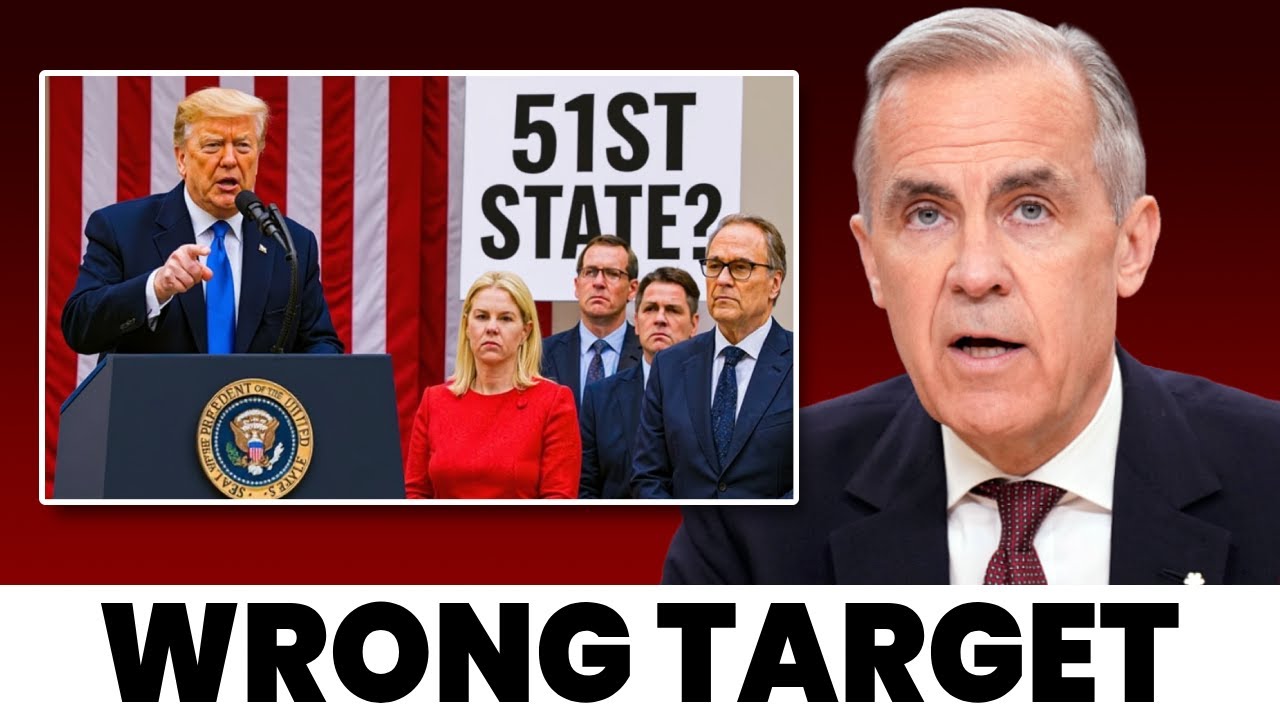
In Ottawa, the response was measured but unmistakable. Canadian officials emphasized that while the United States remains Canada’s largest trading partner by far, the country has spent recent years reducing single-market dependence. Publicly, leaders reiterated commitment to USMCA. Privately, according to people familiar with government and industry discussions, contingency planning accelerated.
“This is no longer about panic,” said one senior Canadian trade official, speaking on the condition of anonymity. “It’s about resilience.”
The signal from Ottawa was that Canada would not respond to pressure by immediate concession. Instead, it would lean into diversification — absorbing near-term costs while expanding alternative supply routes and export markets. That posture marked a contrast with earlier trade confrontations, when Canada focused heavily on de-escalation.
The reaction among economists and business leaders was divided. Some warned that any sustained escalation could damage tightly integrated supply chains, particularly in autos, energy and agriculture. Others argued that the threat itself revealed a weakening of Washington’s leverage, as global firms increasingly plan for geopolitical friction as a baseline condition.
Behind the scenes, multinational companies began adjusting. According to trade lawyers and logistics consultants, firms operating in both countries revisited “two-track” strategies — maintaining U.S.-focused production while scaling Canada-facing operations tied more closely to Europe and the Indo-Pacific. Canada’s network of trade agreements, including deals with the European Union and Asia-Pacific partners, has become a quiet selling point.
“There’s a perception shift underway,” said a Toronto-based investment adviser. “Canada is being viewed less as an extension of the U.S. market and more as a hedge against U.S. political risk.”

That perception has consequences. Several analysts noted that even the hint of USMCA instability can influence capital allocation. Investors tend to respond not only to tariffs themselves but to uncertainty about rule stability, dispute resolution and long-term access. In that environment, Canada’s emphasis on legal continuity and regulatory predictability plays to its advantage.
In Washington, officials pushed back against suggestions that leverage had shifted. Supporters of a harder line argued that the size of the U.S. market still gives it decisive power and that Canada would ultimately face higher costs if trade barriers rose. They described the rhetoric as a negotiating tactic rather than a prelude to withdrawal.
Yet critics of that approach warned of unintended consequences. “Threats change behavior,” said one former U.S. trade negotiator. “But not always in the direction you expect.”
Indeed, some American exporters expressed concern that repeated pressure campaigns could accelerate diversification away from U.S. inputs — a slow-moving process, but one that becomes difficult to reverse once supply chains are rebuilt. Legal experts also noted that companies have become more willing to challenge trade actions through arbitration and domestic courts, raising the cost of aggressive measures.
The broader context is a North American economy already under strain from inflation concerns, industrial policy competition and geopolitical uncertainty. USMCA was designed to provide stability after years of renegotiation. Even speculative threats to its durability can erode confidence, economists say, regardless of whether they materialize.
Canadian officials have been careful not to frame their response as defiance. Instead, they have emphasized preparedness. The message, analysts say, is that Ottawa is signaling it will not be easily cornered — and that pressure tactics may produce diminishing returns.
Whether the moment represents a true inflection point remains unclear. Trade disputes often flare rhetorically before cooling quietly. But the reaction this time suggests something has shifted beneath the surface: companies are quicker to hedge, governments more willing to absorb short-term pain, and markets less convinced that size alone guarantees dominance.
For now, no formal steps toward a USMCA exit have been taken. Tariff changes remain speculative. Yet the episode has already had an effect, accelerating conversations that might otherwise have unfolded over years.
In North American trade, the most consequential moves are often not the loudest ones. They are the quiet adjustments — in capital, contracts and corridors — that redefine leverage long before policy catches up.