Toronto — What began as a personal declaration by Ontario’s premier has tapped into a broader undercurrent in Canadian public life, as questions about economic dependence, political identity and cross-border habits resurface amid renewed tensions with the United States.
Doug Ford, the premier of Canada’s most populous province, has recently framed his criticism of former President Donald J. Trump and Trump-style politics in explicitly national terms, urging Canadians to rethink where they spend their money, travel and invest their attention. While Mr. Ford did not announce a formal policy shift, his comments echoed a sentiment that appears to be gaining traction: a quiet but growing impulse to put “Canada first” in everyday decisions.
The reaction was swift. On social media, Canadians shared anecdotes of canceled trips to Florida, a longtime winter destination, and conscious efforts to buy domestic products rather than American brands. Tourism analysts noted early signs of softening demand for some U.S.-bound routes, though comprehensive data remains limited. What stood out was not any single statistic, but the emotional intensity of the conversation.

For many Canadians, the moment reflects accumulated frustration rather than a sudden rupture. Trade disputes, tariff threats and political rhetoric from Washington over recent years have periodically strained what has long been one of the world’s closest bilateral relationships. Mr. Trump’s approach, in particular, challenged assumptions about reliability and mutual benefit that underpinned decades of integration.
Mr. Ford’s intervention gave voice to that unease in unusually blunt terms. Known for his populist style, he framed everyday consumer choices as expressions of sovereignty and solidarity. Supporters praised the stance as overdue, arguing that Canada has too often taken the relationship for granted. Critics warned that symbolic gestures risk inflaming tensions without delivering tangible benefits.
Behind the scenes, the rhetoric has drawn attention from sectors that rely heavily on cross-border flows. Tourism boards, retailers and logistics firms are closely watching whether sentiment translates into sustained behavioral change. Even modest shifts can matter in industries built on volume and predictability.

“This relationship is deeply embedded,” said an economist at the University of Toronto. “You don’t unwind it with a hashtag. But sentiment does shape behavior over time.”
Canada and the United States share the world’s longest undefended border, and their economies are intertwined through supply chains that move goods back and forth multiple times before reaching consumers. Millions of jobs depend on that integration. For decades, the relationship was framed less as foreign policy than as an extension of domestic economic planning.
That framing has begun to feel less secure. Episodes of tariff brinkmanship, combined with broader global uncertainty, have prompted renewed debate in Canada about resilience and diversification. Governments in Ottawa and the provinces have spoken more openly about reducing exposure to political volatility south of the border, even as they stress continued partnership.
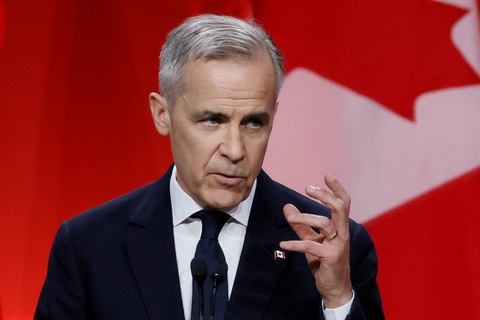
Mr. Ford’s comments did not signal a break with Washington, but they did underscore how political language can reframe private decisions. Choosing a vacation destination or a grocery item suddenly carried symbolic weight. For some Canadians, that felt empowering; for others, uncomfortable.
“This is about identity as much as economics,” said a political sociologist at McGill University. “When people feel a relationship has become asymmetric or unpredictable, they look for ways to reassert control, even in small acts.”
The United States, for its part, has shown little public reaction to the comments. Federal officials have not addressed the boycott rhetoric directly, and analysts in Washington largely view it as part of domestic Canadian politics rather than a coordinated strategy. Still, they acknowledge that perceptions matter, particularly when they influence tourism and consumer confidence.
Historically, moments of tension between the two countries have tended to ebb rather than harden. Disputes over lumber, steel or dairy have flared and faded, absorbed by a system designed to manage friction. Whether the current mood follows that pattern remains to be seen.
What distinguishes this moment is its grassroots flavor. Rather than emerging from formal negotiations, the conversation is being driven by individuals, amplified by social media and validated by political figures willing to name it. That makes it harder to measure — and harder to steer.

Mr. Ford has not called for official sanctions or restrictions, and his government continues to work closely with U.S. partners on trade, infrastructure and security. Yet his remarks have become a touchstone in a wider debate about how Canada defines its interests in an era of uncertainty.
For some Canadians, the shift feels like a long-overdue assertion of confidence. For others, it risks overstating difference in a relationship that still delivers enormous mutual benefit. Most likely, it reflects a society testing the boundaries of its assumptions.
Whether this moment marks a turning point or a passing flare of sentiment will depend on what follows — not just in rhetoric, but in policy and behavior. As winter approaches and travel plans are made, as shopping habits settle and political cycles turn, the durability of the mood will become clearer.
For now, Mr. Ford’s challenge has done something tangible: it has moved the conversation out of boardrooms and into living rooms. In doing so, it has reminded both Canadians and Americans that even the closest relationships are shaped not only by treaties and trade flows, but by how ordinary people feel about where they stand — and who they can count on.