The most powerful man in America just got stopped cold by one of Washington’s quietest government bodies—and Donald Trump is already blowing a gasket. What began as a vanity construction project has now spiraled into yet another legal showdown, with a federal watchdog stepping in to do what much of corporate media seemed unwilling to do: say no. This time, it isn’t a rival politician or a cable-news critic. It’s the law itself dragging Trump into court to keep him from bulldozing his way through history.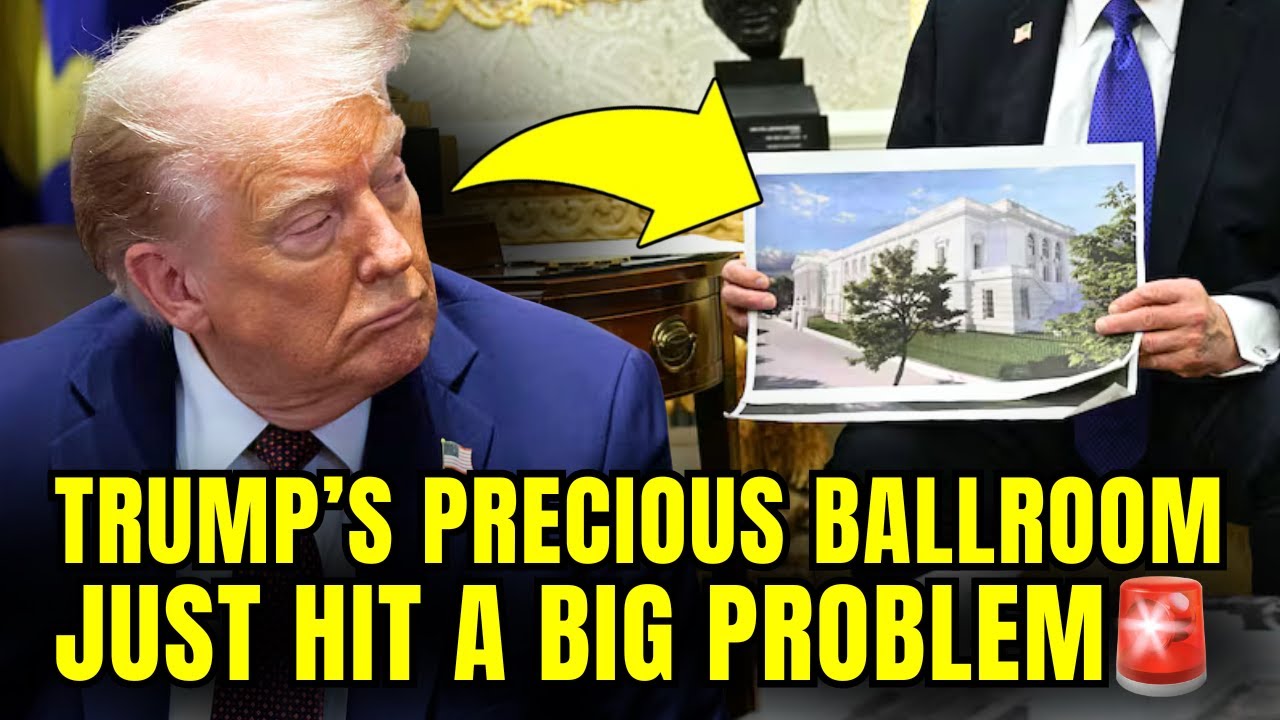
The controversy centers on Trump’s decision to demolish part of the White House’s East Wing to make room for what he proudly described as a “very excellent ballroom.” At the time, he assured the public it would not interfere with the existing structure and would show “total respect” for the building he claimed to love so dearly. But as with so many Trump promises, those words evaporated the moment the wrecking crews arrived. One October morning, Americans woke up to images of heavy machinery tearing into a historic section of the White House—during a three-week government shutdown, no less.
Democrats protested loudly, calling the project an ego-driven distraction amid a national healthcare crisis. Chuck Schumer took to the cameras, denouncing the destruction as a disgrace and vowing to hold Trump accountable. But the outrage quickly fizzled into soundbites. No emergency lawsuit. No immediate injunction. The media reported it briefly, shrugged, and moved on. For a moment, it looked like Trump would get away with it—again.
That changed when the National Trust for Historic Preservation finally stepped in. Chartered by Congress to protect America’s historic buildings, the Trust went to court seeking an injunction to halt the ballroom’s construction. Their argument was simple and devastating: no president is legally allowed to tear down parts of the White House or build new structures on public land without proper review, public input, and congressional authorization. Not Trump. Not Biden. Not anyone.
According to the lawsuit, the White House allegedly broke the law in three major ways: by failing to file plans with the National Capital Planning Commission, by skipping an environmental assessment, and by declining to seek approval from Congress. These aren’t minor technicalities—they’re foundational safeguards meant to prevent exactly this kind of unilateral abuse of power.
The Trump administration initially stonewalled the press before releasing a familiar statement claiming the president has full authority to “modernize, renovate, and beautify” the White House. What they left out, critics note, is that every other president sought and received approval before making changes. That omission may prove costly in court, especially given the National Trust’s final argument: that Trump violated the Constitution’s Property Clause, which gives Congress—not the president—control over federal property.
And in a twist that feels almost too on-brand to be real, reports emerged that Trump stiffed the construction company that carried out the demolition. No payment. No accountability. Just pure Trump.
Once again, it’s not the loudest voices or the flashiest politicians slowing him down—it’s a small agency, armed with the law, forcing a reckoning. And as this case moves forward, one thing is clear: the ballroom may never see the light of day, but the fallout is only just beginning.