The warning signs for the U.S. economy are becoming harder to ignore, and this time they are coming directly from Federal Reserve Chair Jerome Powell. In his latest remarks, Powell delivered a sobering assessment of both the labor market and inflation, signaling that economic conditions may be deteriorating faster than previously understood—even as the Fed moves forward with cutting interest rates.
According to Powell, the labor market has been “gradually cooling” for months. Official data suggested that payroll jobs were averaging around 40,000 new positions per month since April, already a weak number by historical standards. But Powell revealed that the situation is likely worse than the headline figures indicate. The Fed now believes that employment data may be overstated by as much as 60,000 jobs per month, meaning the U.S. economy has potentially been losing roughly 20,000 jobs per month since spring.
That admission is striking. While job losses only became widely discussed during the summer, Powell’s comments suggest that the downturn began much earlier. This raises serious questions about the reliability of recent employment data, especially in the context of the Trump administration’s decision to cancel or downplay official jobs reports. Even without those reports, Powell emphasized, alternative data sources still point to a weakening labor market.
At the same time, inflation pressures remain elevated. Powell noted that total PCE inflation rose 2.8% over the 12 months ending in September, with core inflation—excluding food and energy—also at 2.8%. These readings are higher than earlier in the year, and Powell explicitly tied the increase to tariffs, which have driven up the cost of goods. In other words, prices are rising not because of overheating demand alone, but due to policy-driven cost increases.
Taken together, Powell painted a difficult picture: job losses are accelerating while inflation risks remain tilted upward. This tension explains why the Federal Reserve decided to cut interest rates. Traditionally, the Fed lowers rates when it sees economic trouble brewing, hoping to stimulate borrowing, spending, and investment. President Trump has long demanded aggressive rate cuts, but Powell made clear that the Fed’s decision is driven by economic data—not political pressure.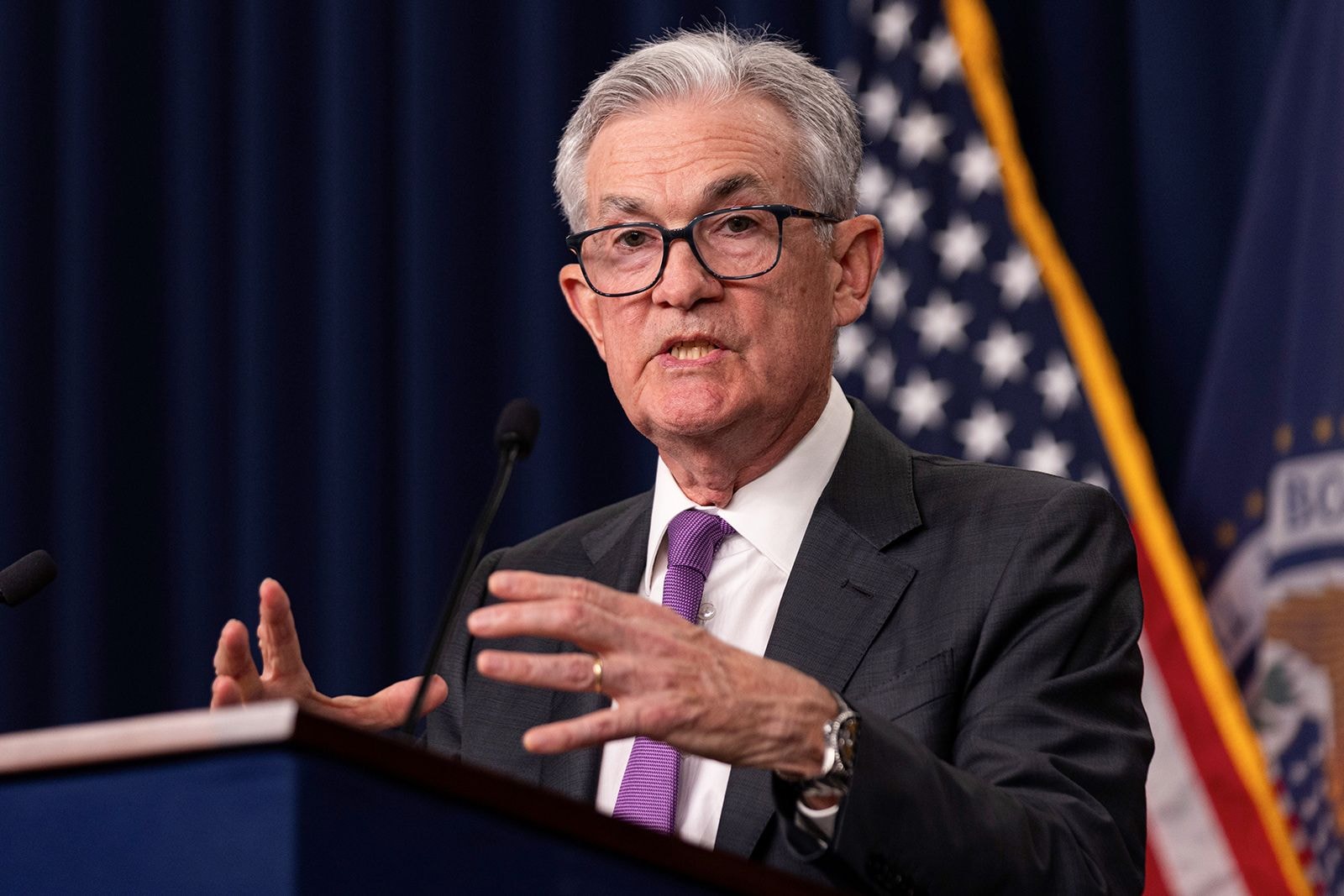
In another key statement, Powell acknowledged that in the near term, “risks to inflation are tilted to the upside and risks to employment to the downside.” He described the situation as having “no risk-free path,” noting that while tariff-driven inflation could prove temporary, the Fed must ensure that a one-time price increase does not become a sustained inflation problem. Meanwhile, the growing downside risks to employment have forced the Fed to rebalance its priorities under its dual mandate of price stability and maximum employment.
This is where the broader economic debate becomes even more complicated. In theory, some economists argue that allowing employment to cool slightly can ease inflationary pressures, as fewer people with disposable income reduces demand and slows price growth. While this approach is academically valid, it carries real human costs—lost jobs, reduced income, and economic insecurity.
Under normal circumstances, policymakers might openly debate whether to tolerate slightly higher unemployment to stabilize prices. But Powell’s remarks highlight why that discussion is largely impossible right now. The economy is already grappling with self-inflicted crises, including sweeping tariffs that raise prices across the board, political pressure on the Fed, and massive bailout programs for farmers harmed by trade wars.
As a result, policymakers are stuck in crisis-management mode. Instead of having thoughtful, forward-looking conversations about long-term economic strategy in a mature and complex economy like the United States, leaders are busy putting out fires. Powell’s warning makes clear that the consequences of these policy choices are no longer theoretical—they are showing up in lost jobs, rising prices, and growing uncertainty.
The message from the Fed Chair is unmistakable: the economic risks are real, the margin for error is shrinking, and the decisions being made now will shape the trajectory of the U.S. economy for years to come.