OTTAWA — For decades, Canada’s major air-power decisions followed a familiar rhythm: consultations with allies, alignment with U.S. systems, and aircraft choices that fit neatly within North American defense integration. That rhythm is now being questioned, as Canadian officials quietly examine alternatives that place Arctic realities and operational independence ahead of long-standing alliance habit.
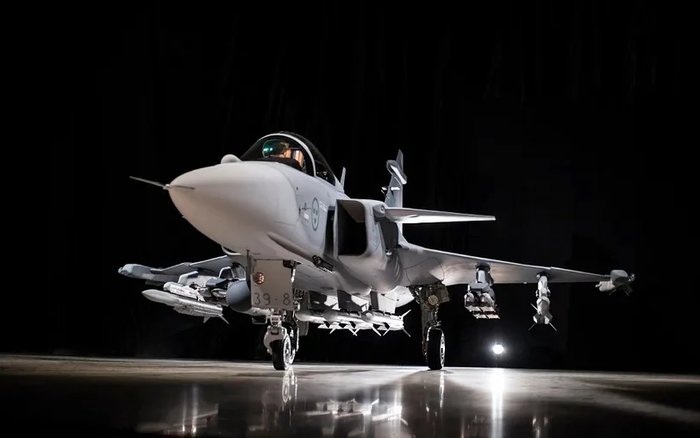
At the center of the discussion is Sweden’s Saab Gripen fighter jet, a platform designed for dispersed operations, austere basing, and rapid turnaround — features that resonate strongly with Canada’s vast northern geography. While no formal decision has been announced and officials stress that discussions remain exploratory, the very seriousness of the consideration has unsettled assumptions in Washington and among NATO planners accustomed to Ottawa’s predictable choices.

Canadian defense officials describe the review as pragmatic rather than ideological. The country faces a unique operational challenge: patrolling immense Arctic airspace with limited infrastructure, extreme weather, and long distances between bases. In that environment, survivability and flexibility can matter as much as raw stealth or network integration.
“The Arctic doesn’t care about alliance politics,” said one former Canadian defense planner, speaking privately. “It cares about whether an aircraft can operate independently, land on short or damaged runways, and keep flying when logistics are stretched thin.”
The Gripen was built around that philosophy. It can operate from highways, be serviced by small crews, and rely less on complex supply chains — attributes that appeal to countries concerned about resilience in high-end conflict. Supporters inside Canada argue that such characteristics align with a sovereignty-first approach to northern defense, where rapid response and self-reliance are paramount.
The move, even at a preliminary stage, marks a departure from decades of implicit alignment with U.S.-led defense procurement. Canadian air power has historically been deeply integrated with American systems through NORAD and NATO, reinforcing interoperability but also limiting flexibility. A serious look at a non-U.S. fighter challenges the assumption that interoperability must always mean identical hardware.
In Washington, the discussion has been met with quiet unease rather than open opposition. U.S. officials recognize Canada’s sovereign right to choose its equipment, but worry about fragmentation at a time when alliance cohesion is emphasized as a strategic necessity. NATO planners have spent years standardizing logistics, training, and communications around shared platforms; divergence complicates that effort.
Critics of the Gripen option argue that stepping away from U.S. aircraft risks friction precisely when geopolitical tensions demand unity. They point to intelligence sharing, joint operations, and maintenance ecosystems that benefit from common platforms. “Interoperability isn’t abstract,” said one defense analyst. “It’s what allows allies to fight together on day one.”
Yet proponents counter that interoperability is not binary. Modern data links and shared standards, they say, allow different aircraft to operate effectively within the same coalition — as Sweden itself has demonstrated while deepening ties with NATO. They argue that Canada’s credibility as an ally ultimately rests on capability and readiness, not on brand loyalty.
Public reaction in Canada has been unusually animated for a defense procurement debate. Online, supporters frame the Gripen discussion as a long-overdue assertion of autonomy, a signal that Ottawa is willing to define its own defense needs rather than default to U.S. expectations. Critics warn that symbolism should not outweigh strategic realities and caution against reading too much into exploratory talks.
The broader context matters. Climate change is opening the Arctic to greater traffic and competition, while great-power rivalry is increasingly playing out in northern latitudes. Canada faces pressure to modernize its air force quickly, credibly, and in a way that reassures both its citizens and its allies.

What makes the moment significant is not the Gripen itself, but what its consideration represents: a willingness to revisit assumptions that have guided Canadian defense planning for generations. Even if Ottawa ultimately opts for a more traditional path, the debate signals a shift in tone — from automatic alignment to deliberate choice.
For NATO and Washington, the message is subtle but unmistakable. Canada remains committed to collective defense, but it is also reasserting that geography, sovereignty, and operational reality will shape its decisions as much as alliance custom.
In an era when security challenges are multiplying and certainty is scarce, that recalibration may prove less a rupture than an adaptation — one that tests how flexible modern alliances truly are when partners begin to ask not just what they owe the collective, but what the collective must accommodate in return.