Canada and the European Union Announce New Security Framework, Signaling a Strategic Shift

Brussels — Canada and the European Union on Tuesday announced a new security and defense cooperation framework that officials on both sides described as the most ambitious deepening of their partnership in decades, a move that immediately drew close attention in Washington and London.
Prime Minister Mark Carney, speaking alongside senior European Union officials in Brussels, said the agreement was designed to strengthen coordination on defense procurement, intelligence sharing and industrial capacity at a moment of growing geopolitical uncertainty.
“This partnership reflects shared values and shared risks,” Mr. Carney said. “It is about preparedness, resilience and ensuring that democratic allies can act together when circumstances demand it.”
European officials echoed that framing, emphasizing that the arrangement complements — rather than replaces — existing alliances, including NATO. Still, diplomats acknowledged privately that the scope and timing of the agreement mark a notable evolution in how Canada positions itself within the transatlantic security architecture.
What the Agreement Does — and Does Not Do
According to a joint statement, the framework establishes formal mechanisms for collaboration on defense research, joint procurement planning and supply-chain security, particularly in areas such as cyber defense, advanced manufacturing and critical infrastructure protection.
It does not constitute a mutual defense pact, nor does it alter Canada’s NATO commitments. But analysts said it goes further than previous cooperation agreements by embedding Canada more deeply into Europe’s long-term security planning.
“This is about integration at the industrial and strategic level,” said Ulrich Speck, a security analyst based in Berlin. “It reflects Europe’s desire to diversify partnerships and Canada’s desire to be more than a peripheral ally.”
Why Now

The agreement comes against a backdrop of heightened global tension, including the war in Ukraine, instability in the Middle East and uncertainty over future U.S. foreign policy. While officials avoided direct references, several European diplomats said concerns about potential shifts in Washington were part of the context.
“Europe is thinking much more seriously about redundancy and reliability,” said one senior E.U. official, speaking on the condition of anonymity. “Canada is seen as predictable.”
For Mr. Carney, who has argued that Canada must reduce strategic overreliance on any single partner, the agreement fits a broader effort to diversify alliances while remaining firmly anchored in the transatlantic community.
Reaction in Washington and London
In Washington, officials struck a cautious tone. A spokesperson for the National Security Council said the United States welcomed closer cooperation among allies and emphasized that Canada remains “a core partner in North American and NATO defense.”
British officials offered similar reassurances, noting the United Kingdom’s own security agreements with the European Union and Canada. Privately, however, some diplomats expressed concern that overlapping frameworks could complicate coordination.
“There’s a lot of alliance architecture right now,” said a former U.S. defense official. “The challenge is making sure it all works together.”
Canada’s Expanding Role
Canada has long been a close but secondary player in European security affairs, often deferring to larger NATO members. The new framework signals a more assertive posture, one that Canadian officials say reflects both necessity and opportunity.
Defense contractors in Canada welcomed the announcement, noting that access to European projects could support domestic industrial growth. Labor unions cautioned that details would matter, particularly around job creation and technology transfer.
Europe’s Perspective
For the European Union, the agreement aligns with efforts to strengthen what it calls “strategic autonomy” — the ability to act independently while remaining aligned with allies. Bringing Canada into closer cooperation offers access to advanced capabilities and a trusted political partner.
“Canada is not a stranger,” said Nathalie Tocci, director of the Italian Institute of International Affairs. “This formalizes a reality that was already emerging.”
Managing Expectations
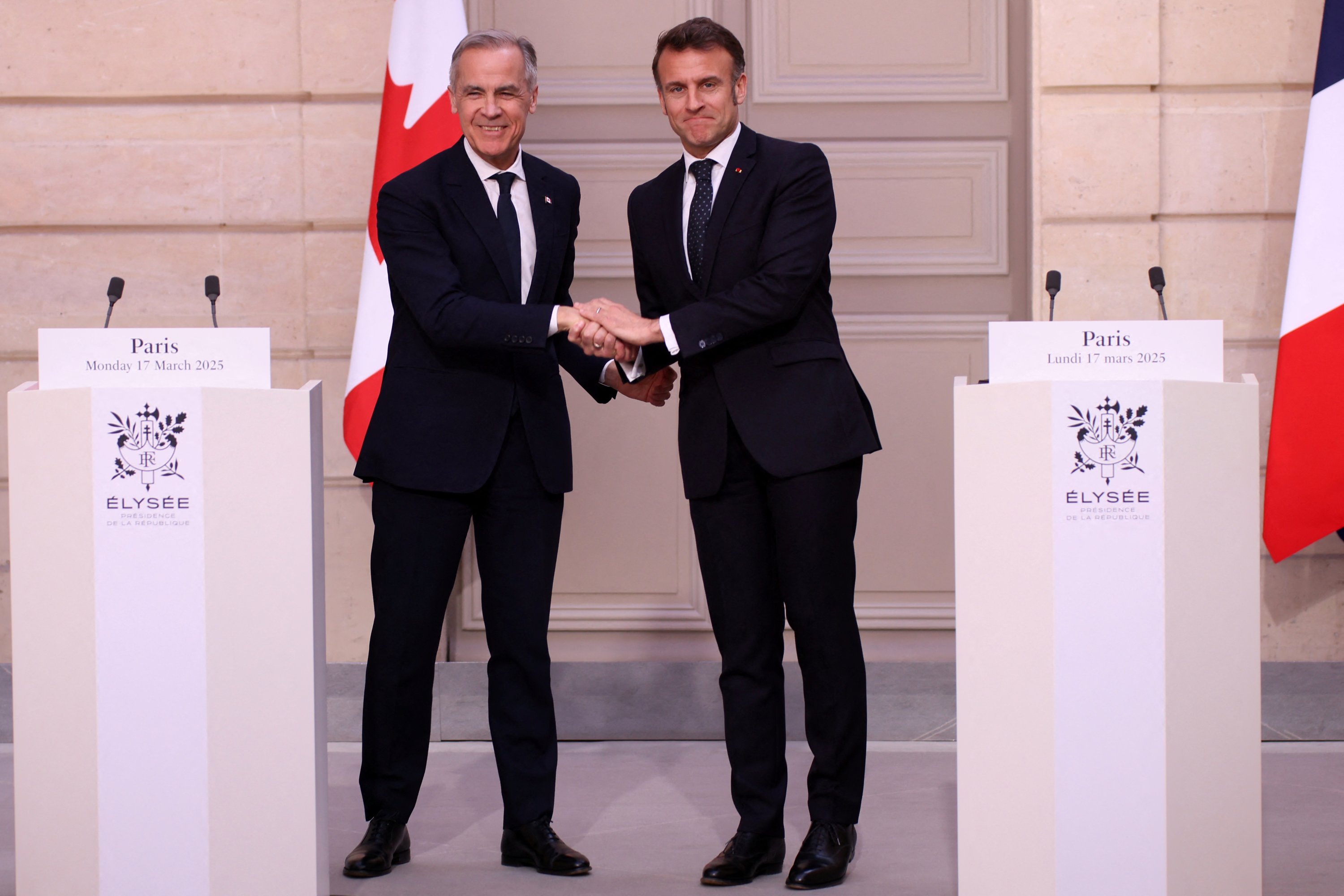
Despite the dramatic attention the announcement generated, experts urged caution about overstating its immediate impact. Implementation will depend on funding decisions, regulatory alignment and political continuity on both sides.
“This is a framework, not a finished structure,” said Roland Paris, a former Canadian national security adviser. “The real test is what follows.”
A Signal to the World
Still, the symbolism was hard to miss. At a time when alliances are being tested, Canada and the European Union chose to highlight cooperation rather than fragmentation.
Mr. Carney framed the agreement as additive, not exclusionary.
“We are strengthening the fabric of cooperation,” he said. “Not tearing any thread out.”
Whether the deal reshapes global security dynamics or simply reinforces existing ones will become clearer over time. For now, it stands as a clear signal that Canada is positioning itself as a more central player in European security — and that traditional allies are adjusting to a more complex, multipolar alliance landscape.