A Question About Trump. A Brief Answer From Carney. And a Moment That Drew Wider Attention.
The exchange lasted only a few seconds, but it quickly began circulating online.
During a press interaction while traveling abroad, Mark Carney — who has been promoting new economic and strategic partnerships across the Indo-Pacific — was asked what appeared to be a pointed question. What, a reporter wanted to know, had been President Donald Trump’s reaction to Canada’s support for recent air strikes on Iran? And what did that say about their relationship?
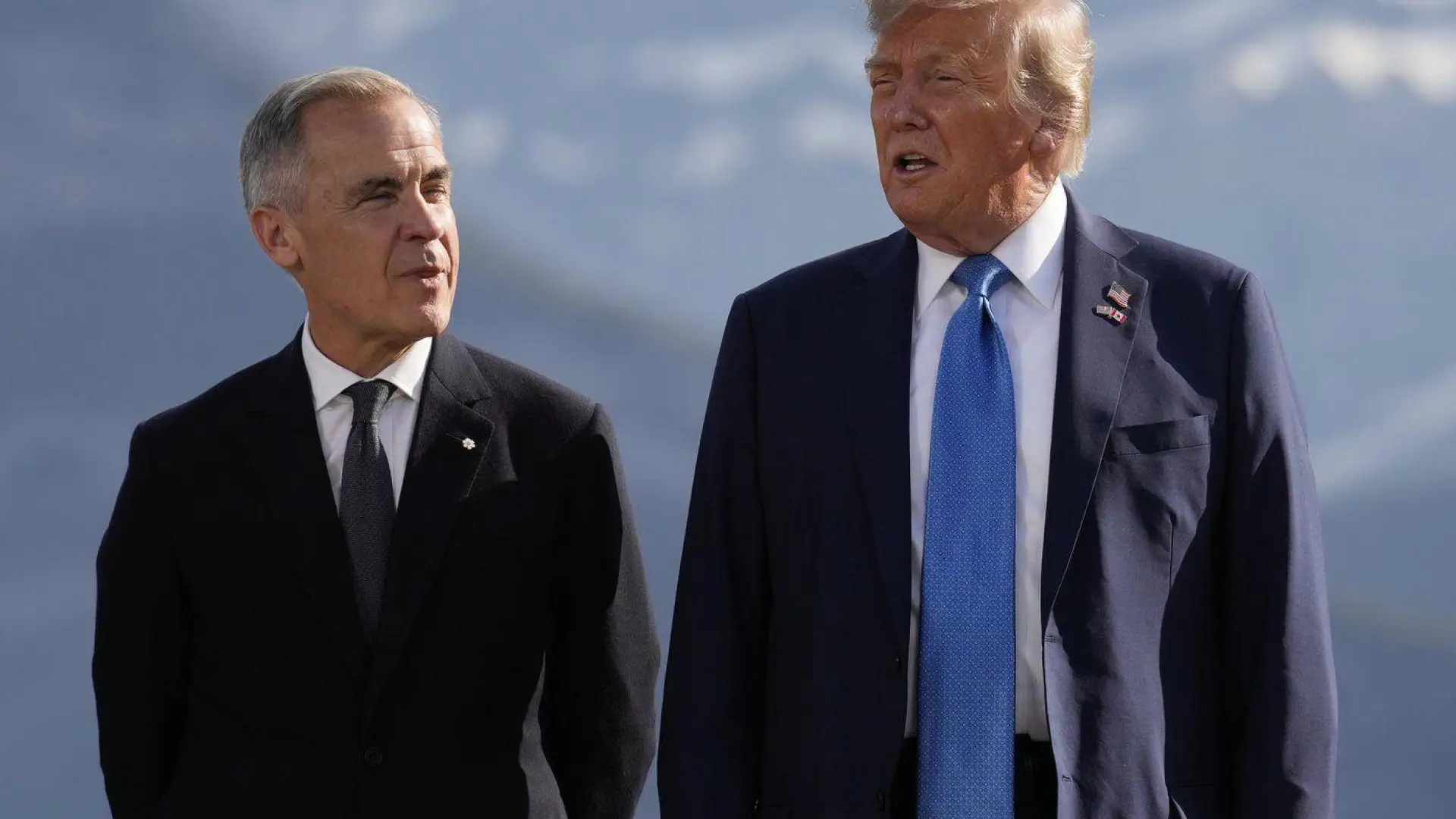
For a moment, the implication seemed clear: that Ottawa’s position might be judged through the lens of Washington’s response.
Carney’s reply was brief.
“I haven’t spoken to the president,” he said.
Then he explained Canada’s stance in straightforward terms. Ottawa supported the limited objective of the strikes, he said, because it views Iran’s nuclear ambitions and decades-long export of militant activity as serious threats to international security. But that support, he emphasized, was not a “blank check,” not participation in the operation and not part of any political exchange.
The moment passed quickly. But in diplomatic and political circles, such exchanges are often examined for what they reveal about tone as much as substance.
Carney’s comments came during a week of travel that has underscored Canada’s effort to deepen economic and strategic partnerships across several regions. In India, Canadian officials confirmed more than $5 billion in new commercial agreements, including a $2.6 billion uranium supply deal and a series of partnerships involving energy, critical minerals and artificial intelligence.
From there, Carney traveled to Australia, where meetings with business leaders and government officials have focused on investment, security cooperation and technology partnerships. He is also scheduled to address Australia’s Parliament, a diplomatic gesture often interpreted as a sign of political recognition.
For analysts watching the trip, the contrast between the reporter’s question and the broader context of Carney’s agenda was notable.
While the press exchange focused on Washington’s possible reaction, the diplomatic schedule highlighted Ottawa’s effort to expand relationships across multiple regions at once.
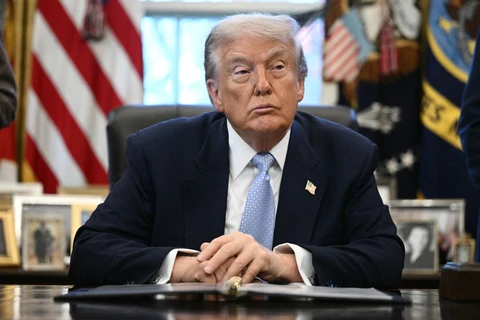
Some policy observers view this as part of a broader pattern among middle powers seeking to diversify economic partnerships and strategic relationships in an increasingly uncertain geopolitical environment. As global supply chains shift and security concerns intensify, countries such as Canada, Australia and several European states have been exploring ways to strengthen cooperation beyond traditional frameworks.
Others caution against reading too much into a brief exchange with a reporter.
Canada’s political, economic and security ties with the United States remain among the deepest in the world. The two countries share the world’s longest undefended border, extensive trade integration and long-standing military cooperation through NATO and other defense arrangements.
Yet moments like the one involving Carney often attract attention precisely because of the assumptions embedded in them.
Questions about Washington’s reaction can reflect the long-standing expectation that Canada’s foreign policy decisions will be closely linked to those of its southern neighbor. That perception has deep historical roots, shaped by decades of economic integration and security cooperation.
Carney’s response did not challenge that relationship. Nor did it criticize Washington.
Instead, by emphasizing that Canada had taken its position based on its own assessment of international security risks, he redirected the discussion toward the reasoning behind Ottawa’s decision itself.
In diplomatic language, such shifts in emphasis can matter.
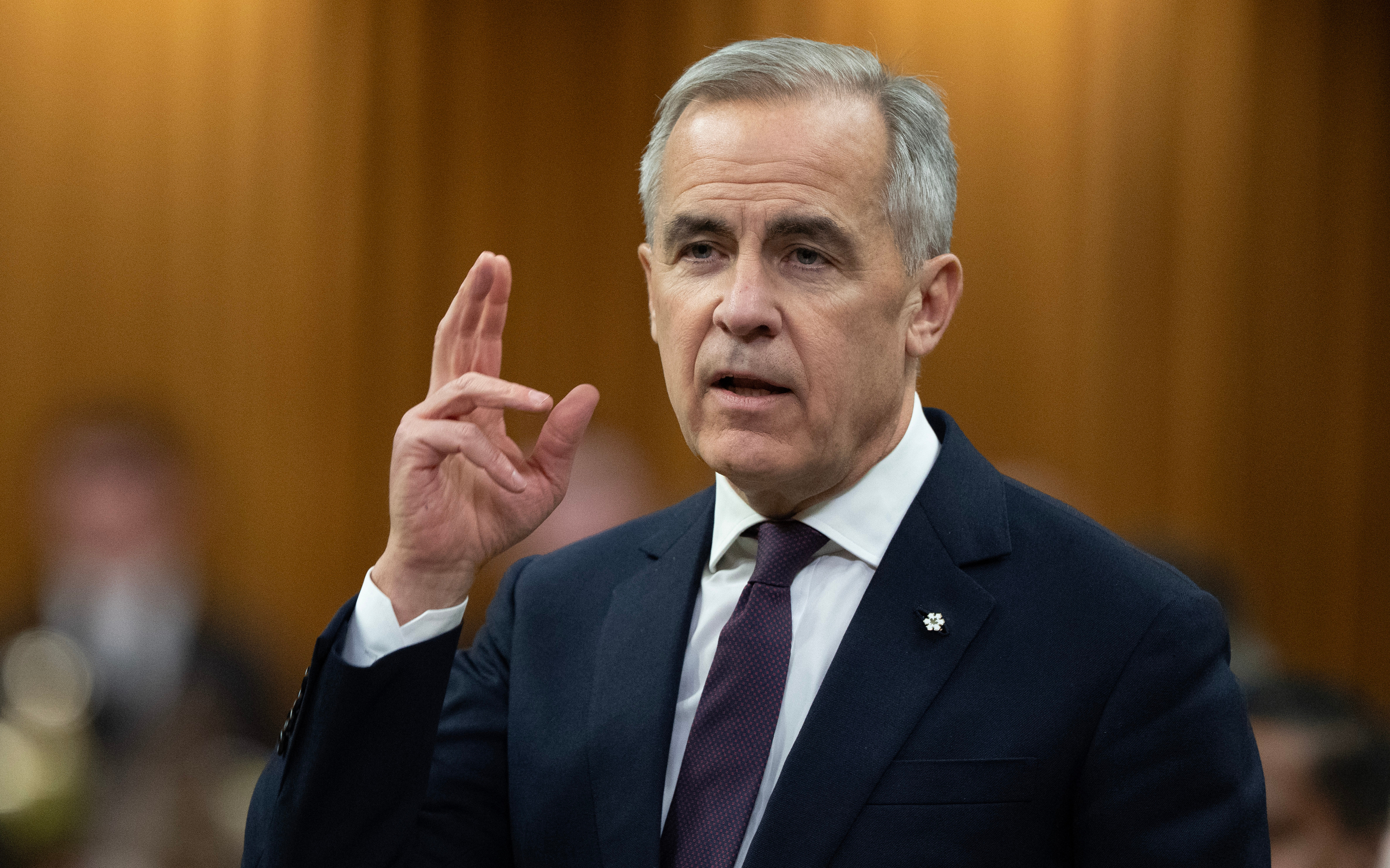
Foreign policy messaging often operates in careful layers, where tone, framing and context can signal as much as formal policy statements. A brief exchange at a press conference rarely changes strategic realities, but it can illuminate how leaders choose to present their country’s decisions to both domestic and international audiences.
In this case, the emphasis was on independence of judgment rather than confrontation.
Whether the moment will carry broader significance remains unclear. Press interactions often produce exchanges that attract temporary attention online before fading quickly from public discussion.
But in an era where political messaging travels instantly across platforms, even a short answer can spark wider interpretation.
For some viewers, the exchange represented little more than a routine press-room moment.
For others, it reflected a subtle reminder that Canada, like many middle powers navigating a shifting geopolitical landscape, increasingly frames its foreign policy choices as decisions made on its own terms.
And sometimes, in diplomacy, a single sentence is enough to redirect the conversation.