Canada’s Submarine Gamble Is About Far More Than Defense
OTTAWA — Canada is nearing a decision that could reshape not only its navy, but also its economic and diplomatic posture in a fractured world.
According to senior officials familiar with the deliberations, the government is weighing an unconventional approach to its $24 billion submarine replacement program: splitting the contract evenly between Germany’s ThyssenKrupp Marine Systems and South Korea’s Hanwha Ocean. Six boats would come from each supplier — a departure from the traditional model of selecting a single vendor to ensure uniformity and simplify logistics.
At first glance, the proposal appears to defy conventional wisdom in defense procurement. Operating a single fleet reduces maintenance complexity, streamlines training and limits supply chain risk. Indeed, Canadian leaders have previously acknowledged those efficiencies.
But this is not a conventional moment.
Canada faces mounting pressure on two maritime fronts. In the Atlantic, Russian submarine activity has intensified along NATO’s northern flank, reviving Cold War anxieties about undersea surveillance and deterrence. In the Pacific, intensifying rivalry between Washington and Beijing has elevated the strategic importance of allied naval presence in the Indo-Pacific.
A split purchase would allow Canada to tailor its fleet to those distinct theaters. Germany’s Type 212CD submarines — developed in cooperation with Norway — are designed for operations in cold, shallow waters and are fully interoperable with NATO forces. Their deployment along Canada’s Atlantic coast would reinforce alliance cohesion at a time when European security remains unsettled.
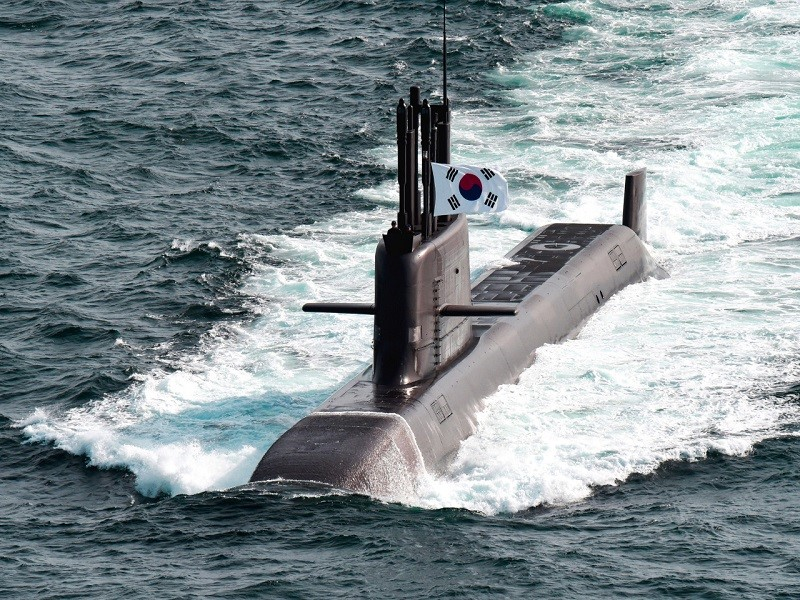
South Korea’s KSS-III Batch 2 submarines, by contrast, represent one of the most advanced conventional submarine designs in production. With greater range and payload capacity, they are well suited to Pacific operations and could anchor Canada’s long-discussed but only partially realized Indo-Pacific strategy.
For Canada, whose aging Victoria-class submarines were purchased secondhand from Britain in the 1990s and have struggled with reliability, modernization is overdue. The prospect of receiving new boats within the next decade would mark a significant acceleration in a procurement system often criticized for delay.
Yet the implications extend well beyond naval capability.
Both Berlin and Seoul have reportedly been encouraged to align their bids with broader economic commitments to Canada’s manufacturing sector, particularly its beleaguered auto industry. In recent years, Canadian automakers and steel producers have faced tariffs and protectionist measures from the United States, exposing the vulnerabilities of Canada’s deep economic integration with its southern neighbor.
Germany already has a foothold in Canada’s electric vehicle supply chain through a major battery plant investment in Ontario. South Korean firms have likewise expressed interest in expanding electric vehicle and hydrogen technology partnerships. Linking submarine procurement to industrial cooperation would transform a defense contract into an instrument of economic policy.
Such linkage reflects a broader recalibration in Ottawa’s strategic thinking. For decades, Canada’s defense decisions have been closely aligned with American priorities. But shifting geopolitical currents — and uncertainty in Washington — have prompted policymakers to pursue diversification. Deepening ties with Europe and Asia offers both economic opportunity and diplomatic leverage.
Critics warn that operating two submarine classes could introduce avoidable complexity. Distinct training regimes, spare parts inventories and maintenance procedures would demand careful coordination. The Royal Canadian Navy, already stretched, would need to adapt.
Supporters counter that Canada’s armed forces already manage multiple aircraft and vehicle platforms. They argue that strategic flexibility may outweigh logistical simplicity, particularly if each submarine class is optimized for its respective theater.
There is also a symbolic dimension. A decisive, timely procurement would signal a break from the protracted, politicized processes that have dogged past defense acquisitions. Delivering modern submarines on schedule would bolster Canada’s credibility among allies and adversaries alike.
Ultimately, the choice before Ottawa is not merely between two manufacturers. It is between competing visions of how Canada situates itself in a turbulent era.
A single-vendor contract would prioritize operational cohesion and lower administrative burden. A split arrangement would embrace complexity in pursuit of broader strategic dividends: reinforced NATO ties in the Atlantic, a firmer Indo-Pacific presence, and industrial partnerships that reduce dependence on the United States.
The decision, expected in the coming weeks, will reveal how Canada balances efficiency against ambition. In an age when economic security and national security are increasingly intertwined, the submarine program has become a test case for integrated statecraft.
Submarines operate beneath the surface, largely unseen. Yet the consequences of this procurement will be visible in shipyards, factories and diplomatic corridors for decades to come.