🔥 BREAKING: Canada ENDS PREFERENTIAL ALUMINUM PRICING — U.S. AUTO SECTOR FACES COST PRESSURE 🚗⚙️
Canada has taken a quiet but consequential step in its trade relationship with the United States, recalibrating the pricing of aluminum exports in a move that is already reverberating through America’s auto industry.
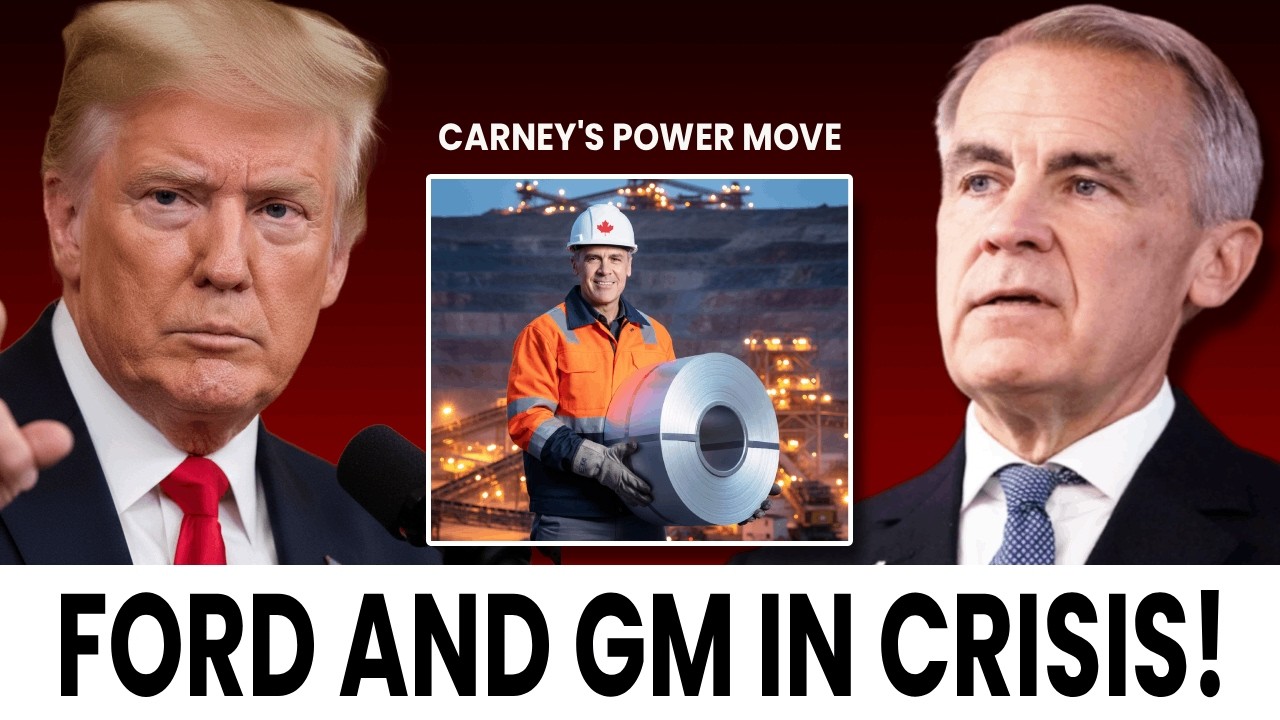
Rather than imposing new tariffs or restricting shipments, Ottawa has allowed long-term supply contracts to be renegotiated at higher rates, reflecting both environmental premiums and what officials describe as increased political and commercial risk. The shift comes as the United States, under President Donald Trump, moves forward with expanded tariffs on steel and aluminum imports, raising levies to 50 percent in some categories.
Canadian leaders have criticized the tariff increase as a breach of prior understandings. Doug Ford, the premier of Ontario, said recently that Washington had “broken a verbal agreement,” signaling mounting frustration in a province deeply tied to cross-border manufacturing.
Yet Canada’s response has been notably restrained. There have been no headline-grabbing countertariffs. Instead, producers — many clustered in Quebec, where hydroelectric power supports energy-intensive smelting — have repriced contracts to reflect what industry officials call the “true strategic value” of low-carbon aluminum.
The consequences are being felt most acutely in Detroit and other manufacturing centers. Ford Motor Company and General Motors, which rely heavily on Canadian aluminum for vehicle frames, body panels and electric vehicle components, now face higher input costs at a time when margins are already thin.
Modern automobiles, particularly electric vehicles and large sport utility vehicles, contain significantly more aluminum than their predecessors. The metal’s light weight helps meet fuel-efficiency and emissions standards while offsetting the heft of battery systems. Even modest increases in aluminum pricing can translate into billions of dollars in additional annual costs when multiplied across millions of vehicles.
Executives in the sector describe the change not as routine commodity fluctuation but as a structural adjustment. Some companies are reassessing sourcing strategies, while others are exploring whether additional domestic capacity could cushion future shocks. But building new smelters in the United States would require years of permitting, vast capital investment and access to large supplies of inexpensive electricity — conditions not easily met.
For decades, American manufacturers benefited from relatively stable and competitively priced Canadian aluminum. The two economies’ supply chains became deeply integrated, particularly after the North American Free Trade Agreement and its successor frameworks reinforced cross-border flows.
Canada’s aluminum industry, meanwhile, quietly leveraged its comparative advantage in clean energy. Smelters powered by hydroelectricity generate far fewer emissions than facilities reliant on coal-fired power elsewhere in the world. That environmental edge, long embedded in supply contracts, has now become an explicit premium.
Industry analysts say carbon intensity is increasingly central to global trade dynamics. As governments and corporations adopt sustainability targets, lower-emission inputs command higher prices. Canada’s producers have begun factoring that into contracts, alongside an added “stability premium” tied to political uncertainty.

The approach reflects a broader shift in Ottawa’s trade posture. Rather than engaging in direct tariff retaliation — a path that often triggers legal disputes and escalating countermeasures — Canada appears to be relying on market-based mechanisms to assert leverage.
From Canada’s perspective, the repricing corrects what some policymakers view as a longstanding imbalance. Aluminum exports have supported downstream American manufacturing for years, sometimes at prices critics argue did not fully reflect environmental or geopolitical value. By adjusting contract terms, Canada captures more revenue while remaining within established trade rules.
The move also underscores a vulnerability in U.S. industrial policy. Tariffs are designed to protect domestic production or pressure foreign suppliers. But when domestic capacity is limited and supply chains are entrenched, tariffs alone cannot easily offset dependence on a key input.
Political reactions in Washington have been mixed. Some lawmakers have called for renewed efforts to rebuild domestic smelting capacity, framing aluminum as a matter of economic and national security. Others warn that higher input costs risk undermining competitiveness at a delicate moment for American manufacturing.
In boardrooms, the response has been more pragmatic. Companies must decide whether to absorb the additional costs, pass them on to consumers or delay investment plans. Electric vehicle programs, already sensitive to price fluctuations and consumer demand, may be particularly affected.
The episode highlights a larger evolution in global trade. In an era marked by supply chain disruptions, climate policy and rising geopolitical tension, control over critical inputs can matter more than border measures alone. Pricing power, exercised quietly through contracts, may prove more durable than the dramatic announcements that often dominate political headlines.
Canada has not closed its market, nor has it withdrawn from its closest economic partnership. Instead, it has adjusted the terms of access. For American manufacturers accustomed to predictable flows of affordable aluminum, that recalibration represents a significant change.
Whether the shift leads to lasting restructuring in North American manufacturing remains uncertain. What is clear is that aluminum — once treated as a routine industrial commodity — has become a focal point in the evolving balance between economic integration and strategic autonomy.