🔥 BREAKING: Canada MOVES TO RESTRICT ACCESS TO $890B Great Lakes CORRIDOR — U.S. TRADE ROUTES UNDER PRESSURE ⚓🌎
Canada’s Parliament this week approved sweeping new restrictions on water withdrawals from the Great Lakes basin, a move that underscores rising tensions over trade, climate change and resource security in North America.
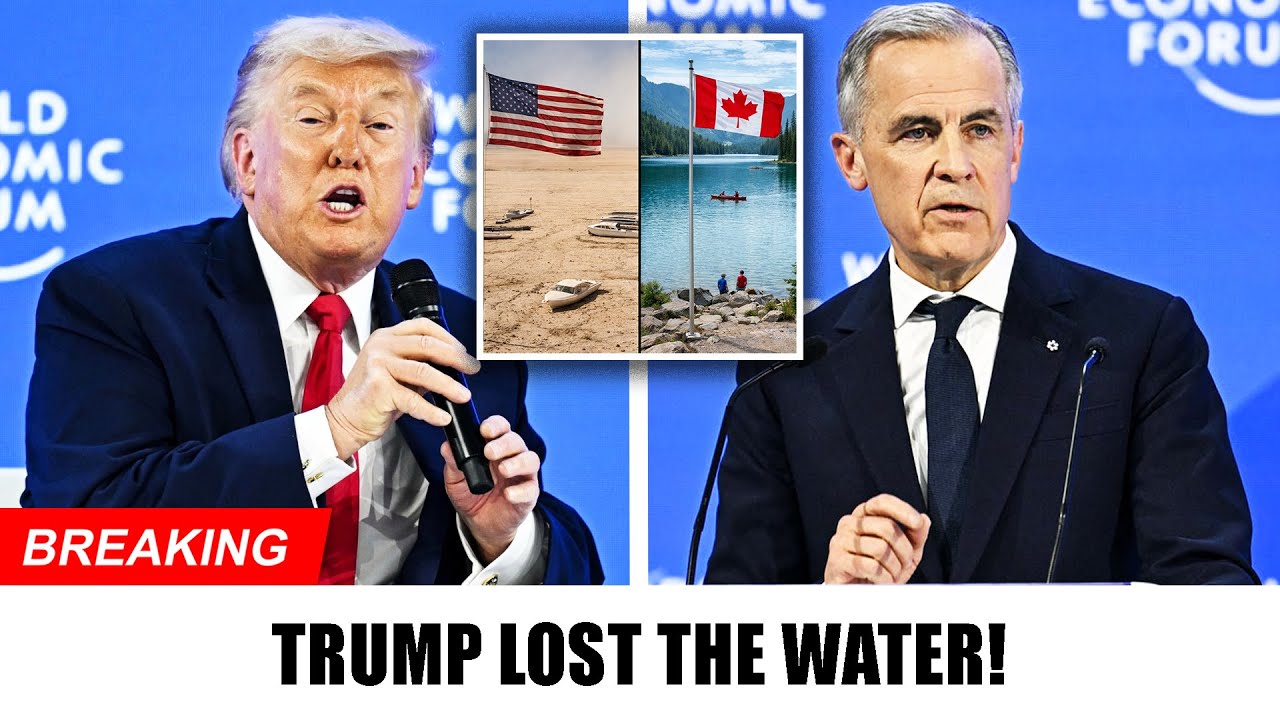
The legislation, described by officials as a reinforcement of existing protections, tightens federal and provincial authority over any transfer of water outside the basin. Speaking in Thunder Bay, Prime Minister Mark Carney said the measure was intended to safeguard a resource that Canadians increasingly view as both environmentally fragile and economically indispensable.
“The Great Lakes are not an inexhaustible reservoir,” he said, framing the law as a response to climate pressures and growing external demand.
The five Great Lakes — Lake Superior, Lake Michigan, Lake Huron, Lake Erie and Lake Ontario — together hold roughly one-fifth of the world’s surface fresh water. More than 40 million people in Canada and the United States rely on them for drinking water, and the basin supports an estimated $890 billion in annual economic activity, from manufacturing and shipping to agriculture, fisheries and tourism.
For decades, management of the lakes has been governed by a web of bilateral agreements and state and provincial regulations built on an assumption of abundance. While bulk water exports outside North America have long been restricted, critics argued that loopholes and uneven enforcement left room for large-scale withdrawals or diversions under certain circumstances.
The new Canadian law closes many of those gaps. It requires explicit federal and provincial approval for any transfer of water outside the natural basin and extends scrutiny to categories such as bottled water and certain industrial uses. It also reinforces Canada’s authority over key outflows, including the St. Lawrence River system.
The legislation arrives at a moment when water scarcity is becoming a central political issue across parts of the United States. Prolonged drought in the Southwest has strained the Colorado River, depleted groundwater reserves and forced difficult negotiations among states that depend on shrinking supplies. Some policymakers and advocacy groups have floated the idea — largely theoretical but technically feasible — of diverting Great Lakes water westward through pipelines or other infrastructure.
Those proposals have faced significant legal and environmental hurdles, including opposition from governors of Great Lakes states. Still, the mere suggestion has heightened sensitivities in Canada, where officials say climate change is already altering lake levels through increased evaporation and erratic precipitation.
Water levels in several of the lakes have fluctuated sharply over the past decade, driven by warmer winters, reduced ice cover and changing rainfall patterns. Scientists caution that long-term trends remain complex, but few dispute that the basin is experiencing greater volatility than in the past.
Against that backdrop, some American political rhetoric has added to the strain. Former President Donald Trump has previously taken a combative approach to trade disputes with Canada, imposing tariffs on steel and aluminum during his first term and warning that the United States would prioritize its own economic interests. While he has not advanced a formal proposal to divert Great Lakes water, his broader posture has prompted Canadian leaders to emphasize sovereignty over strategic resources.
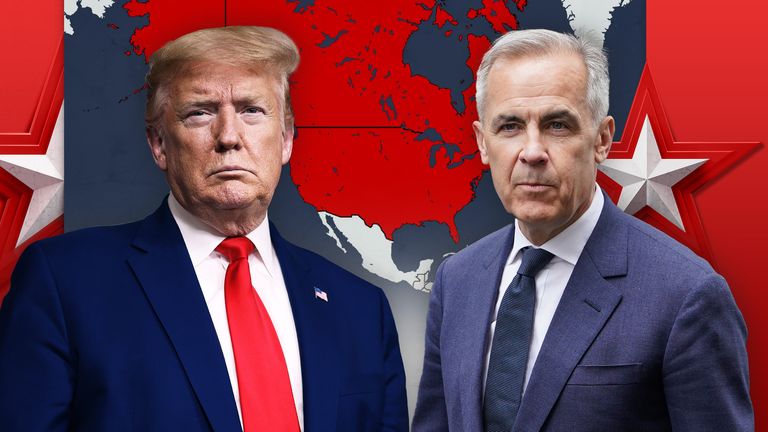
Canadian officials insist the new law is not designed to curtail water supplies to American cities or industries within the basin. The United States and Canada share responsibility for managing lake levels and flows under longstanding agreements, and any abrupt restriction would likely trigger diplomatic and legal challenges.
Nevertheless, the legislation signals a shift in tone. By consolidating legal authority and narrowing exceptions, Ottawa has made clear that large-scale diversions to regions outside the basin would face formidable obstacles.
Economists note that the Great Lakes region is among the most integrated industrial corridors in the world. Steel mills in Indiana and Ohio, auto plants in Michigan and Ontario, and power facilities along the lakes all depend on reliable water access. Inland shipping routes carry iron ore, grain and manufactured goods across borders daily.
Because those supply chains are so deeply intertwined, analysts say that water is less a tool of leverage than a shared vulnerability. Any serious disruption would reverberate on both sides of the border.
Still, the symbolism of the law is significant. As climate pressures intensify, water is increasingly viewed not just as a local utility but as a strategic asset. Nations rich in freshwater resources are reassessing policies that once seemed purely administrative and now carry geopolitical weight.
In Washington, officials have largely avoided direct confrontation over the issue, focusing instead on domestic water management reforms. Several Great Lakes governors have reiterated their opposition to out-of-basin diversions, aligning in that respect with Canadian concerns.
The episode highlights a broader recalibration in North American relations. Long defined by assumptions of stability and abundance, the partnership is now being tested by environmental change, economic nationalism and shifting political dynamics.
For residents of Chicago, Toronto, Cleveland and other lakeside cities, the water still flows as it always has. But the legal architecture surrounding it is evolving — a reminder that even the world’s largest freshwater system is no longer insulated from the pressures shaping the 21st century.