A World Cup, a Presidency and the Strain on America’s Image
In 1980, after Soviet troops marched into Afghanistan, President Jimmy Carter announced that the United States would boycott the Summer Olympics in Moscow. More than 60 countries ultimately joined, transforming what should have been a celebration of sport into a geopolitical statement. For decades, that episode stood as a reminder that global tournaments, however idealistic their rhetoric, are never insulated from politics.
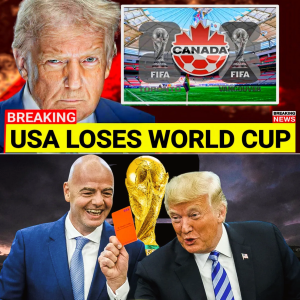
Now, as the 2026 FIFA World Cup approaches — co-hosted by the United States, Canada and Mexico — a different and more unusual debate has taken shape. In several European capitals, lawmakers and commentators have raised the possibility of a boycott, not in response to a foreign invasion, but in reaction to the political direction of the American government under President Donald Trump.
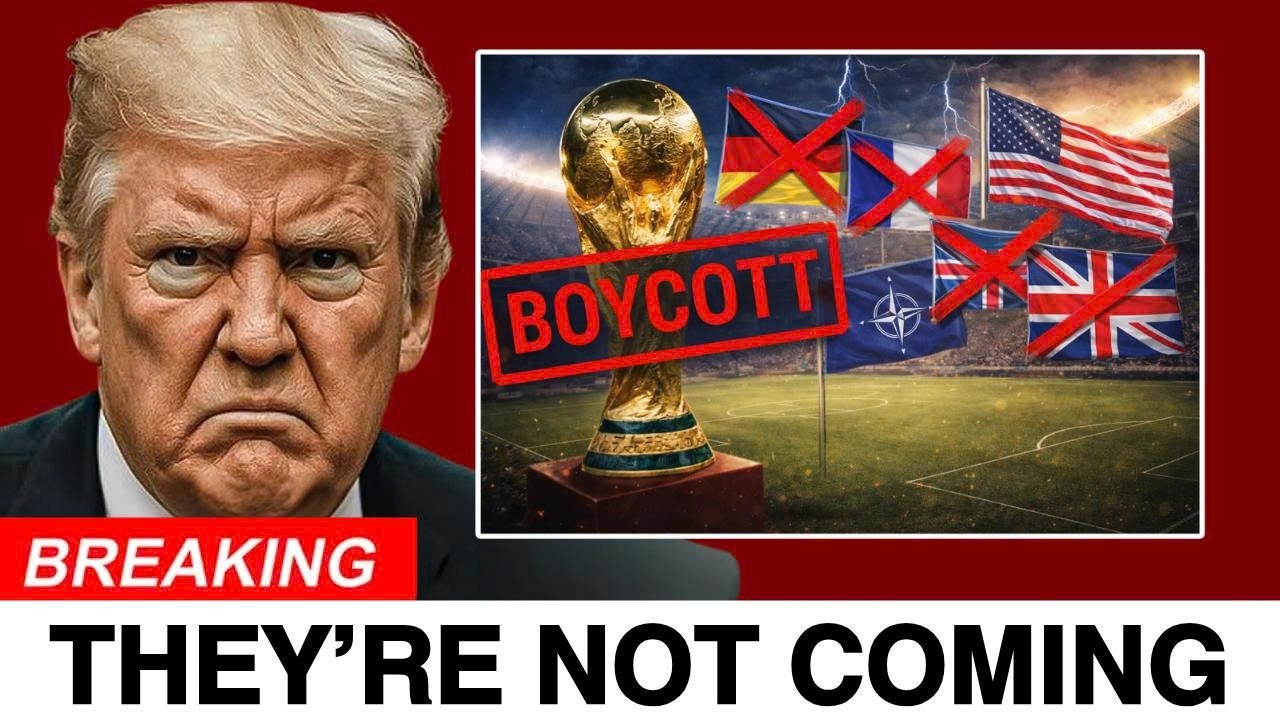
The comparison is imperfect, and in many ways unfair. The United States in 2026 is not the Soviet Union of 1980. Yet the fact that such parallels are being voiced at all is revealing. It reflects less a specific policy dispute than a broader anxiety among America’s allies about the trajectory of the country’s democratic identity.
The current controversy has its roots in a series of confrontations between Washington and European governments. President Trump’s repeated insistence that the United States should acquire Greenland — an autonomous territory within the Kingdom of Denmark — rattled officials in Copenhagen and Brussels. His public threats of steep tariffs on European goods, coupled with sharp rhetoric directed at NATO partners, compounded the unease.
At the same time, expanded immigration enforcement measures and travel restrictions have raised concerns about whether fans and even qualified teams from certain countries could face obstacles entering the United States for the tournament. Human rights groups have warned that the policies risk undermining the inclusive ethos that international sporting bodies often profess.
In Germany, public opinion polling has shown a substantial minority of respondents expressing support for keeping the national team at home if diplomatic tensions escalate. In Britain, a handful of members of Parliament have invoked the precedent of the 1980 Olympic boycott, arguing that democratic allies must consider the moral implications of participation.
Yet within official channels, the response has been more restrained. National football associations across Europe have emphasized the unifying power of sport and the practical realities of withdrawing from an event of this magnitude. Governments have stopped short of endorsing a boycott. The tournament, by all indications, will proceed as planned.
That outcome is unsurprising. The modern World Cup is a sprawling commercial enterprise. Broadcast contracts span continents. Corporate sponsors have invested billions. Infrastructure projects in host cities — from Los Angeles to New York, from Toronto to Mexico City — are already complete or nearing completion. Players have devoted their lives to the opportunity to compete on the sport’s largest stage. The institutional and personal costs of withdrawal would be immense.
Still, the debate itself carries significance. For much of the post–World War II era, even when disagreements flared — over the Iraq war, over Guantánamo Bay, over surveillance and drone strikes — America’s allies tended to frame their objections as disputes within a shared democratic family. The underlying assumption was that the United States, whatever its policy errors, remained committed to a common liberal order.
Today, some European officials privately acknowledge a more fundamental worry. They speak not only of divergent policies but of eroding norms: the tone toward allied governments, the treatment of international institutions, the language used to describe democratic processes at home and abroad. In this telling, the World Cup has become a symbolic arena for a deeper question about credibility.

Soft power, a term popularized in the late 20th century, rests less on coercion than on attraction — on the perception that a country’s values and institutions merit admiration. Sporting events have long served as vehicles for that attraction. The United States has often benefited from hosting global competitions that showcase its openness and diversity.
If that perception shifts, even subtly, the consequences are difficult to quantify but hard to dismiss. A boycott may never materialize, and the stadiums in 2026 may well be full. But reputational changes tend to unfold gradually. Trust, once strained, is not instantly restored by a successful tournament.
It is also possible that the storm will pass. International politics has a short memory, and sporting spectacles have a way of recentering attention on the field rather than the forum. Fans who arrive in American cities may encounter hospitality and civic pride that complicate the narrative of decline.
Whether the current controversy marks a turning point or a transient flare-up will depend on events beyond the pitch. The World Cup, in this sense, is less a cause than a mirror. It reflects how allies see the United States at a particular moment — uncertain, polarized and fiercely debated, both at home and abroad.
In 1980, the Olympic boycott was a blunt instrument aimed at a geopolitical rival. In 2026, the mere discussion of a boycott by long-standing partners signals something more nuanced and more disquieting: a questioning of assumptions that once seemed settled. Sport may not determine the course of international relations, but it can illuminate the pressures beneath them.