On a stretch of industrial land outside Montreal, cranes have begun to move with unusual purpose. Steel framing is rising, concrete foundations are curing and procurement orders are quietly circulating through Quebec’s aerospace supply chain. The project attached to this activity — a proposed $400 million facility tied to production of the Saab Gripen fighter jet — represents more than another expansion in a city long synonymous with aviation. It signals a recalibration of Canada’s defense-industrial ambitions at a moment of geopolitical strain.
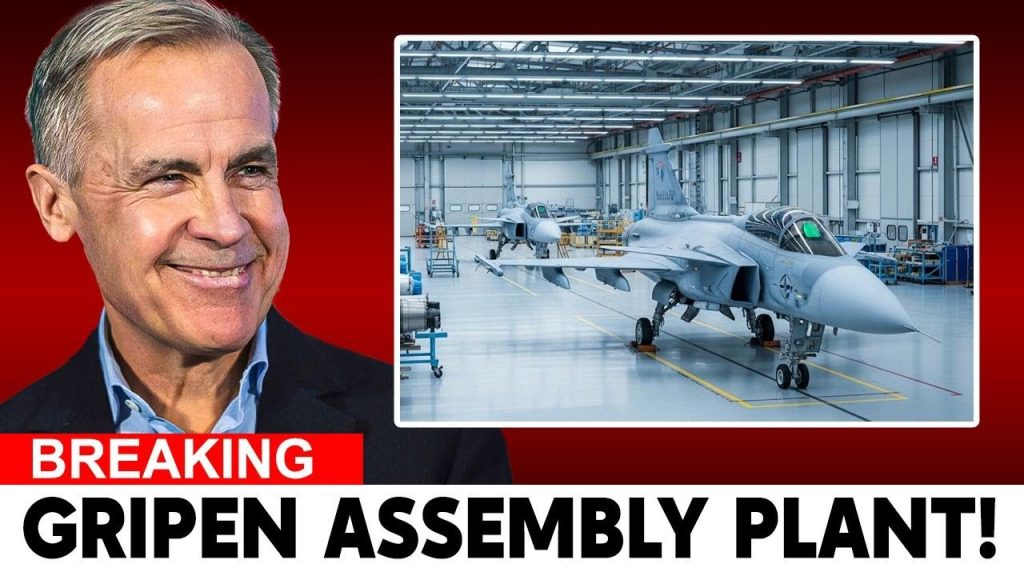
Montreal has for decades ranked among North America’s most concentrated aerospace hubs, home to Bombardier, Pratt & Whitney Canada, CAE and an ecosystem of specialized suppliers. Yet fighter aircraft assembly carries a different strategic weight than business jets or flight simulators. If completed as outlined, the new plant would provide final assembly and integration capacity for the Gripen E and F variants, embedding advanced military aviation manufacturing directly within Canada’s borders.
Industry executives describe the 126,000-square-foot facility as purpose-built for high-bay assembly, avionics integration and systems testing. Aerospace construction at this scale is not simply about square footage; it is about certification regimes, security protocols and precision tooling that can meet the exacting standards of modern combat aircraft production. Much of the investment, analysts say, will flow not just into the building itself but into specialized machinery, workforce training and quality-control systems designed to mirror Saab’s established processes in Sweden.
For Quebec officials, the economic argument is immediate. The project is expected to generate hundreds of direct jobs — technicians, engineers, inspectors and logistics specialists — and potentially many more across the supply chain. Aerospace employment tends to carry a multiplier effect, supporting smaller machine shops, electronics manufacturers and research institutions. In a province that has sought to position itself as a leader in advanced manufacturing, the symbolism of assembling fighter jets resonates far beyond payroll numbers.
Yet the political significance may exceed the economic one. Canada’s defense procurement decisions have long balanced interoperability with allies against domestic industrial benefits. Establishing fighter production capability at home would reduce dependence on foreign assembly lines and reinforce arguments about strategic sovereignty. In an era of tariff disputes and supply-chain disruptions, governments across Europe and North America have grown more attentive to where critical systems are built and who controls their delivery timelines.
Supporters of the Montreal project frame it as a hedge against volatility. By pairing European airframe design with local manufacturing and, potentially, engine production capacity in the same metropolitan region, Canada could shorten logistics chains and insulate itself from certain external bottlenecks. Critics caution that such ventures carry substantial financial and political commitments. Once infrastructure is erected and workers trained, reversal becomes costly — economically and diplomatically.

The timing intersects with broader debates about Western defense readiness. NATO members have faced pressure to increase military spending and accelerate production capacity amid prolonged conflict in Europe and rising tensions elsewhere. Diversifying manufacturing nodes within allied territory has become an attractive proposition. A Canadian Gripen facility would not only serve domestic needs but could position Montreal as a contributor to allied sustainment and export markets, should demand materialize.
Still, large defense projects rarely proceed without scrutiny. Questions remain about long-term order volumes, cost-sharing arrangements and the extent of federal support. Government backing, whether through tax incentives, workforce programs or direct procurement commitments, will likely prove decisive. Ottawa has emphasized both economic resilience and strengthened alliances in recent policy messaging; this initiative appears to align with both themes.
For Bombardier and its partners, the endeavor represents an evolution. The company’s identity has long been tied to civil aviation. Moving into fighter final assembly would deepen its role in defense manufacturing, even if under partnership frameworks with established European producers. Executives familiar with the plans suggest that knowledge transfer and process standardization are central to ensuring that aircraft built in Montreal meet the same benchmarks as those assembled overseas.
By 2027, if construction and certification proceed on schedule, the skeletal framework rising today could become a functioning production floor. The first aircraft would not roll out until later, but the strategic shift would already be visible. Montreal would add another address to its aerospace map — one tied not to corporate jets or simulators, but to the machinery of national defense.
Whether the facility ultimately reshapes Canada’s position within NATO supply chains or remains a symbol of industrial ambition will depend on execution and sustained demand. For now, the cranes continue their work, and a city that has long defined itself by flight is preparing to anchor a new chapter in its aviation history — one measured not only in jobs created, but in the sovereignty those jobs are meant to secure.