As the 2026 World Cup Approaches, Politics Threaten to Eclipse the Pitch
The 2026 World Cup was conceived as a celebration without precedent — a tournament expanded to 48 teams and shared across three nations, the United States, Canada and Mexico. It was designed to symbolize scale, accessibility and continental partnership. When organizers announced that more than 500 million ticket applications had been submitted, the number seemed to confirm that vision. Demand had never been higher. The sport’s global pull appeared undiminished.
Yet months before the opening match, the atmosphere surrounding the tournament feels unsettled.
Instead of anticipation alone, the buildup has become entangled in political tension, visa uncertainty and questions about access. Stadium construction continues. Sponsorship deals remain intact. Broadcast rights agreements promise record revenues. But beneath those reassuring indicators lies a quieter debate: who, exactly, will be able to attend?
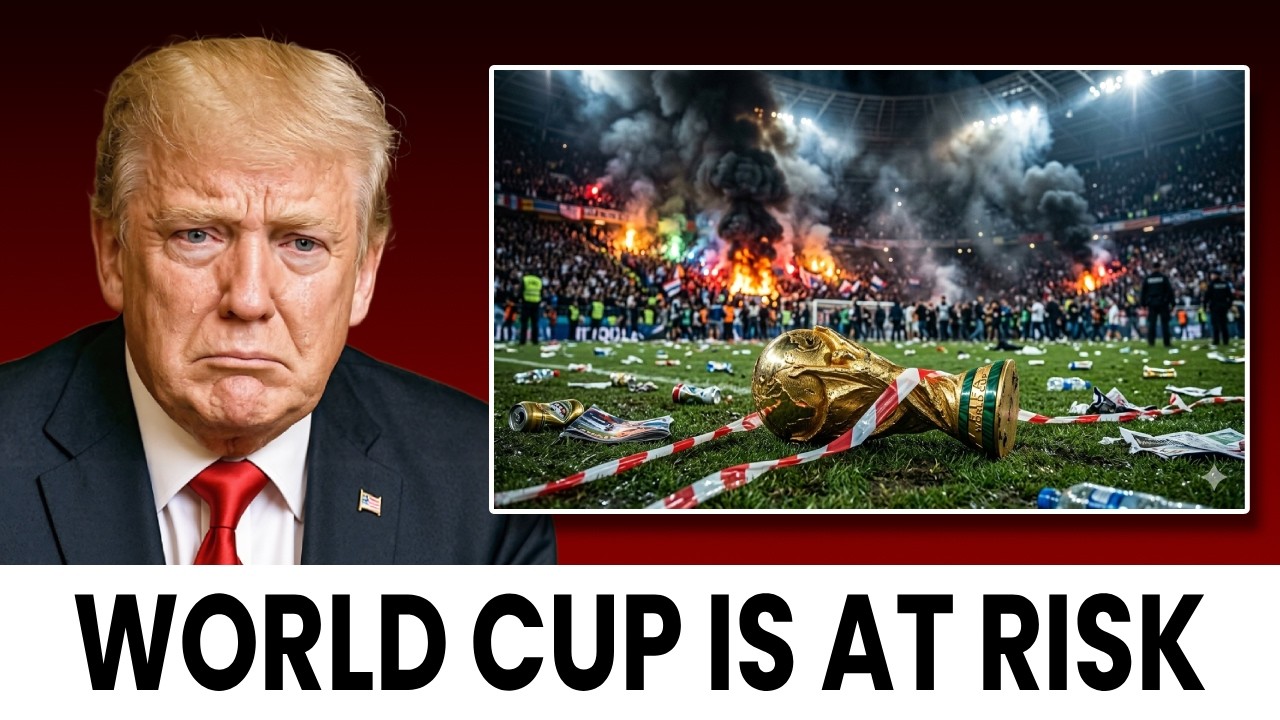
The shift in tone accelerated in early January, when a fatal immigration enforcement operation in Minneapolis — one of the designated host cities — circulated widely on social media. The incident was not directly related to the tournament, yet its imagery traveled far beyond local news cycles. For international supporters who had already applied for tickets, reserved hotels or begun saving for travel, it raised questions that extend beyond sport.
The response was not a tidal wave of cancellations. In the third phase of FIFA’s lottery process, roughly 16,800 applicants withdrew their ticket registrations — a minute fraction of the reported 500 million applications. Statistically, the impact was marginal. Symbolically, it suggested a subtle recalibration of confidence. The withdrawals reflected not a waning interest in football, but a reassessment of whether the host environment would feel predictable and welcoming.
That uncertainty deepened after President Donald Trump signed an executive order suspending visa processing from dozens of countries and imposing full or partial restrictions on several others. Visa fees rose, and processing timelines grew less transparent. For supporters in parts of Africa, the Middle East and South Asia, securing entry began to resemble a gamble.
Attending a World Cup is rarely a spontaneous decision. Fans often save for years, purchase tickets months in advance and reserve accommodations early to avoid surging prices. In some American host cities, hotel rates have climbed dramatically in anticipation of demand. For a supporter in Lagos or Dhaka, the financial risk is considerable: flights and lodging may be paid long before visa approval arrives — or does not.
On social media platforms, promotional renderings of packed stadiums appear alongside stories of delayed applications and denied entry. The juxtaposition has proven difficult for organizers to manage. A tournament marketed as the most inclusive in history now faces scrutiny over whether access will match rhetoric.
Human rights groups including Amnesty International and Human Rights Watch have criticized the restrictions as inconsistent with the spirit of global competition. A hashtag calling for a boycott gained traction across multiple regions, amplifying individual decisions to cancel travel plans. Major sponsors, while avoiding overt political commentary, reportedly began directing portions of their promotional budgets toward Canadian and Mexican host cities, where visa policies are perceived as more predictable.
For FIFA, the governing body of world football, the situation presents a delicate test. The organization retains authority under hosting agreements to reallocate matches if necessary. Eleven American cities, three Canadian cities and two Mexican cities comprise the official structure. In theory, logistical adjustments are possible. In practice, such decisions would carry diplomatic and financial consequences.
FIFA President Gianni Infantino has maintained a cautious public stance. His personal rapport with President Trump has drawn attention from critics who argue that the organization should advocate more forcefully for fan access. Vice President Victor Montagliani has reiterated that football transcends political regimes, but the tension between principle and pragmatism remains unresolved.
Canada and Mexico, meanwhile, have continued preparations with an emphasis on administrative clarity and hospitality. Mexico’s experience hosting the tournament in 1970 and 1986 provides historical precedent; Canada has focused on transparent messaging. Neither government has directly criticized American policy, yet online search trends in some regions suggest growing interest in northern and southern venues.
The economic stakes are substantial. Projections estimate that the tournament could contribute billions to the United States economy and support thousands of temporary jobs across hospitality, transportation and retail sectors. A meaningful reduction in foreign attendance would ripple beyond stadium gates, affecting municipal budgets and small businesses that rely on seasonal surges.

Beyond economics lies a broader question of soft power. For decades, major sporting events have functioned as instruments of national image. The 1994 World Cup and subsequent Olympic Games reinforced perceptions of openness and organizational capacity. A 2026 tournament overshadowed by visa denials and diplomatic friction could complicate that narrative.
None of this diminishes the underlying appetite for the sport. The volume of ticket applications alone demonstrates enduring global enthusiasm. Infrastructure projects remain on schedule. Teams will qualify, and matches will be played. The spectacle itself is unlikely to disappear.
But the composition of the crowds — and the symbolism attached to them — may shift depending on how policies evolve. Demand guarantees interest, not equitable access.
In that sense, the 2026 World Cup has become more than a sporting event. It is a referendum on whether institutions can reconcile commercial ambition with inclusive participation. The defining image of the tournament may not be a last-minute goal or a trophy lift, but the extent to which fans from across continents felt able to take part.
As the countdown continues, the spotlight will shine not only on players and coaches, but on policymakers and administrators. The world will be watching — not merely to see who wins, but to observe how trust is sustained, or strained, in the process.