As Tariffs Rise, a North American Partnership Strains Under Pressure
For decades, the trade relationship between the United States and Canada has been held up as a model of modern economic integration — a system in which supply chains ignored borders even when politics did not. Steel poured in Ontario could be stamped in Michigan, assembled in Ohio and sold across the continent. Aluminum smelted in Quebec found its way into American cars, aircraft and construction projects with little friction. That system now faces one of its most serious tests in a generation.
In March 2025, President Donald Trump imposed 25 percent tariffs on all Canadian steel and aluminum under Section 232 of the Trade Expansion Act, citing national security concerns. The administration argued that reliance on foreign metals threatened American industrial resilience. Canada, the largest foreign supplier of both steel and aluminum to the United States — and one of its closest defense partners — rejected the premise outright.
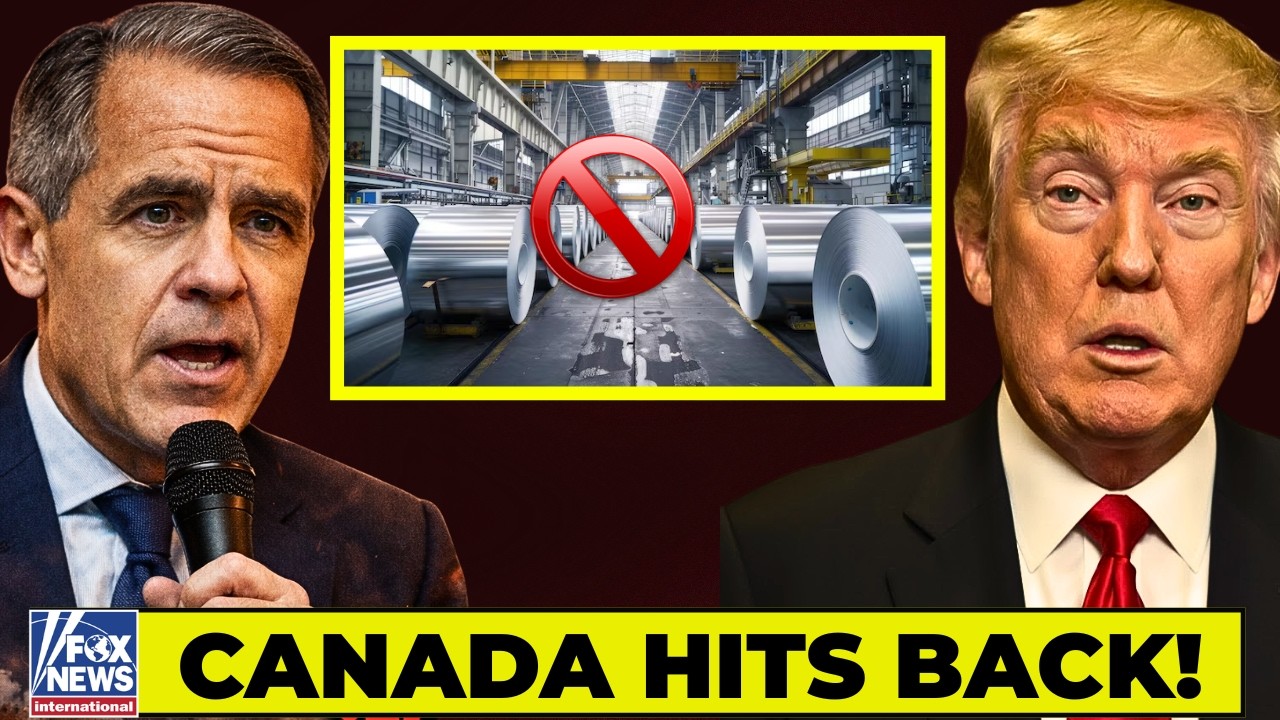
Ottawa responded swiftly. Following a dollar-for-dollar approach, Canada imposed 25 percent reciprocal tariffs on $12.6 billion worth of American steel products and $3 billion in aluminum, along with an additional $14.2 billion in U.S. goods, including tools, computers, display monitors and sports equipment. These measures were layered on top of earlier countertariffs introduced in response to tariffs enacted under the International Emergency Economic Powers Act. By late spring, nearly $30 billion in American exports faced Canadian retaliation.
The escalation did not stop at raw materials. The United States expanded the scope of its tariffs to include derivative products — manufactured goods containing steel and aluminum. In some cases, the duty applies to the full value of the product; in others, to the metal content alone. Either way, costs have risen across supply chains that were designed for seamless cross-border trade.
The economic consequences are beginning to surface. Industry estimates suggest that the steel and aluminum tariffs could add as much as $1,500 to the cost of a U.S.-manufactured automobile. General Motors has projected between $3 billion and $4 billion in tariff-related costs as part of its forward-looking risk outlook for 2026. For manufacturers operating on narrow margins, such increases are not theoretical. They affect hiring decisions, capital investment and pricing strategies.
The broader macroeconomic picture is also shifting. Economists estimate that the 2025–2026 tariff cycle has reduced Canadian gross domestic product by between 1.5 and 2 percent. Canadian households are absorbing an estimated $1,700 to $2,000 annually in higher costs. American manufacturers that rely on Canadian metals report rising input expenses that are difficult to pass on fully to consumers without dampening demand.
In September, Canada announced it would remove many of its March countertariffs on American goods that qualify for tariff-free treatment under the United States–Mexico–Canada Agreement (USMCA). But Ottawa left in place duties on steel, aluminum and automobiles — sectors where American tariffs remain. The gesture signaled both flexibility and resolve: a willingness to reduce tensions, but not unilaterally.
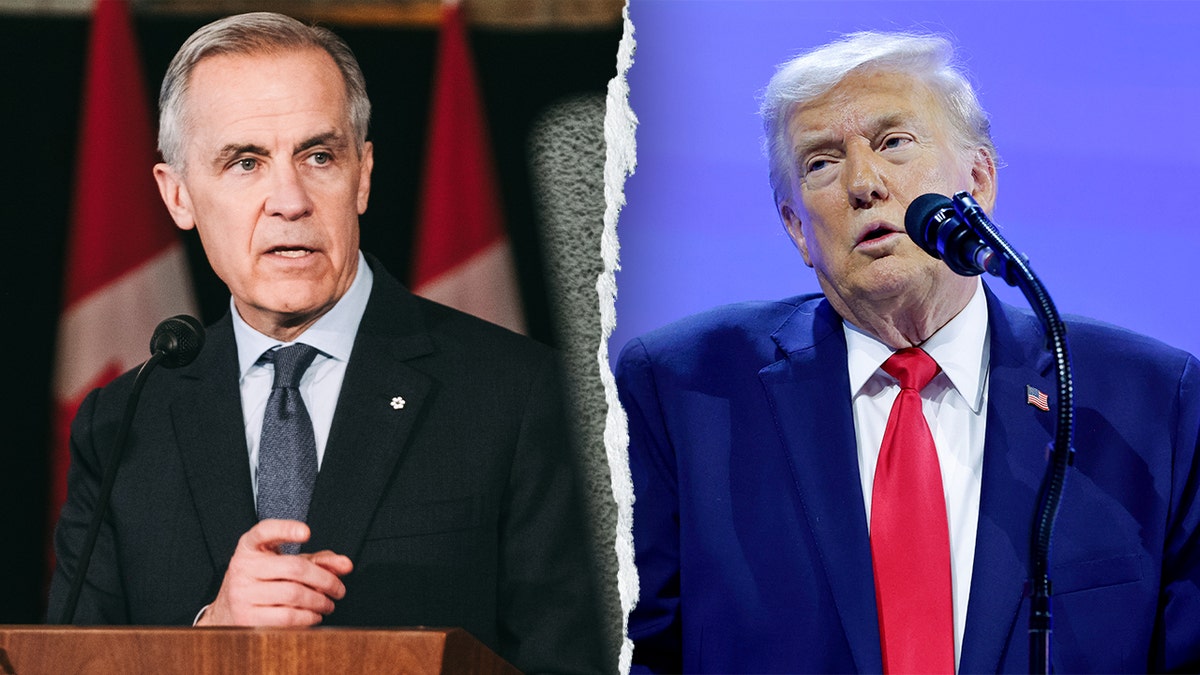
Prime Minister Mark Carney has framed the dispute as a matter of sovereignty and mutual respect. Speaking at a steel plant in Ontario, he emphasized that Canada remains open to negotiations “under a position where there is respect for Canadian sovereignty and we are working toward a common approach.” At the same time, he acknowledged that a near-term resolution appears unlikely, with discussions potentially folding into the mandatory 2026 review of the USMCA.
The review deadline, set for July 1, 2026, now looms large. Trade officials on both sides describe ongoing technical conversations as constructive, even as political rhetoric intensifies. Dominic LeBlanc, Canada’s trade minister, has indicated that while the USMCA remains a trilateral framework, disputes over industrial tariffs may ultimately require bilateral agreements.
What makes the current standoff particularly consequential is not only its scale, but its timing. Global supply chains are already adjusting to geopolitical fragmentation and shifting trade alliances. Each month that tariffs remain in place encourages companies to seek alternative suppliers and routes. Once those shifts harden into long-term contracts and infrastructure investments, reversing them becomes more difficult — even if tariffs are eventually lifted.
The White House maintains that Section 232 grants the president broad authority to safeguard national security. Yet critics argue that applying the measure to Canada risks undermining a partnership that underpins North American defense integration and industrial cooperation. Canadian steel and aluminum are deeply embedded in American military procurement and energy infrastructure. Treating those imports as security threats has been viewed in Ottawa as both factually flawed and diplomatically provocative.
For businesses on both sides of the border, the most damaging factor may be uncertainty. Tariff announcements have been accompanied by shifting timelines and evolving justifications, complicating long-term planning. Executives in manufacturing and construction describe a climate in which investment decisions are postponed and expansion plans re-evaluated.
The United States and Canada have weathered trade disputes before. But rarely have they unfolded against such a backdrop of economic volatility and political unpredictability. As the USMCA review approaches, both governments face a choice: entrench a cycle of retaliation or recalibrate toward stability.
For now, the tariffs remain. Factories absorb higher costs. Households feel incremental price increases. And a partnership once defined by integration finds itself tested by a policy that has redrawn economic boundaries with unusual speed.