In a speech delivered thousands of miles from Ottawa, Prime Minister Mark Carney offered what amounted to a quiet but unmistakable reframing of Canada’s place in a fractured global economy. Speaking at the Canada-India Forum in Mumbai, Mr. Carney did not name President Donald Trump, nor did he raise his voice. Yet his message — that the era of unguarded economic interdependence has given way to one of strategic autonomy — carried an implicit critique of Washington’s recent trade posture.

Over the past two decades, Mr. Carney argued, crises in finance, public health, energy and geopolitics have exposed the risks of extreme global integration. Multilateral institutions that once anchored stability — the World Trade Organization, the United Nations and global climate forums — now face strain. In their place, he suggested, great powers have begun wielding tariffs as leverage, financial systems as coercive tools and supply chains as pressure points. “When the rules no longer protect you,” he said, “you must protect yourself.”
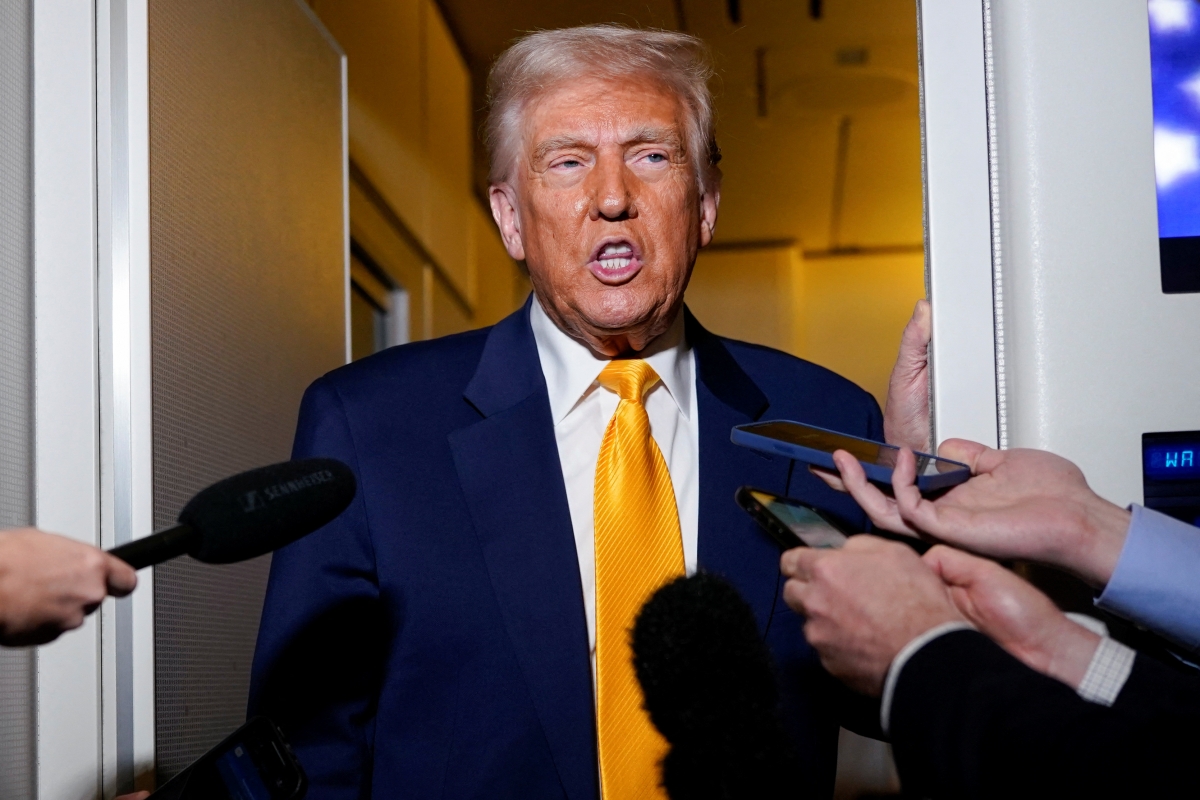
The remarks come as the United States, under Mr. Trump’s renewed leadership, signals its willingness to impose a baseline tariff on imports, potentially raising duties to 15 percent. The president has framed such measures as the price of access to the American market — a market that remains indispensable for Canada, which sends roughly three-quarters of its exports south of the border. Though the U.S. Supreme Court has weighed in on aspects of executive authority over trade, uncertainty lingers over how far and how long such tariffs could extend.
Asked directly whether Canada should prepare for a world in which tariffs are simply the cost of doing business with the United States, Mr. Carney responded with characteristic composure. Yes, he acknowledged, the administration in Washington has been clear that market access may come with a price — sometimes in tariffs, sometimes in regulatory changes, sometimes in investment commitments on American soil. But he noted that many such measures are temporary or subject to conventional trade agreement processes. Even so-called Section 232 actions, he observed, are designed to address specific perceived dislocations and carry time limits.
Rather than contest the premise of tariffs head-on, Mr. Carney pivoted to a broader strategic argument. Countries, he said, are increasingly concluding that they must develop greater strategic autonomy. A nation that cannot feed itself, fuel itself or defend itself has few options. In that formulation, the issue is not retaliation but resilience — not isolation but diversification. If access to one market becomes more costly, the answer is not withdrawal but the cultivation of many markets.
To that end, Mr. Carney outlined a series of domestic policy measures aimed at strengthening Canada’s structural competitiveness. His government has introduced what it calls a “super deduction,” allowing a 100 percent tax write-off on investments ranging from manufacturing equipment to artificial intelligence infrastructure, research and development, clean energy and electric vehicles. Coupled with new investment tax credits across the clean electricity supply chain — from critical minerals to energy storage — these steps reduce Canada’s marginal effective tax rate on investment to 13 percent, below that of the United States and roughly half the Group of 7 average.
Equally significant is an effort to streamline regulatory approvals. Canada has long been criticized for protracted permitting processes, particularly for large-scale infrastructure and resource projects. Mr. Carney pledged that major projects would be approved within two years, in cooperation with provincial governments. The message to investors was clear: Canada intends not merely to withstand tariff pressure but to compete structurally by lowering costs and accelerating development.
Behind the public address lies a more intricate web of consultations and strategic planning. According to officials familiar with the preparations, Mr. Carney’s team engaged with former International Monetary Fund advisers and trade experts to craft a framework centered on diversification, particularly in the Indo-Pacific. India features prominently in that vision. Both Ottawa and New Delhi have signaled interest in expanding cooperation in clean energy, critical minerals and advanced manufacturing, sectors viewed as essential to long-term economic security.
The emphasis on resilience also reflects domestic pressures. Canada’s clean energy and mining industries, facing both global competition and supply chain volatility, have urged the government to secure stable partnerships and reduce exposure to geopolitical shocks. The strategy articulated in Mumbai suggests that these industry concerns have been woven into a broader doctrine — one that Mr. Carney described as “value-based realism.” It is a posture that seeks alliances grounded in shared interests while acknowledging a more transactional global environment.

Markets have responded with caution rather than panic. Analysts note that while talk of tariffs tends to rattle investors, the prospect of deeper Canada-India ties and expanded Indo-Pacific engagement offers potential offsets. Much will depend on how Washington ultimately formalizes its trade measures and whether disputes are channeled through established frameworks such as the United States-Mexico-Canada Agreement.
For now, the situation remains fluid. Mr. Carney’s speech did not announce retaliation, nor did it close the door on negotiation with Washington. Instead, it signaled a strategic realignment: a willingness to adapt to a world in which economic integration is no longer assumed to be benign. Whether this approach will blunt the leverage of American tariffs or merely redefine the terms of engagement remains to be seen. But in Mumbai, before an audience of global business leaders, Canada’s prime minister made one point unmistakably clear — his country does not intend to pay indefinitely for access; it intends to build its own leverage.