Mark Carney’s Doctrine of Strategic Autonomy Signals a New Phase in Canada’s Global Strategy
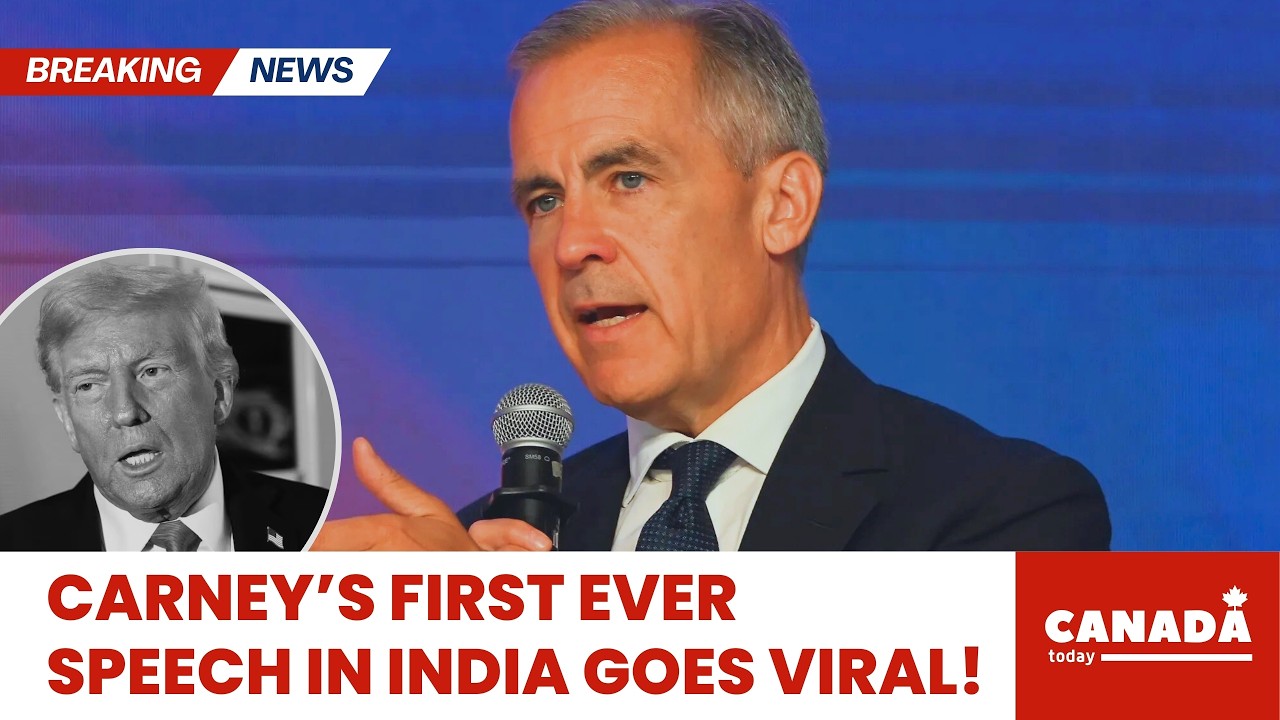
MUMBAI — On a global stage crowded with executives, policymakers and investors, Mark Carney did not raise his voice. He did not invoke President Trump by name. Yet his meaning was unmistakable.
Over the past two decades, Mr. Carney argued, a succession of crises — financial collapse, pandemic disruption, energy shocks and geopolitical conflict — has exposed the fragility of extreme global integration. The very architecture that once promised efficiency and interdependence has revealed new forms of vulnerability. Supply chains can be weaponized. Financial infrastructure can be used as leverage. Tariffs can become instruments of coercion rather than tools of policy.
In that framing, Mr. Carney was not merely describing volatility. He was diagnosing rupture.
His remarks come at a moment when President Donald Trump has made clear his view that access to the American market carries a price — whether in tariffs, regulatory adjustments or domestic investment commitments. A baseline tariff, possibly rising to 15 percent, has been floated as a durable feature of trade policy. The message from Washington is direct: market access is transactional.
Rather than contesting that premise with outrage, Mr. Carney offered something else — a strategy.
“When the rules no longer protect you, you must protect yourself,” he said, articulating what might be called a doctrine of strategic autonomy. It is a phrase increasingly heard in Europe and parts of Asia, but in Mumbai it carried specific weight. A country that cannot feed itself, fuel itself or defend itself, Mr. Carney suggested, has limited leverage in a world where economic integration is no longer neutral.
The setting underscored the point. Speaking in Mumbai, Mr. Carney emphasized partnership with fast-growing economies rather than dependence on any single market. The implicit contrast was clear: diversification over concentration, resilience over reaction.
This is not isolationism. Nor is it a retreat from globalization. It is an argument for recalibration.
Canada’s response, Mr. Carney said, will not be to wait for the next announcement from Washington. Instead, it will seek to lower structural costs at home and deepen long-term relationships abroad. He outlined a broad-based “super deduction” allowing a 100 percent tax write-off on investments ranging from manufacturing equipment to research and development and clean energy infrastructure. Additional tax credits across the clean electricity supply chain — from critical minerals to storage — aim to reduce Canada’s marginal effective tax rate on investment to 13 percent, below that of the United States and roughly half the G7 average.
The message to investors was straightforward: if tariffs raise the cost of access to one market, Canada intends to become more competitive everywhere else.
He also pledged to streamline project approvals, promising that major initiatives would receive decisions within two years in coordination with provincial governments. Canada, long criticized for regulatory bottlenecks, is seeking to signal that capital will encounter fewer delays.
In this sense, Mr. Carney’s posture differs from reactive trade politics. Rather than countering tariffs with tariffs, he is attempting to neutralize leverage through structural reform. By lowering investment barriers and broadening trade relationships, Canada hopes to reduce its exposure to unilateral pressure.
The strategy carries risks. The United States remains Canada’s largest trading partner by a wide margin. Geography and deeply integrated supply chains cannot be unwound without cost. Even a successful diversification effort would take years to materially rebalance trade flows. In the short term, businesses may still confront uncertainty if tariffs become embedded features of American policy.
Yet Mr. Carney’s argument is less about immediate insulation and more about trajectory. If the global order is shifting from rule-based multilateralism toward transactional power politics, then medium-sized economies must accumulate options. Autonomy, in this formulation, is not self-sufficiency in the autarkic sense but the ability to choose among partners.
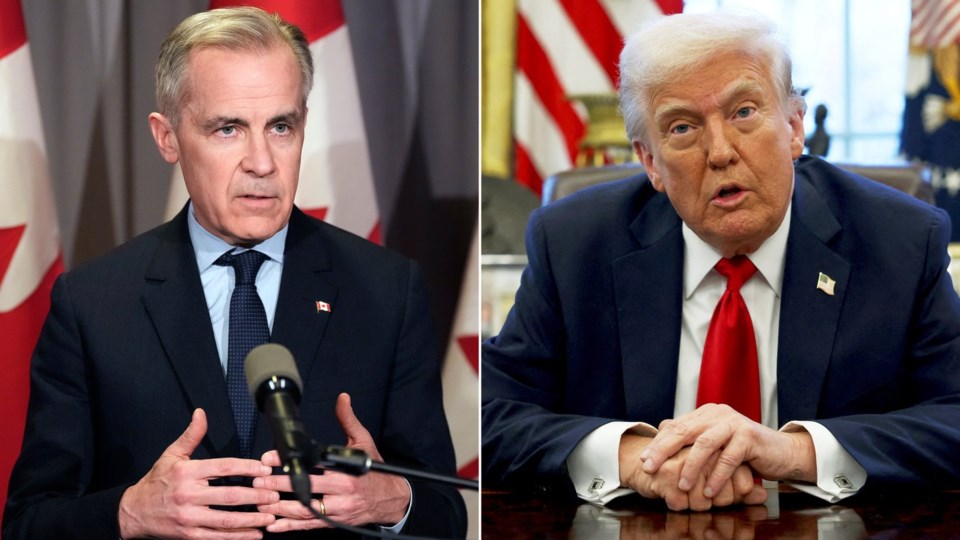
Asked what concerned him most about the current environment, Mr. Carney struck a measured tone. He described himself as cautiously optimistic, citing conversations with a range of countries eager for constructive agendas. India, he suggested, embodies the forward-looking confidence he sees as essential. So, he implied, does Canada.
The subtext was clear: enduring relationships reduce the anxiety generated by episodic volatility. In a world where headlines can pivot on a social media post, reliability becomes a strategic asset.
Whether this doctrine will succeed depends on execution. Tax incentives must translate into productive investment. Regulatory reform must prove durable. Trade diversification must yield tangible agreements rather than aspirational communiqués. Above all, Canada must persuade businesses that its environment offers stability amid geopolitical churn.
Still, the speech in Mumbai marked a departure from defensive rhetoric. It was not a lament about lost certainties. It was an attempt to redefine strength.
If access to a dominant market comes at a price, Mr. Carney’s argument runs, then build the capacity to bargain. In an era of weaponized interdependence, autonomy becomes leverage.