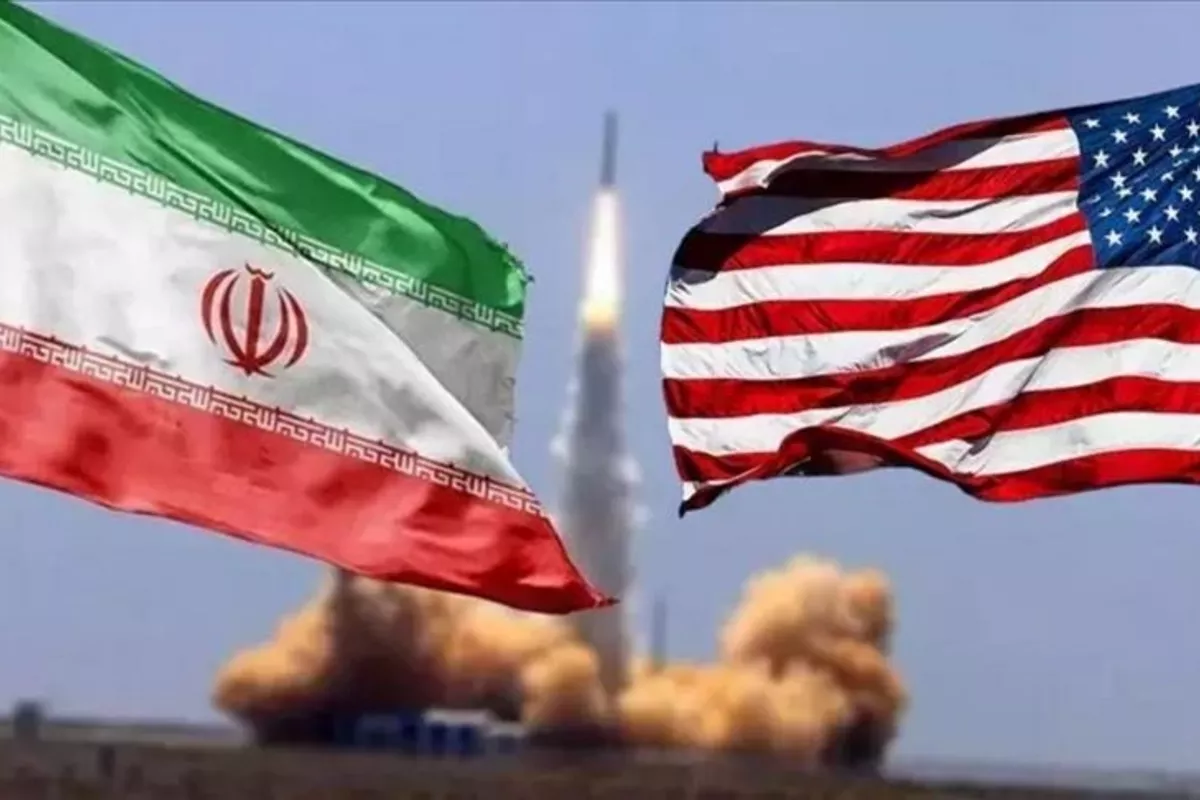
In the early hours of Saturday morning, as indirect nuclear negotiations between Washington and Tehran were still described as active, the United States and Israel launched coordinated airstrikes on Iranian targets, including facilities linked to the country’s nuclear and military infrastructure. The operation, announced by President Trump as a necessary step to prevent Iran from obtaining a nuclear weapon, immediately shifted the diplomatic landscape from fragile engagement to open confrontation. For allies across Europe and Asia, the question was not only what would follow in the Middle East, but how to respond. In Ottawa, that calculation is unusually delicate.
Prime Minister Mark Carney has so far chosen restraint. In a brief statement, the government reiterated Canada’s long-standing position that Iran must not acquire nuclear weapons, while calling for de-escalation and the protection of civilians. Notably absent was any endorsement of the strikes themselves. Nor did Canada signal participation in military operations. The language reflects a careful attempt to align with nonproliferation goals without explicitly validating the timing or method of the attack.
The timing is central to the unease. Just days earlier, mediators in Geneva and Muscat had indicated that discussions between American and Iranian officials were progressing, with proposals reportedly on the table to cap uranium enrichment and expand International Atomic Energy Agency verification. While skepticism about Iran’s commitments has persisted among Western security officials, the fact that negotiations were ongoing complicates the narrative of imminent necessity. Critics in Europe have questioned whether the strikes risk foreclosing diplomatic channels that had not yet been exhausted.
For Canada, the dilemma is structural. The country is deeply integrated into American security architecture through NATO, NORAD and the Five Eyes intelligence alliance. Canadian Armed Forces personnel are stationed in several Gulf states, including Qatar and Bahrain, where Iranian retaliation has already taken the form of missile and drone launches. Heightened alert levels and force protection measures have reportedly been implemented. In that sense, even a formally non-participatory Canada is exposed to the operational consequences of escalation.
At the same time, Ottawa has spent the past year advancing a strategy aimed at diversifying economic and diplomatic partnerships. Mr. Carney was in India pursuing trade and energy agreements when the strikes occurred, part of a broader effort to reduce Canadian reliance on a single market. The Middle East crisis reinforces both the urgency and the risk of that approach. Rising oil prices could benefit Canadian producers in the short term, yet sustained regional instability threatens global growth and supply chains.
Allied responses offer a spectrum of positioning. Britain acknowledged the strikes but emphasized defensive readiness rather than offensive alignment. France and Germany called for restraint and renewed diplomacy. Spain issued sharper criticism. Canada’s posture so far resembles that of other middle powers closely linked to Washington but wary of appearing to endorse unilateral military escalation during negotiations.
Domestically, political lines are predictable but consequential. Conservative leader Pierre Poilievre has framed the strikes as a firm stand against a regime that supports militant proxies and suppresses dissent. New Democratic Party leader Jagmeet Singh has criticized the action as destabilizing and urged a return to diplomacy. Mr. Carney’s centrist formulation — support the goal, not the operation — seeks to avoid both charges of weakness and complicity.
The broader strategic question is whether this episode alters Canada’s room to maneuver. When the United States acts without prior allied consultation, even close partners must recalibrate. Canada’s influence over American decision-making is limited; its ability to absorb secondary effects is not. Energy markets, diaspora communities, cyber threats and regional deployments all sit within Ottawa’s risk horizon. The government’s emphasis on multilateral frameworks, including potential United Nations engagement, reflects a belief that institutional channels remain essential even when great powers bypass them.
None of this suggests rupture. Canada and the United States share extensive security ties and economic interdependence that make divergence measured rather than dramatic. But the distinction between solidarity and endorsement matters in international politics. If negotiations with Iran were indeed on the cusp of tangible constraints, as some mediators suggested, the perception that diplomacy was interrupted rather than exhausted could shape global opinion — and Canada’s standing within it.
For Mr. Carney, the challenge is not to choose between alliance and autonomy, but to sustain both. The strikes have injected volatility into an already fragile region, and retaliation may widen the conflict before diplomatic channels can be revived. Ottawa’s response — deliberate, calibrated and publicly restrained — signals a preference for strategic distance without strategic detachment. In a moment when events are moving faster than institutions, that balance may prove difficult to maintain, yet essential to Canada’s long-term posture in a world where crises rarely wait for consensus.