In a stunning geopolitical upheaval, U.S. Ambassador Pete Hoekstra bluntly declared, “We do not need Canada,” exposing Washington’s deep anxiety as Prime Minister Mark Carney orchestrates groundbreaking alliances with China and secures massive investment deals in Qatar, signaling a decisive shift in North American influence and global economic power.

The United States is facing an unprecedented challenge to its longstanding economic dominance over Canada. Ambassador Hoekstra’s candid dismissal of Canada’s importance marks a rare display of panic within Washington’s ranks, revealing the profound unease triggered by Canada’s ambitious global pivot under the leadership of Prime Minister Mark Carney.
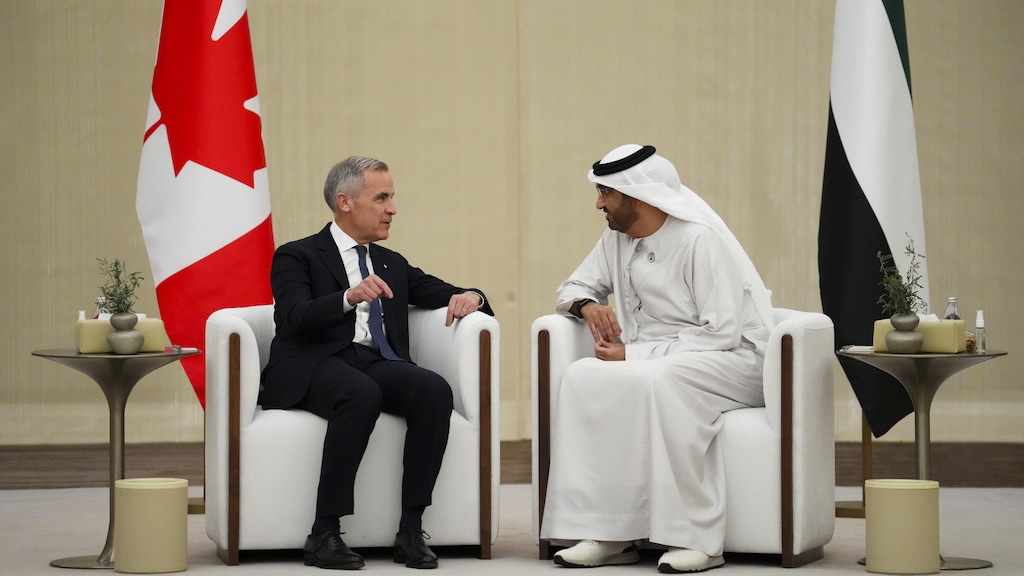
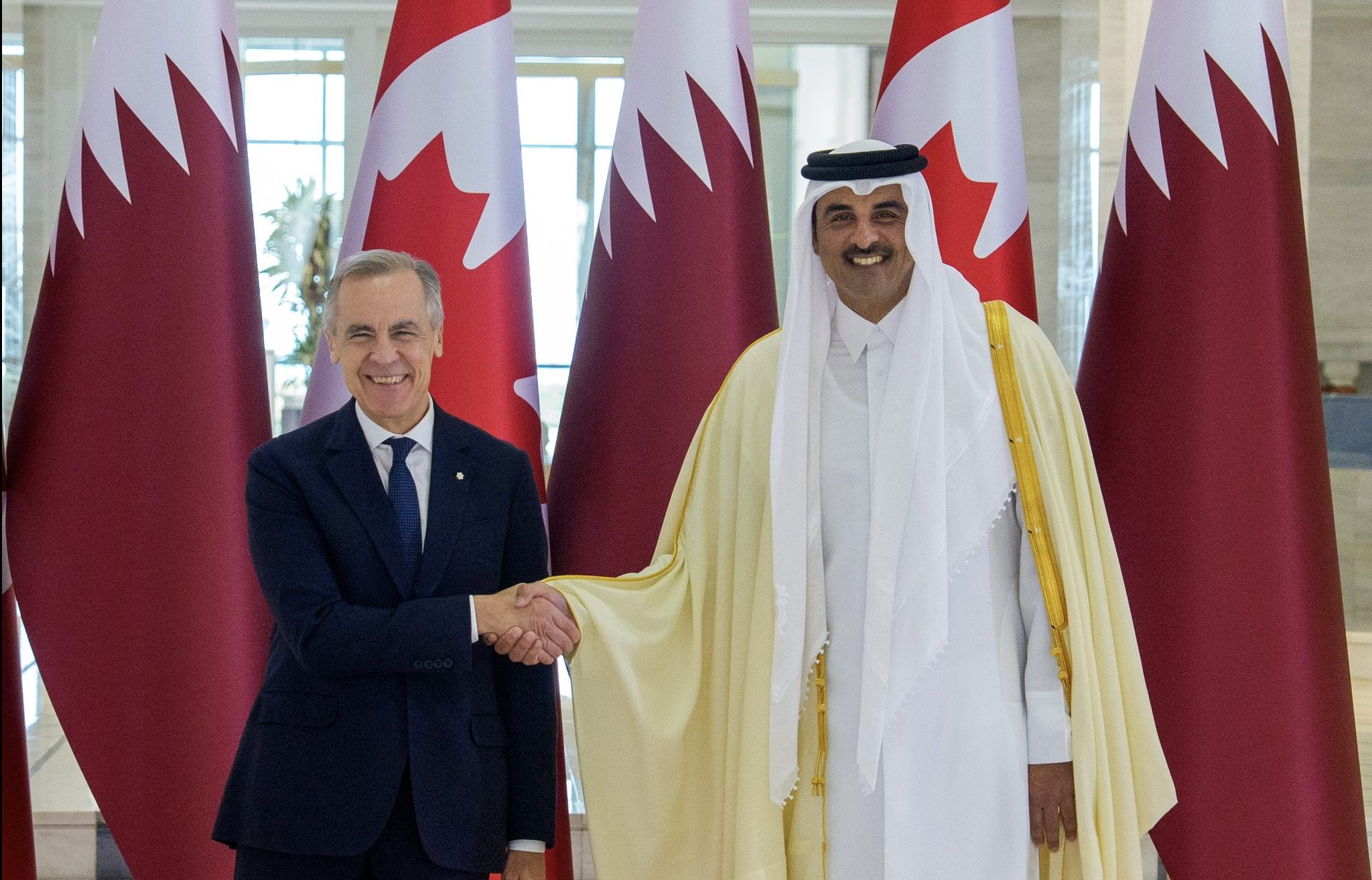
This alarming statement was made on the very week Canada signed landmark agreements with China—a move that dramatically reduced electric vehicle tariffs and eliminated restrictions on canola exports. At the same time, Carney was not idling; he touched down in Qatar to negotiate massive capital investments targeting Canada’s infrastructure, energy, and long-term economic growth.
Ambassador Hoekstra’s remarks were not a show of bravado but a defensive reaction to shifting geopolitical realities. Canada’s strategy is breaking the old assumption that it had no alternative but to rely heavily on the U.S. Over decades, Washington leveraged this dependence to maintain influence, but China and Qatar’s entrance are now dismantling that control.
Mark Carney’s arrival in Qatar marks the first visit by a sitting Canadian prime minister to the Gulf state, underscoring the significance of this strategic alliance. Qatar’s sovereign wealth fund, valued in the hundreds of billions, offers Canada unprecedented access to patient, long-term capital investment, reshaping the country’s economic landscape beyond short-term political shifts.
Unlike China’s focus on trade, Qatar’s emphasis on capital flows carries transformative potential. Investment capital can rewrite the foundations of a nation’s economy, fueling infrastructure projects, energy development, and transportation networks that will define Canadian growth for decades well beyond election cycles and political turbulence.
Carney’s mission in Qatar was clear: pitch Canada as a stable, secure, and lucrative destination for global investment. This was no ordinary diplomatic gesture—it was a direct challenge to the traditional economic order, a declaration that Canada will no longer passively accept the rules dictated by Washington.
U.S. officials have long taken Canada’s economic integration for granted, relying on interconnected supply chains and shared manufacturing sectors. But the bold moves by Carney, bolstered by China’s trade agreements and Qatar’s capital injections, signal a new era of Canadian autonomy, calling into question the effectiveness of America’s coercive trade tactics.
Washington’s leverage, built on decades of economic dependency, is evaporating. Tariffs and diplomatic threats lose potency when a nation has diversified its partnerships and secured solid investment from powerful global players. Pete Hoekstra’s abrupt dismissal was a rare admission of Washington’s shrinking influence and growing frustration.
This panic was fueled not by empty posturing but by real momentum. Canada’s newfound ability to attract capital independently means it is no longer beholden to U.S. economic whims. The flow of massive funds from Qatar will solidify Canada’s position as a global investment hub, making Washington’s threats toothless and ineffective.
Such shifts have profound consequences for North American relations. The relationship between the U.S. and Canada is evolving from one of dependence to one of equal footing—if not cautious competition. Carney’s leadership is at the helm of this transformation, leveraging global systems, trade agreements, and financial capital to reposition Canada globally.
Carney’s credentials amplify his influence. Known globally from his tenure as governor of the Bank of Canada and the Bank of England, he brings unparalleled credibility to negotiations. His proven ability to steer through volatile markets enhances confidence among foreign investors, reassuring them about Canada’s economic stability and long-term prospects.
This synergy between strong leadership and strategic alliances is unraveling the traditional U.S.-Canada dynamic. The American administration, rattled by these developments, now confronts a Canada that no longer asks for permission or waits for Washington’s approval—an autonomous global actor shaping its own destiny.
Canada’s new partners, particularly China and Qatar, provide not just alternative markets but pathways toward sustained growth insulated from sudden political shifts. This diversification reduces America’s ability to use economic pressure as a diplomatic tool, altering the balance of power within North America and beyond.
The implications extend far beyond trade deficits or tariff disputes—they redef
ine sovereignty and control. A Canada flush with global capital can build infrastructure projects that cement its independence economically and politically. This wealth cannot be easily undermined by trade skirmishes or bellicose rhetoric from Washington.
Washington’s fading grip has opened space for Canada to recalibrate its global relationships, marking a turning point in geopolitical history. The Trump administration’s strategy of threats over cooperation inadvertently accelerated this realignment, forcing Canada to widen its international horizons and secure new lifelines.
Pete Hoekstra’s unguarded statement should be viewed not as U.S. strength but as the admission of an eroded influence, a warning sign amid the accelerating shifts in global alliances. The U.S. may have underestimated the speed at which Canada would diversify partnerships and secure alternative avenues for growth.
This evolving scenario demands urgent attention from policymakers in Washington. As Canada embraces significant capital inflows and expands trade networks under Carney’s leadership, the traditional North American economic order faces structural upheaval, challenging U.S. supremacy in the region.
Canada’s trajectory now projects a future where power balances are redistributed through sustained investment rather than sudden trade wars. This redefinition will have ripple effects on industries, international relations, and economic policies across both sides of the border and globally.
The challenge for the U.S. is stark: adapt to a new reality where Canada is a strategic equal, not a subordinate, or risk losing a vital economic and political ally altogether. The question remains whether American leadership can respond constructively or will cling to outdated narratives of control and dominance.
As Mark Carney continues his diplomatic and economic engagements worldwide, the global financial community watches closely. His efforts underscore a sophisticated vision where capital, confidence, and credibility create durable partnerships that transcend volatile political climates and transactional diplomacy.
Ultimately, this critical juncture reveals the resilience and savvy of Canadian leadership navigating complex global dynamics. By harnessing investment capital and building diversified alliances, Canada positions itself as a major player on the world stage—one Washington no longer controls but must reckon with.
The breaking point, signaled by Hoekstra’s rare public outburst, encapsulates a pivotal moment in North American history. Canada is not drifting away; it is accelerating forward on its own terms—confident, well-capitalized, and strategically independent in a rapidly evolving world order.
This seismic shift calls for immediate recalibration in U.S. foreign and economic policy. The realization that Canada no longer needs to “ask” or “seek” U.S. approval should drive Washington toward partnership renewal rather than dismissive rhetoric, or risk alienating a neighbor entering its own era of opportunity and influence.
The days of American economic totality over Canada have passed. The transformation underway is real, substantive, and irreversible—ushered by bold leadership, strategic investment, and global confidence that override old paradigms of dominance and dependency.
The next chapter in U.S.-Canada relations will not be shaped by threats or unilateral demands but by nuanced engagement, mutual respect, and recognition of Canada’s right—and ability—to chart its own course amid the complexities of global power.
Mark Carney’s decisive actions herald a new economic era, compelling all global stakeholders, including Washington, to reconsider their approaches. The question remains: will the U.S. acknowledge and adapt to this new reality, or will it face the consequences of losing its once indispensable neighbor on the world stage?