The moment U.S. and Israeli forces launched coordinated strikes on Iran, the global balance shifted. Branded “Operation Epic Fury,” the decision by Donald Trump to authorize major combat operations without congressional approval immediately raised alarms far beyond the Middle East. For Canada, the timing could not have been more consequential. Prime Minister Mark Carney was in Mumbai finalizing trade and energy diversification deals when the bombs fell, forcing Ottawa into a rapid and carefully calibrated response.
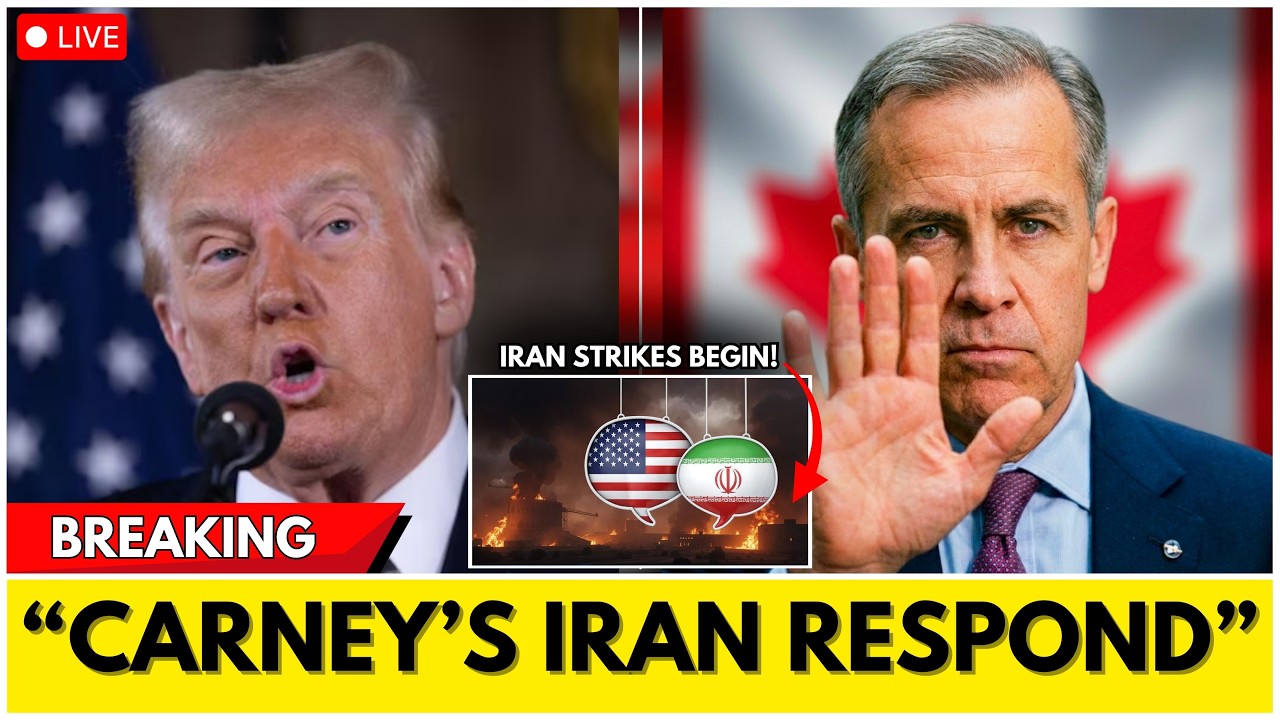
Carney’s statement revealed a tightrope walk. Canada voiced support for preventing Iran from obtaining nuclear weapons, aligning with long-standing Western policy, while explicitly distancing itself from the military operation itself. Ottawa confirmed it was neither consulted nor involved and would not participate. This language was deliberate. It endorsed the objective but not the method, allowing Canada to remain aligned with allies without legitimizing unilateral strikes against a sovereign state. The distinction matters under NATO, where collective defense obligations apply only to attacks on member territory, not preventive wars abroad.
Domestically, the response exposed political fault lines. Conservatives quickly backed the strikes, framing them as necessary action against a hostile regime. The left condemned the move as reckless escalation and a violation of international law. Carney positioned himself between these poles, neither hawkish nor pacifist, reinforcing a centrist image but also introducing strategic ambiguity. Internationally, Canada’s stance mirrored that of other “middle powers” such as Australia and the UK, which supported U.S. goals while keeping distance from execution. The common thread was proximity to U.S. security architecture rather than ideology.
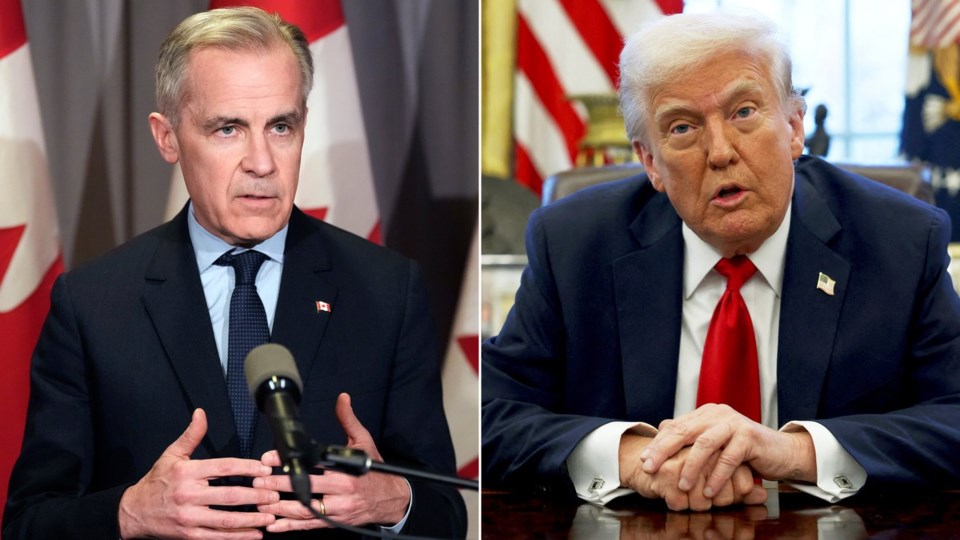
The deeper concern for Ottawa lies in precedent. Trump’s willingness to strike Iran based on perceived future threats, without congressional authorization or allied consultation, underscores an expansive view of presidential war powers. Historically, U.S. presidents have acted this way before, but the scale and rhetoric surrounding Iran revive fears of preventive war as a normalized tool. For Canada, this raises uncomfortable questions. If military force can be justified by hypothetical threats, economic disputes, energy policy, or border issues could, in theory, be framed as national security risks.
That risk remains low but no longer unthinkable. Canada’s deep economic integration with the United States acts as both shield and vulnerability. While any attack on Canadian infrastructure would carry massive costs for the U.S. economy, Trump has repeatedly shown willingness to absorb economic pain to achieve political objectives. The Iran strikes reinforce why Carney’s diversification push — toward India, Asia-Pacific partners, and non-U.S. markets — is central to Canadian resilience. Reducing dependence limits leverage and expands strategic autonomy.
Energy markets underscore the urgency. Oil prices surged on fears that Iran could disrupt the Strait of Hormuz, validating Canada’s role as a stable supplier. Yet price spikes also risk inflation and economic slowdown at home. In this context, Carney’s strategy becomes clearer: support U.S. strategic goals where necessary, avoid entanglement in unilateral wars, and accelerate diversification in trade, defense procurement, and diplomacy. The Iran strikes did not just reshape Middle East security. They served as a stress test for Canada’s future under an unpredictable ally — and a reminder that sovereignty today is as much about insulation as it is about alliance.