The Spectacle and the Survivor: Trump’s Strife of the Union and the Theater of American Politics
On the eve of President Trump’s latest State of the Union address, the mood in Washington felt less ceremonial than surreal. The annual ritual — a constitutionally mandated report to Congress — has long blended policy with pageantry. But this year, even before the president approached the rostrum, the conversation had already drifted toward something darker and stranger: the question of the designated survivor.
The concept, at once practical and macabre, is rooted in Cold War anxieties. Each year, one member of the Cabinet is chosen to remain absent from the chamber during the State of the Union. The logic is stark. Should catastrophe strike while the president, vice president, congressional leaders, Supreme Court justices and military chiefs are gathered in one place, the absent official would assume the presidency and begin the task of reconstituting the federal government.
It is an exercise in contingency planning that underscores both the fragility and durability of American democracy. Yet in the current political climate, even this sober safeguard has taken on a theatrical air.
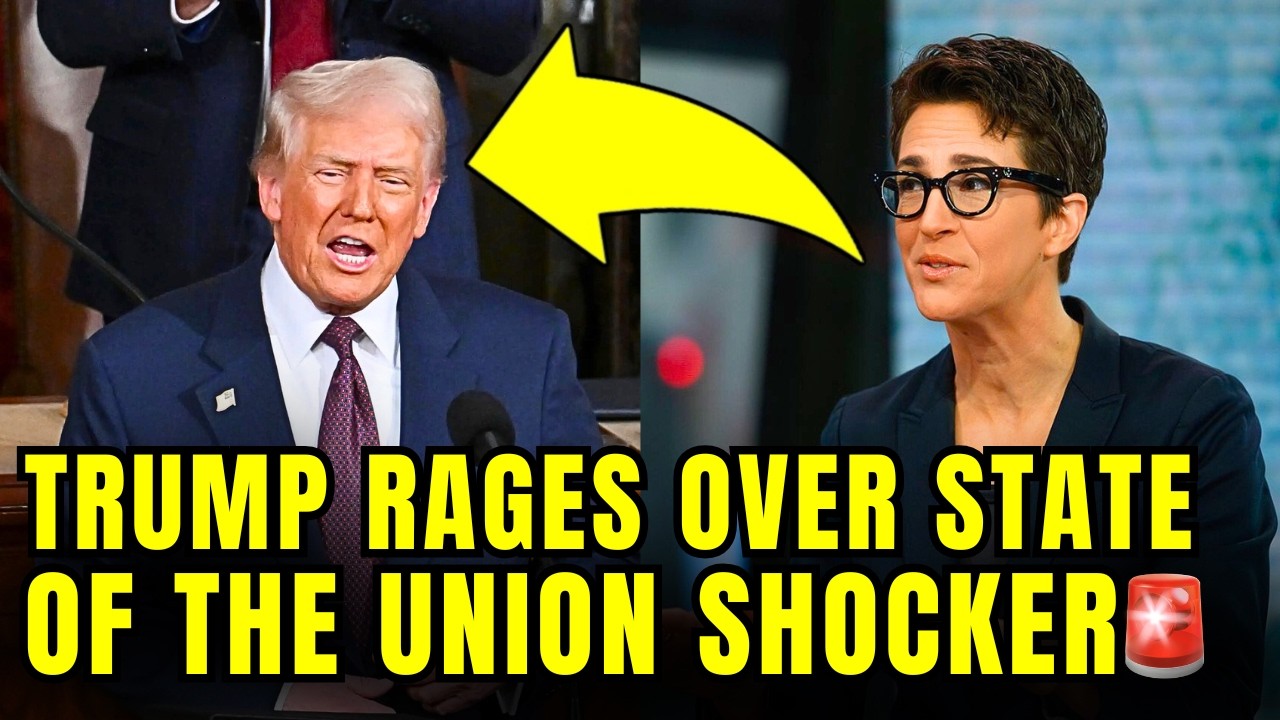
On her MSNBC program, Rachel Maddow recently devoted a segment to the speculation, leaning into the dystopian oddity of the ritual. In another era, the designated survivor might have been a relatively obscure Cabinet official, someone competent but low-profile. The selection rarely generated more than a brief headline. Now, however, the choice is freighted with symbolism.
The Trump Cabinet, marked by turnover, internal rivalries and ethical controversies, offers few uncontroversial options. Even departments traditionally considered politically quiet — Labor, Commerce, Housing — are entangled in investigations, tabloid intrigue or partisan crossfire. In such an environment, the act of naming a designated survivor can feel less like prudent governance and more like a revealing spotlight.
The irony is difficult to miss. President Trump, whose political ascent was fueled in part by his role on the reality television show The Apprentice, has often approached politics with a showman’s instinct for spectacle. The State of the Union under his tenure has reflected that sensibility: dramatic pauses, combative asides, applause lines aimed as much at television audiences as at lawmakers seated below.
Critics argue that this performative approach has contributed to a broader erosion of institutional gravity. Recent polling, cited by analysts in the days leading up to the address, suggests that the president’s approval ratings among independent voters have declined sharply compared with previous years. Whether those numbers represent a temporary trough or a more enduring shift remains to be seen. But they form the backdrop against which this year’s speech unfolded.
The designated survivor question, in this context, becomes a kind of Rorschach test. For some viewers, it is merely a morbid curiosity — a reminder of worst-case scenarios that rarely materialize. For others, it symbolizes a deeper unease about the state of governance. If the Cabinet itself is perceived as unstable or ethically compromised, the hypothetical of sudden succession feels less abstract.
Yet it is worth remembering that the mechanism endures precisely because the system is designed to outlast individual officeholders. The line of succession, codified in statute and amended over time, reflects lessons learned from war, assassination and national trauma. It is not a comment on the competence of any one administration; it is an acknowledgment of uncertainty as a permanent feature of political life.

Still, tone matters. The State of the Union is not only a policy address but also a cultural event, a shared moment when political adversaries occupy the same physical and symbolic space. When the discourse surrounding it veers into ridicule or apocalyptic speculation, that shared space can feel diminished.
Supporters of the president contend that the theatrical framing is itself a partisan construction, amplified by cable news and social media. They argue that the speech remains an opportunity to outline economic achievements, legislative priorities and national security strategies. Detractors counter that the president’s rhetoric and governing style invite satire, even demand it.
In truth, both interpretations may coexist. American politics has always contained elements of theater. What feels different now is the degree to which performance eclipses deliberation. The designated survivor, once an obscure footnote, has become a character in the drama.
As the president delivered his address, the constitutional choreography proceeded as it has for generations. Lawmakers rose or remained seated. Cameras panned. Applause ebbed and surged. Somewhere, at a secure undisclosed location, a Cabinet secretary waited — not as a punchline, but as a living embodiment of institutional continuity.
In that quiet waiting lies a reminder: beneath the spectacle, the scaffolding of government remains. It is imperfect, contested and frequently strained. But it persists, even when the theater of the absurd threatens to steal the scene.