Germany’s Engine Choice Signals a Subtle but Significant Shift Inside NATO
BERLIN — In a conference room inside Germany’s defense ministry, officials recently made a decision that could shape European air power for half a century. The question before them was technical on its surface: which engine should power the Future Combat Air System, or FCAS, the sixth-generation fighter jet being developed jointly by Germany, France and Spain. The implications, however, extended far beyond thermodynamics.
When the ballots were counted, the committee selected an engine from Rolls-Royce over a competing proposal from General Electric Aviation. The choice marked a departure from decades in which major NATO procurement decisions often defaulted to American propulsion technology. This time, Europe opted to anchor its most ambitious military aviation project to a European supplier.
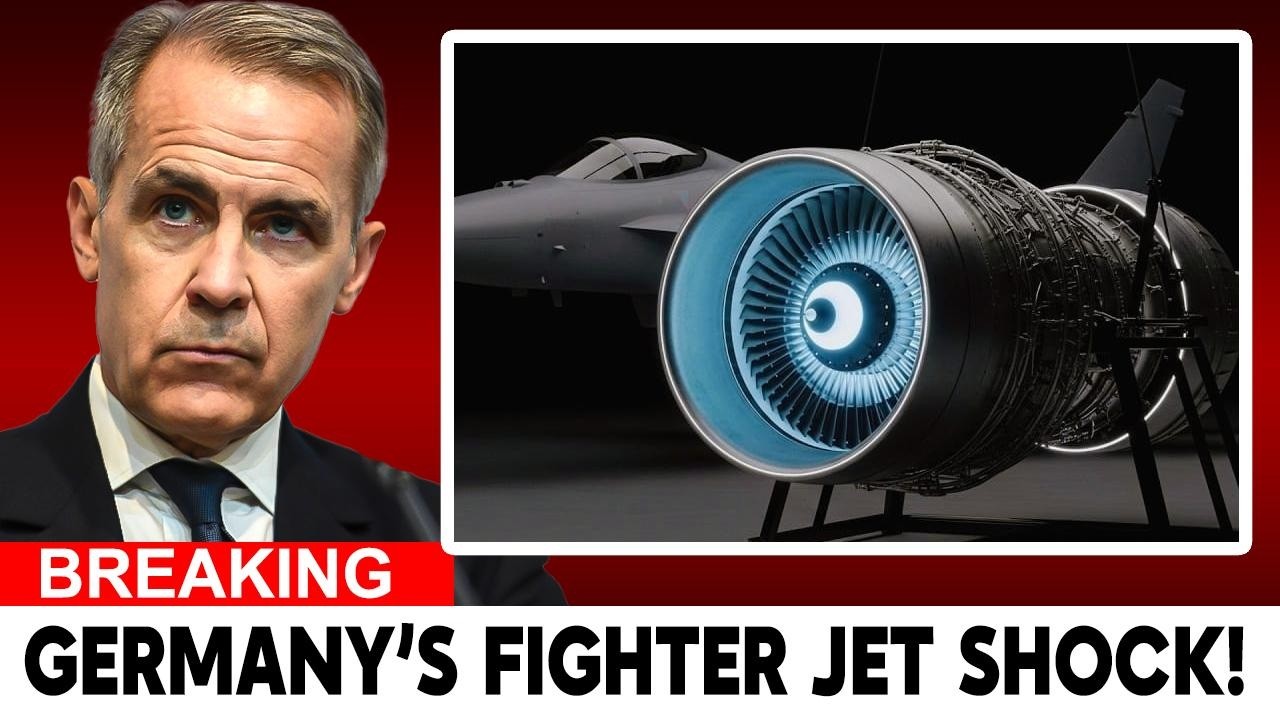
The FCAS program, designed to replace aging fleets including France’s Dassault Rafale and to modernize the German Luftwaffe, is projected to cost roughly €200 billion over its life cycle. It is not merely an aircraft but a system-of-systems concept, integrating crewed fighters, unmanned platforms and advanced sensors into a networked architecture intended to operate into the 2080s.
At issue in Berlin was the engine at the heart of that system. General Electric offered a variable-cycle design derived from American sixth-generation research, capable of adjusting airflow and thermodynamic performance to optimize thrust and fuel efficiency across flight regimes. The technology builds on decades of U.S. investment and testing within the American defense establishment.
Rolls-Royce proposed a different path, centered on an advanced architecture influenced by research into high-speed and hypersonic applications. German evaluators concluded that the British proposal offered greater long-term growth potential, particularly in areas such as thermal management and energy generation — critical requirements for aircraft expected to power sophisticated sensors and future directed-energy systems.
According to officials familiar with the deliberations, the decision was unanimous.
For Berlin, the calculus was not purely technical. It reflected a broader European conversation about industrial sovereignty and strategic autonomy. Engines produced in the United States are subject to American export regulations, which can limit the sale of aircraft incorporating U.S. components to third countries. A European-controlled propulsion system reduces that constraint and gives participating governments greater flexibility in future export policy.
France and Spain quickly endorsed the outcome. Paris has long championed European defense autonomy, while Madrid emphasized the industrial benefits for Spanish aerospace firms integrated into the program’s workshare arrangements. Germany’s own MTU Aero Engines will participate in development and production, embedding domestic expertise into the engine’s supply chain.
The choice reverberated beyond the FCAS partners. Italy, which operates the American-built F-35 Lightning II produced by Lockheed Martin, has been weighing complementary platforms for future needs. Poland, too, fields a mixed fleet that includes both the F-35 and Sweden’s Saab JAS 39 Gripen, manufactured by Saab. A German-backed European fighter with indigenous propulsion offers another option in a marketplace that is gradually diversifying.
Financial markets registered the significance. Shares of Rolls-Royce rose sharply following news of the selection, while GE’s aerospace unit saw a decline, reflecting investor expectations about long-term revenue streams attached to next-generation programs.
American officials responded with diplomatic restraint, emphasizing interoperability within NATO while acknowledging Germany’s sovereign right to choose its suppliers. The alliance’s military integration remains deep, and transatlantic cooperation on defense technology continues across numerous domains.
Yet the symbolism is difficult to ignore. For much of NATO’s history, American technological leadership effectively guaranteed that allied procurement decisions would align with U.S. industry. Europe’s defense sector has matured considerably in recent decades, buoyed by sustained investment and, more recently, the urgency created by Russia’s invasion of Ukraine.
The FCAS engine vote suggests that European governments increasingly believe their domestic and regional industries can compete at the highest levels of aerospace engineering. That confidence, once tentative, now appears institutionalized.
This does not signal a rupture within NATO. Rather, it points to a rebalancing of industrial influence inside the alliance. As European capabilities expand, procurement choices may become less predictable and more competitive.
For Washington, the lesson may be less about loss than adaptation. American firms continue to dominate global defense markets in many categories, and collaboration with European partners remains extensive. But the assumption of automatic preference is eroding.
In Berlin, the engine decision was framed as a matter of performance, cost over the aircraft’s projected 50-year life span, and long-term sovereignty. Whether the Rolls-Royce design ultimately fulfills its promise will be measured in decades of operational service.
What is clear already is that the center of gravity in allied defense technology is no longer singular. Europe’s largest economy has signaled that it intends to shape the next generation of air power not as a dependent customer, but as a co-architect.