CANADA SAYS NO: CARNEY WON’T DELAY $6B BRIDGE AS TRADE FALLOUT ERUPTS
Tensions between Canada and the United States have erupted over the Gordie Howe International Bridge, a $6.4 billion infrastructure project once hailed as a symbol of cross-border cooperation. With the bridge set to open soon and serve as a vital economic artery between Windsor, Ontario, and Detroit, Michigan, the dispute has quickly escalated into a high-stakes political confrontation between Canadian Prime Minister Mark Carney and U.S. President Donald Trump.
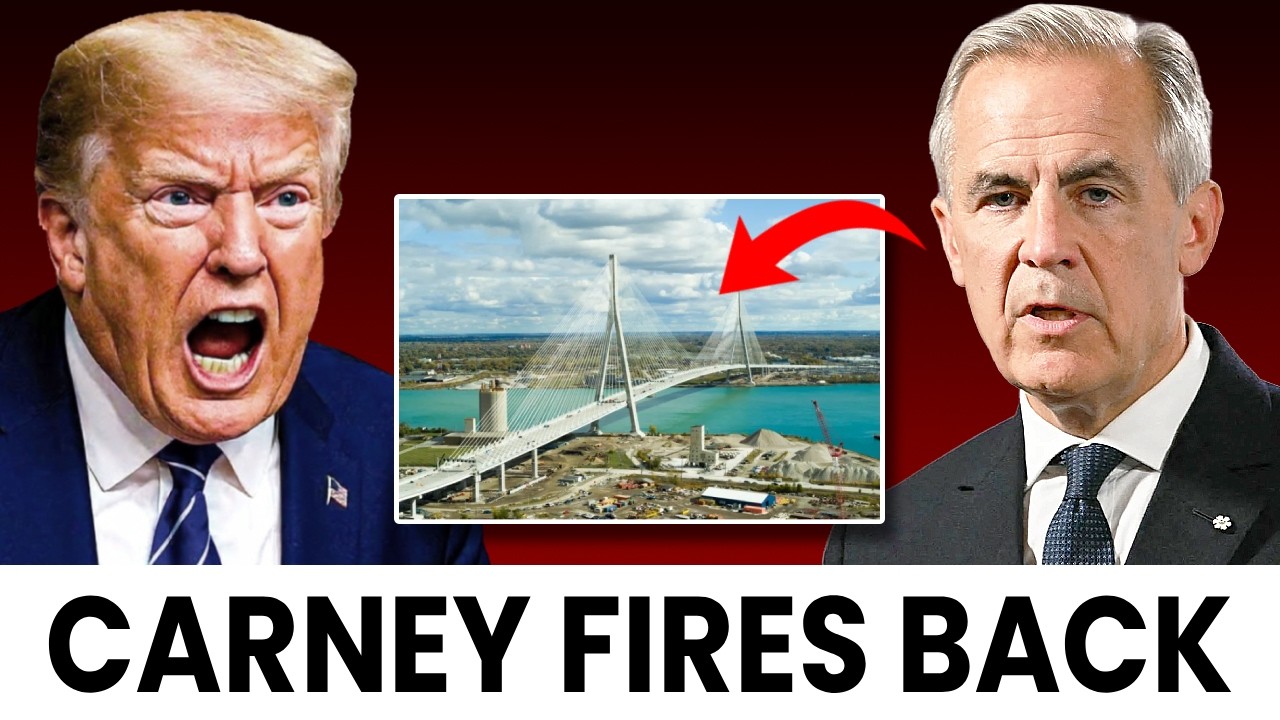
The flashpoint came after Trump publicly threatened to block or delay the bridge’s opening unless the United States receives what he called “full compensation” and greater ownership control. Posting on Truth Social, Trump argued that because the U.S. market would generate “astronomical” revenue, Washington should own at least half of the bridge. He also accused Canada of using little to no American materials — claims that immediately drew a sharp and methodical response from Ottawa.
Speaking ahead of a cabinet meeting, Carney rejected the accusations point by point. He confirmed that Canada financed the entire construction cost, paying more than $4 billion upfront, and emphasized that ownership terms were locked in under a binding 2012 agreement between Canada and the state of Michigan. Under that deal, Canada recovers its investment through tolls, after which Michigan becomes eligible for 50 percent of net toll revenue — a detail that undercuts claims the U.S. was excluded from economic benefits.
Carney also dismantled claims about materials and labor, noting that both Canadian and American steel and workers were used throughout construction. Ontario Premier Doug Ford reinforced that assessment, stating that while Canada supplied the majority of materials, the Michigan-side infrastructure was built entirely by American workers using American steel and concrete. Together, Canadian and U.S. officials framed the bridge not as a takeover, but as a joint economic project rooted in long-standing cooperation.
The stakes extend far beyond politics. The Windsor–Detroit corridor already handles hundreds of millions of dollars in trade every day, much of it tied to North America’s tightly integrated auto industry. The aging Ambassador Bridge operates near capacity, meaning any disruption can ripple across supply chains within hours. Business leaders in Michigan and Ontario have warned that delaying the new bridge would threaten manufacturing schedules, investment confidence, and thousands of jobs on both sides of the border.
As legal agreements, economic realities, and political rhetoric collide, the bridge has become a test of whether signed deals can withstand shifting nationalist pressure. For Canada, backing down could set a dangerous precedent for future infrastructure projects. For the United States, reopening ownership demands after construction risks undermining trust with its closest trading partner. With the structure physically complete and inspections underway, the coming weeks will determine whether the bridge opens as planned — or becomes another lasting symbol of a trade relationship under strain.