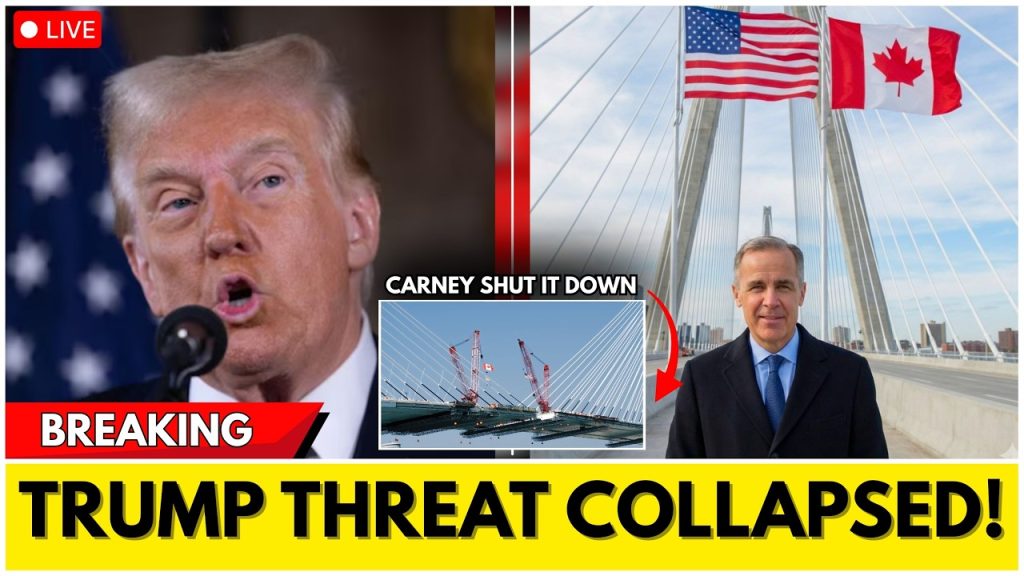
When former President Donald Trump declared on social media that he would not allow a new cross-border bridge between Detroit and Windsor to open, the message landed with the force of a trade ultimatum. The structure in question — the Gordie Howe International Bridge — is a $6.4 billion infrastructure project financed by Canada and designed to ease congestion at one of North America’s busiest commercial corridors.
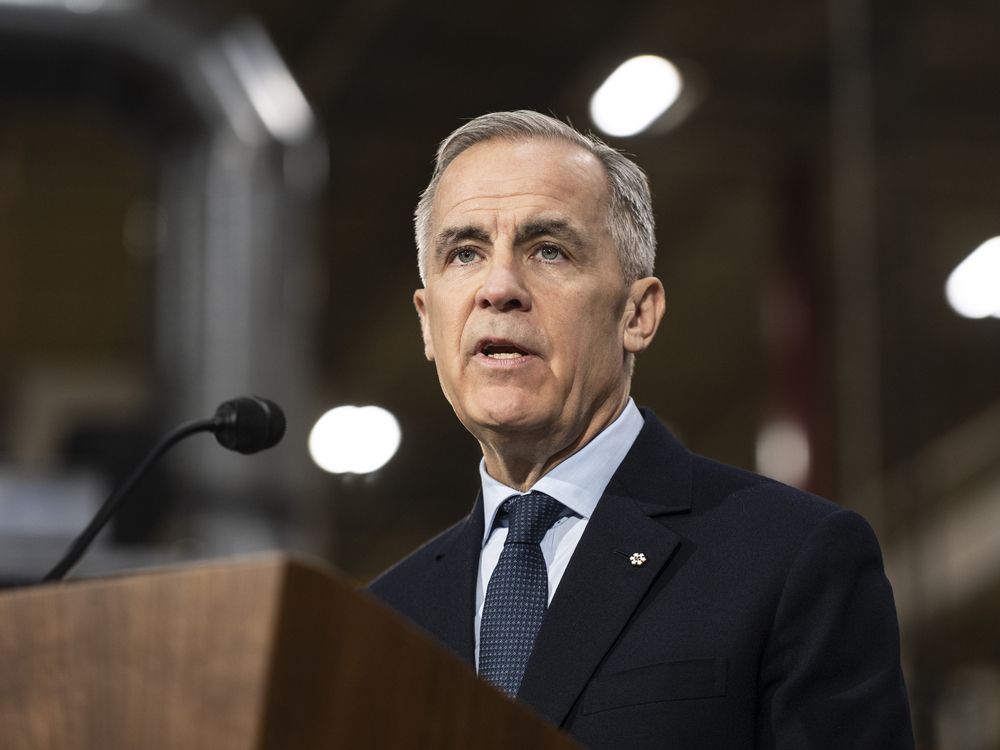
Within hours, Prime Minister Mark Carney responded not with a public rebuke but with a phone call. The next morning, speaking briefly to reporters, he summarized his position in four factual points: Canada financed construction; Michigan already owns half under a 2012 agreement; American steel and American workers helped build it; and he looked forward to its opening.
The exchange might have remained a fleeting episode of cross-border friction were it not for the political and economic context surrounding it.
The bridge spans the Detroit River, linking Interstate 75 in Michigan directly to Highway 401 in Ontario. It is intended to relieve pressure on the privately owned Ambassador Bridge, built in 1929, which has long handled a significant share of truck traffic between the two countries. Roughly a quarter of all merchandise trade between Canada and the United States crosses through the Detroit–Windsor gateway.
Mr. Trump’s post framed the bridge as leverage amid broader grievances: Ontario’s restrictions on American alcohol in provincial stores, Canadian dairy protections and a recently concluded trade arrangement between Ottawa and Beijing. The bridge, in that framing, was less infrastructure than bargaining chip.
But the ownership and financing structure complicates that narrative.
Under the 2012 Canada–Michigan Crossing Agreement, Canada agreed to cover the full cost of construction. In exchange, Michigan receives joint ownership of the completed span and, after costs are recouped through tolls, eligibility for half of future net revenues. The arrangement was negotiated under Gov. Rick Snyder, a Republican, and approved through established federal channels. The U.S. State Department issued the necessary presidential permit in 2013. During his first term, Mr. Trump publicly endorsed the project as a “vital economic link” and signed legislation allocating federal customs funding connected to the crossing.
Those details were quickly reiterated by officials on both sides of the border after Mr. Trump’s threat.
Gov. Gretchen Whitmer of Michigan described the bridge as “all about jobs,” noting that union labor from both countries had participated in construction. Senator Alyssa Slotkin warned that cancellation would raise costs for Michigan businesses and disrupt supply chains. Mr. Snyder, the former governor who helped design the deal, published an opinion piece correcting what he characterized as factual misunderstandings about ownership and funding.
The political sensitivity in Michigan is evident. The state sits at the center of the North American auto industry’s integrated supply chain. Vehicles and components routinely cross the border multiple times before final assembly. A University of Windsor study estimated that the new bridge could reduce truck crossing times by up to 20 minutes per trip, translating into billions of dollars in long-term cost savings.
Blocking the bridge, critics argued, would not only strain diplomatic ties but also risk undermining the economic interests of Michigan manufacturers and logistics companies.
There is also a competitive dimension. The Ambassador Bridge, owned by the Moroun family of Detroit, has long held a near-monopoly on heavy commercial truck traffic between the two cities. Over two decades, the family mounted legal and political challenges to the publicly financed alternative. Courts rejected those efforts, and construction of the new span proceeded.
Mr. Snyder noted in his column that a prolonged delay of the Gordie Howe Bridge would primarily benefit the existing private crossing by preserving its dominant market position. The White House did not directly address that assertion.
Mr. Carney’s approach was restrained. He did not threaten retaliatory measures or call an emergency summit. Instead, he reiterated the legal framework and emphasized shared interests in commerce and tourism. He also enlisted the U.S. ambassador to Canada, a Michigan native, to help smooth discussions.

In Washington, the episode highlighted the fragility of trade relations already strained by tariffs and countermeasures. Mr. Trump has repeatedly argued that Canada benefits disproportionately from access to American markets and that stronger leverage is necessary to secure favorable terms. Canadian officials counter that the two economies are deeply intertwined, with millions of jobs dependent on predictable cross-border flows.
The bridge dispute illustrates that interdependence. American workers helped fabricate steel and build approaches on the Michigan side. Canadian taxpayers financed the span. Michigan stands to receive future revenue. Automakers on both sides depend on redundancy in case one crossing is disrupted.
For now, construction is nearing completion, and opening preparations continue. Whether Mr. Trump’s threat was intended as a negotiating tactic or a symbolic warning, it underscored how infrastructure can become entangled in geopolitical strategy.
Bridges, after all, are both physical structures and metaphors. They connect supply chains, labor markets and communities. They also reflect the terms of cooperation between nations.
In this case, the legal agreements remain intact. The steel has been poured. The ownership shares are documented. And barring an extraordinary intervention, the bridge is expected to open — a reminder that in cross-border politics, facts on the ground often carry more weight than posts online.