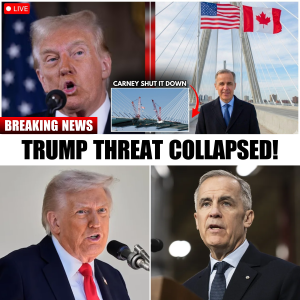
In a stunning and widely criticized social media post, former U.S. President Donald Trump has threatened to block the opening of the Gordie Howe International Bridge, a major infrastructure project connecting Windsor, Ontario, and Detroit, Michigan.
The $6.4 billion bridge, fully funded by Canada, is scheduled to open this year and is expected to significantly boost cross-border trade and tourism. But Trump now claims the United States should be “fully compensated” and suggests America should own at least half of the bridge.
The reaction in Canada has been swift — and in some cases, openly mocking.
What Is the Gordie Howe International Bridge?
The Gordie Howe International Bridge is one of the largest infrastructure projects in North America. It was designed to relieve congestion at the Ambassador Bridge and facilitate trade between Canada and the United States.
Key facts:
-
Total cost: Approximately $6.4 billion
-
Fully funded by: Government of Canada
-
Ownership structure: Jointly managed between Canada and the State of Michigan
-
Purpose: Increase cross-border trade, tourism, and transportation capacity
The project has been under discussion for more than 25 years and has involved multiple U.S. presidents and Canadian prime ministers. It received necessary presidential permits and regulatory approvals on both sides of the border.
In short: this is not a surprise development. It is the culmination of decades of planning.
Trump’s Social Media Threat
In his post, Trump wrote:
“I will not allow this bridge to open until the United States is fully compensated for everything we have given them. We should own perhaps at least one half of this asset.”
He also repeated claims that no American materials or workers were involved in construction — assertions that Canadian officials immediately disputed.
The post went further, veering into bizarre territory with a claim that if Canada aligns economically with China, “the first thing China will do is terminate all ice hockey being played in Canada and permanently eliminate the Stanley Cup.”
The hockey reference drew confusion and ridicule across Canadian media.
Importantly, as noted by observers, this was not an executive order or formal policy announcement. It was a social media post. No legal action has been taken to block the bridge.
May you like

However, the rhetoric alone has created fresh uncertainty in U.S.-Canada relations.
Prime Minister Mark Carney’s Diplomatic Response
Canadian Prime Minister Mark Carney responded calmly and factually.
He clarified:
-
Canada paid for the bridge’s construction.
-
Ownership is shared between Canada and the State of Michigan.
-
Both Canadian and American workers participated.
-
American steel and materials were used.
-
The bridge represents economic cooperation, not exploitation.
Carney emphasized the importance of commerce, tourism, and cross-border mobility that the bridge will facilitate.
Rather than escalating the rhetoric, Carney framed the project as a symbol of partnership.
His tone stood in stark contrast to Trump’s post.
Windsor’s Mayor Calls Trump’s Comments “Insane”
While Carney chose diplomacy, Windsor Mayor Drew Dilkens was far less restrained.
Reacting live on air, Dilkens said:
“It’s just insane. When I read that post, I really can’t believe what I’m reading.”
The mayor reminded viewers that:
-
Canada offered to fund the bridge after the U.S. declined to pay.
-
Presidential permits were issued.
-
Multiple administrations were involved in negotiations.
-
The bridge was built to facilitate international trade for both countries.
Dilkens also openly laughed at Trump’s hockey claims, calling them absurd.
His reaction reflects a broader sentiment in Canada: frustration mixed with disbelief.
Why Is This Happening Now?
The timing is notable.
The United States, Canada, and Mexico are approaching critical deadlines for renegotiations and reviews related to the USMCA trade agreement.
Trade tensions have already escalated in recent months over tariffs, energy exports, and manufacturing.
Some analysts believe Trump’s bridge threat may be positioning — an attempt to gain leverage ahead of negotiations.
Trump has long described his negotiation style as asking for something extreme and settling somewhere in the middle while claiming victory.
Critics argue that this tactic increasingly appears theatrical rather than strategic.
Economic Implications of Blocking the Bridge
Blocking or delaying the Gordie Howe Bridge would have significant economic consequences.
The Windsor-Detroit corridor is one of the busiest trade crossings in North America. Billions of dollars in goods cross annually.
Industries that depend on this route include:
-
Automotive manufacturing
-
Agriculture
-
Energy
-
Consumer goods distribution
Any disruption would impact not only Canada but also Michigan, Ohio, and the broader Midwest economy.
American workers and businesses benefit directly from the increased capacity the bridge provides.
This raises an important question: who would actually be harmed by blocking the project?
Political Fallout and International Perception
Mayor Dilkens pointed out a broader issue — international credibility.
He noted that volatility and uncertainty create instability for businesses and investors.
Foreign leaders reacting with laughter is not simply a matter of pride. It signals erosion of diplomatic trust.
When infrastructure agreements negotiated over decades are suddenly questioned via social media, future cross-border investments may face hesitation.
Predictability is foundational to trade.
Uncertainty carries economic cost.
The Hockey Reference That Backfired
Perhaps the most widely shared element of Trump’s post was his claim about China eliminating Canadian hockey and “stealing the Stanley Cup.”
The Stanley Cup is awarded by the National Hockey League (NHL), a private professional sports organization operating in both Canada and the United States.
The idea that China could “terminate” hockey in Canada is not grounded in any policy mechanism or legal framework.
The remark was widely mocked in Canadian media and on social platforms.
For many observers, it reinforced a perception that the rhetoric is becoming increasingly disconnected from policy realities.
Negotiation Tactic or Political Theater?
Supporters argue Trump’s approach is strategic brinkmanship — applying pressure to extract concessions.
Critics argue it resembles political theater that undermines long-term relationships.
The core issue is leverage.
The United States remains Canada’s largest trading partner. That economic reality gives Washington influence.
However, Canada funded this bridge precisely to facilitate trade for both sides.
Blocking it would reduce mutual benefit.
Trade disputes typically revolve around tariffs, quotas, and regulatory standards — not infrastructure that both nations helped develop.
What Happens Next?
At this stage:
-
No legal action has been taken to block the bridge.
-
Construction continues toward scheduled opening.
-
Canadian officials remain publicly confident it will proceed.
-
Michigan officials have not indicated support for halting the project.
The situation may cool as negotiations continue.
Or it may escalate if formal action is attempted.
For now, the threat remains rhetorical.
Conclusion: A Test of Stability in U.S.-Canada Relations
The Gordie Howe International Bridge was designed as a symbol of cross-border cooperation.
Instead, it has become the latest flashpoint in an increasingly tense trade relationship.
Prime Minister Mark Carney chose measured diplomacy.
Windsor’s mayor chose blunt dismissal.
Both rejected the underlying premise that Canada owes compensation for a project it fully financed.
Whether this episode represents calculated leverage or impulsive rhetoric may depend on what happens next.
But one thing is clear:
When infrastructure negotiated over 25 years becomes the subject of social media threats — and hockey jokes — the credibility of serious policy discussion is at stake.
And that may be the most significant consequence of all.