Ambassador Says Trump Era Reshaped U.S.–Canada Relations: Pressure, Tariffs, and Strategic Fallout
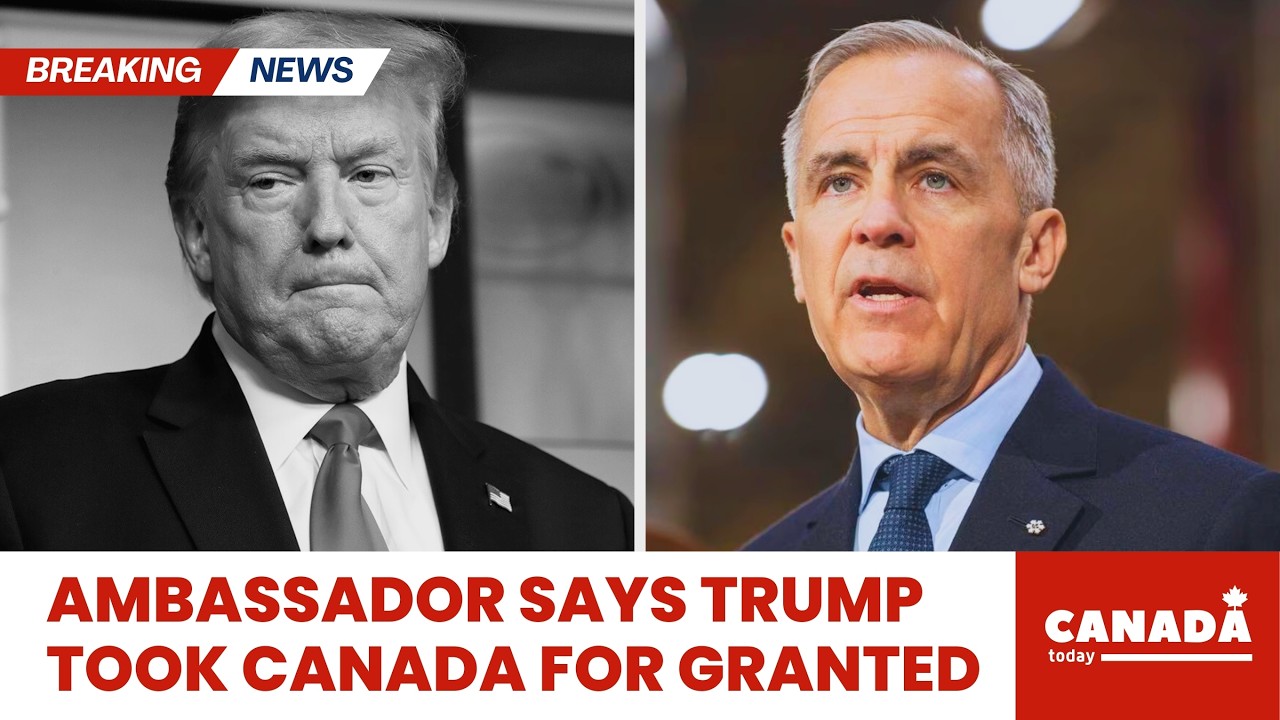
For decades, the relationship between the United States and Canada was widely considered one of the most stable and predictable alliances in global politics. Built on deep trade integration, defense coordination, and institutional trust, the partnership functioned with relatively low friction compared to most international relationships.
But according to recent interview remarks from Canada’s outgoing ambassador to the United States, that era of “automatic cooperation” changed significantly during Donald Trump’s presidency. Her comments, now widely circulated in political media, describe a shift from predictable partnership toward pressure-driven negotiation and strategic uncertainty.
Here’s what was said — and what it could mean for the future of cross-border relations.
Ambassador: The Old Model of Automatic Cooperation Is Over
In the interview, the ambassador reflected on how both countries historically took the relationship for granted. She suggested that the Trump administration introduced a more confrontational and personalized negotiation style that altered expectations on both sides.
According to her remarks, the relationship is unlikely to return fully to its earlier, assumption-based model. Instead, she described a new phase defined by caution, recalibration, and more deliberate strategic planning.
Key theme from her comments:
-
Cooperation will continue
-
But predictability can no longer be assumed
-
Policy volatility must now be planned for
-
Institutional trust is no longer automatic
Tariffs and Trade Pressure During the Trump Years
One of the most visible stress points in U.S.–Canada relations during the Trump presidency was trade policy — particularly the steel and aluminum tariffs imposed on Canadian exports under national security justifications.
Critics at the time argued:
-
Canada was a long-standing defense partner
-
Integrated supply chains made tariffs costly on both sides
-
U.S. manufacturers faced higher input prices
-
Cross-border industries experienced disruption
Supporters of the tariff strategy argued it was a legitimate negotiating tool designed to rebalance trade terms and strengthen U.S. leverage in renegotiations that ultimately produced the USMCA trade agreement.
The ambassador’s interview frames the tariff period as a turning point that forced Canada to reconsider its economic exposure to U.S. political shifts.

Centralized Decision-Making and Diplomatic Uncertainty
Another major point raised in the interview was the degree to which trade and diplomatic decisions were centralized around presidential authority during the Trump administration.
This reportedly created:
-
Rapid policy shifts
-
Sudden tariff announcements
-
Public negotiation via social media
-
Reduced reliance on traditional diplomatic channels
From Canada’s perspective, this increased unpredictability — making long-term planning more difficult and raising risk for cross-border investment.
Business Community Reaction on Both Sides
The ambassador also noted that many U.S. business leaders expressed concern during periods of trade escalation with Canada. Industry groups repeatedly warned that:
-
Supply chains were deeply integrated
-
Tariffs would raise U.S. production costs
-
Export competitiveness could decline
-
Investment decisions could be delayed
Multiple U.S. trade associations publicly supported maintaining stable North American trade frameworks during that period.
Canada’s Strategic Response: Diversification and Resilience
According to the interview analysis, one long-term result of the tension period was a Canadian push toward greater economic diversification and strategic resilience.
Policy directions discussed in recent years include:
-
Expanding non-U.S. trade partnerships
-
Strengthening domestic supply capacity
-
Reducing single-market dependency
-
Increasing regulatory autonomy
-
Building redundancy into trade routes
Rather than disengaging from the United States, the strategy focuses on reducing vulnerability to political volatility.