Trump’s Trade War Backfires: How Canada Turned Away from Detroit and Chose Japan Instead
Donald Trump believed tariffs would make America stronger. Instead, they accelerated the collapse of American automotive dominance in Canada and handed the Canadian auto market to Japan — with China now poised to take what remains.
Less than a decade ago, the “Detroit Three” — Ford, General Motors, and Stellantis — dominated Canadian vehicle production. Today, they control just 23% of it. The rest belongs overwhelmingly to Honda and Toyota, Japanese automakers that stayed, invested, and adapted while American companies retreated.
Trump threatened Canada on trade. Canadians responded by buying Japanese cars instead of American ones.
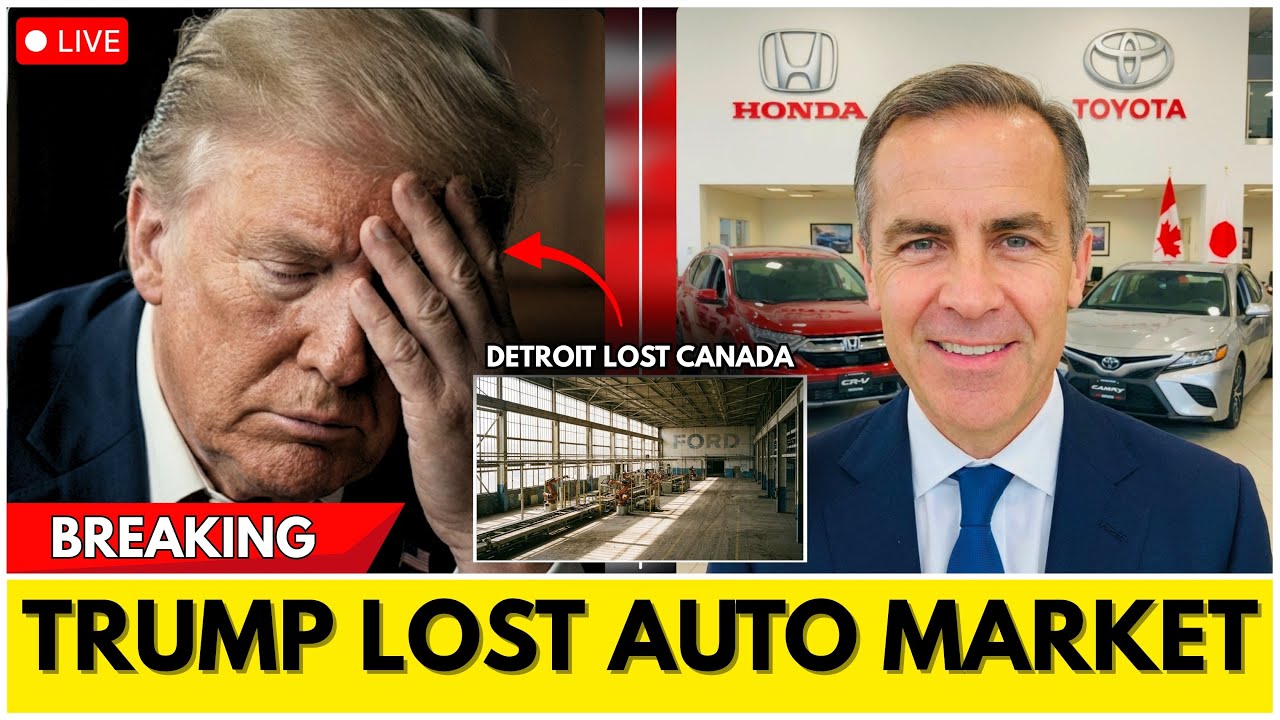
Detroit’s Collapse in Canada: From Dominance to Decline
In the mid-2010s, Canada assembled approximately 2.3 million vehicles annually. The Detroit Three accounted for 56% of that production, operating multiple large assembly plants across Ontario and employing tens of thousands of workers.
By last year, total Canadian vehicle production had fallen to 1.2 million units — nearly a 50% decline. Almost all of that loss came from American automakers. The Detroit Three’s share collapsed to 23%, while Japanese manufacturers surged ahead.
According to data from the Trillium Network for Advanced Manufacturing, Japanese automakers now account for 77% of Canadian vehicle production, up from 44% a decade ago. The shift did not happen because Honda and Toyota massively expanded capacity. It happened because Detroit collapsed while Japan stayed stable.
The conclusion from the Trillium report is blunt: Detroit is disappearing from Canada.
Why Japanese Automakers Succeeded Where Detroit Failed
Brendan Sweeney, Executive Director of the Trillium Network, explains the difference clearly:
“Japanese companies look at their plants as part of a global production network. American companies see them as profit centers.”
Toyota builds the RAV4 Hybrid and Lexus RX in Cambridge and Woodstock, Ontario. Honda produces the Civic and CR-V in Alliston. These plants are not temporary outposts — they are core components of long-term global strategies.
Detroit’s approach is different. If margins tighten in a given quarter, production is cut. Workers are laid off. Investment is delayed. That short-term thinking creates a downward spiral that eventually justifies closure.
While Detroit cut back, Honda and Toyota invested through downturns, retooled for hybrids, and upgraded technology. The RAV4 Hybrid, built in Ontario, is now one of the best-selling vehicles in Canada.
Japan stayed. Detroit cut and ran.
Jobs Tell the Real Story
The human cost is stark. In the mid-2010s, Detroit automakers employed 60% of Canadian auto assembly workers. Today, that figure has fallen to just over 40%. Japanese companies now employ the majority of Canada’s auto assembly workforce.
Stellantis cut thousands of jobs. General Motors idled facilities. Ford scaled back production lines. Each cut weakened Detroit’s position further — and pushed Canadian buyers toward brands that consistently delivered vehicles without threatening to leave.
Canadian workers noticed. So did unions.
Unifor, which represents tens of thousands of auto workers, has shifted its stance. Instead of defending Detroit by default, the union now urges the government to support companies that actually invest in Canada.
As Flavio Volpe, president of the Automotive Parts Manufacturers’ Association, put it:
Incentives should go to any company willing to build vehicles and create jobs in Canada — not just legacy American brands.
Trump’s Tariffs Made Everything Worse
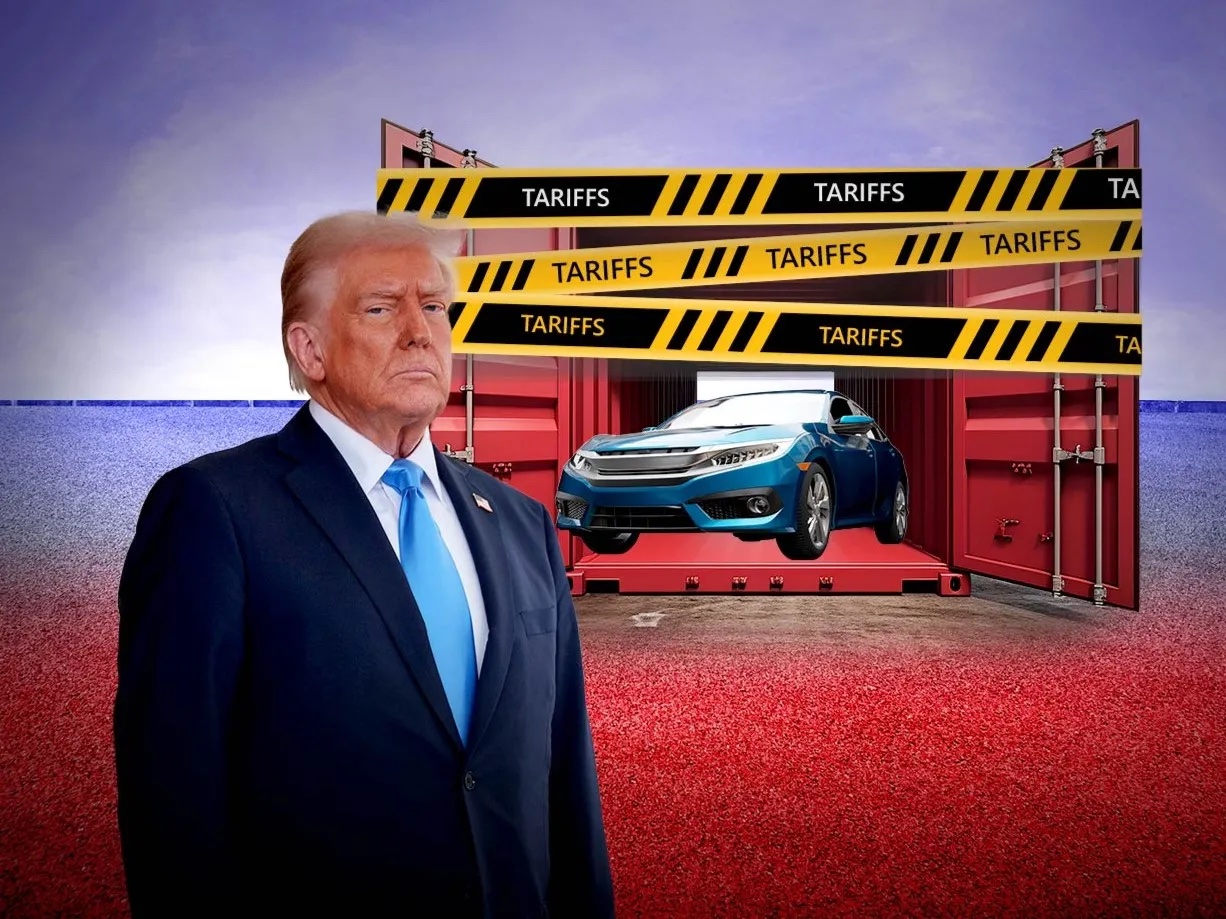
Trump imposed 25% tariffs on vehicles from Canada and Mexico under Section 232 “national security” rules. The stated goal was to force manufacturing back to the United States.
The result was the opposite.
Detroit’s supply chains are deeply integrated across North America. Components cross borders dozens of times. Tariffs disrupted that system overnight. General Motors reported $1.1 billion in tariff costs. Stellantis warned losses could exceed $3 billion.
Japanese automakers were far less exposed. Honda and Toyota already assemble millions of vehicles inside the United States, with supply chains less dependent on cross-border flows. The tariffs hurt Detroit far more than Japan.
Then came the final blow.
Trump negotiated a deal that lowered tariffs on Japanese vehicle imports to 15%, while vehicles built in Canada and Mexico — even with high U.S. content — still faced 25% tariffs.
Detroit executives were furious. So were American auto workers.
Canadian buyers took notice too.
Canadian Consumers Turn Away from American Brands
For decades, Canadian buyers defaulted to American vehicles. That loyalty is gone.
Today, Canadian consumers actively choose Japanese brands — citing reliability, availability, and long-term commitment to Canada. Toyota set a record with 249,000 vehicles sold, led by the RAV4. Honda’s Civic and CR-V dominate their segments.
General Motors still holds the top overall market share, but growth is concentrated in premium brands like Cadillac and GMC. Mass-market Chevrolet struggles. Ford’s sales rely heavily on the F-Series pickup alone.
American brands now carry political baggage in Canada. Trade threats, tariffs, and insults have consequences.
China Is About to Make It Worse
As Detroit struggles, Chinese electric vehicle manufacturers are preparing to enter Canada.
Canada has reduced tariffs on Chinese EVs to 6.1% for up to 49,000 vehicles annually, with quotas set to rise. By 2030, as many as 70,000 Chinese EVs could enter Canada each year — many priced under $35,000.
BYD, the world’s largest EV manufacturer, sold 4 million vehicles globally last year, outselling Tesla. Its entry-level EVs sell for as little as $10,000 in China. Even with shipping and compliance costs, BYD could deliver EVs to Canada for under $25,000.
The cheapest new EV currently available in Canada costs over $40,000.
If Chinese manufacturers begin assembling vehicles inside Canada — something Bloomberg reports is under consideration — Detroit’s remaining mass-market position could collapse entirely.
Detroit’s Century Is Over
Ford, GM, and Stellantis built over 100 million vehicles in Canada over the last century. That history matters — but history does not pay today’s workers.
Detroit chose quarterly profits over long-term investment. Chose lobbying over innovation. Chose threats over partnership.
Trump believed trade wars would force Canada to submit. Instead, they pushed Canada toward Japan — and soon, toward China.
Detroit’s dominance in Canada is not coming back.
And the lesson is clear:
Threatening your closest ally is the fastest way to lose market share permanently.