Washington / Ottawa — Tensions between the United States and Canada are escalating again, and this time the fallout could hit Americans where it hurts most: the grocery store checkout line.
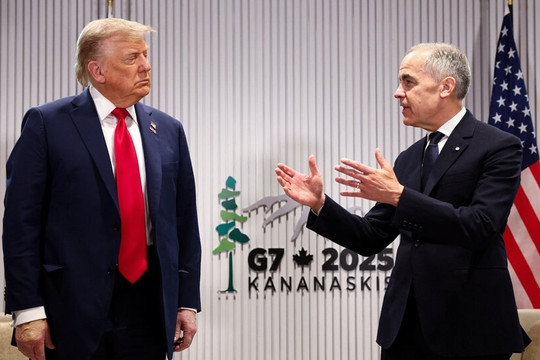
In a sudden reversal, U.S. President Donald Trump is now threatening new tariffs tied to Canada’s evolving trade relationship with China—despite previously signaling support for the deal. The policy whiplash has reignited fears across the U.S. agricultural sector, where farmers warn they are already stretched to the breaking point.
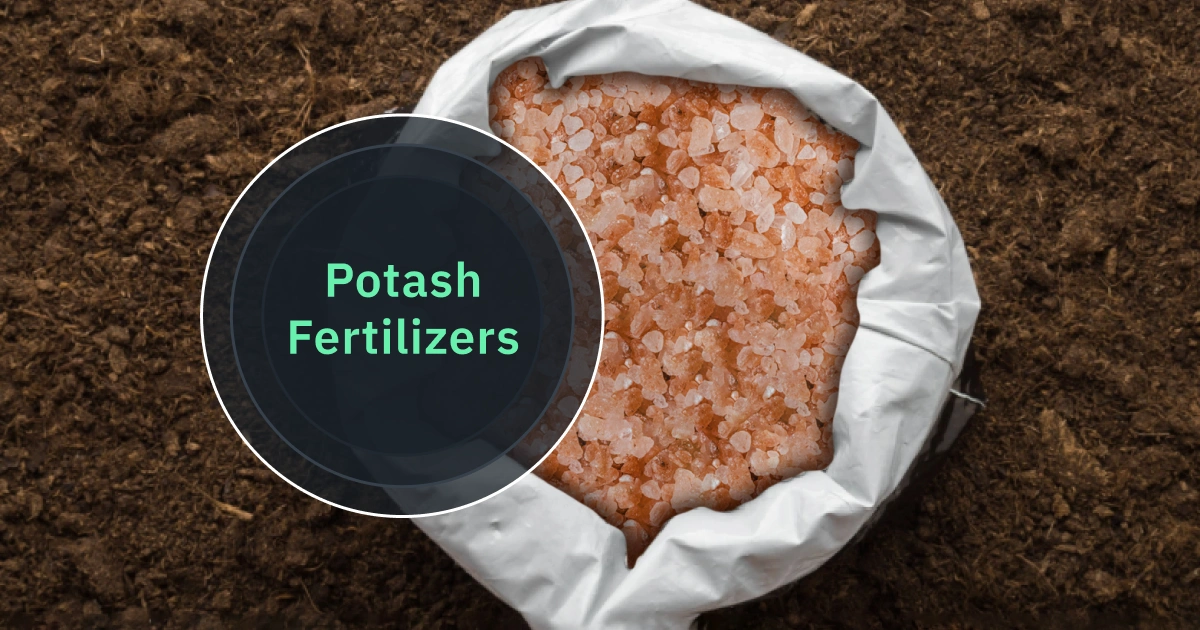
At the center of the storm is an ingredient most Americans never think about, but cannot live without: potash.
Why Potash Matters: The Hidden Backbone of U.S. Agriculture
Potash is not optional. It is an irreplaceable nutrient essential for modern crop production, used in nearly every major field crop grown in the United States. Without it, yields fall, profits vanish, and food prices rise.
Here’s the reality:
-
85–90% of U.S. potash imports come from Canada
-
87% of a critical farming ingredient used by U.S. growers is sourced from Canada
-
Canada supplies:
-
Nearly 10% of U.S. nitrogen fertilizer needs
-
25% of total nitrogen fertilizer imports
-
Nearly 20% of sulfur consumed by U.S. agriculture
-
According to the Fertilizer Institute, the United States has historically relied on international markets for nearly all of its potash—and Canada dominates that supply.
Canada’s Potash Power: A Supply Chain the U.S. Can’t Replace
Canada isn’t just a supplier. It is the supplier.
-
Canada holds the world’s largest potash reserves:
1.1 billion tons (potassium oxide equivalent), according to Natural Resources Canada -
That is five times larger than U.S. reserves
-
Canada’s potash production scale is 36 times larger than the United States
-
In 2023:
-
Canada produced over 32% of global potash
-
Accounted for 41% of global exports
-
The U.S. does operate small domestic potash mines in Utah, New Mexico, and Michigan, but industry experts say these facilities struggle with lower-quality ore and cannot come close to meeting national demand.
Alternative suppliers like Belarus and Russia are widely viewed as unreliable due to ongoing geopolitical tensions.
Tariffs Already Hurt — And Worse May Be Coming
President Trump first imposed tariffs on Canadian fertilizer imports in February 2025, starting at 25%. After intense backlash from farmers and industry groups, the tariffs were reduced to 10%—but the damage was already done.
The numbers tell the story:
-
U.S. Import Price Index for chemical fertilizers
-
Rose from 164.5 (Dec 2024) to 186.5 (Sept 2025)
-
-
Prices Paid Index for U.S. farmers
-
Jumped from 139.9 to 149.9 year-over-year
-
-
Fertilizer costs increased 11%, becoming the primary driver of rising farm expenses
For corn farmers, fertilizer alone accounts for 45% of operating costs. Across agriculture, fertilizer represents 30–45% of annual expenses.
Potash prices currently hover around $450 per ton. A full 25% tariff pass-through could push prices over $550 per ton, adding more than $100 per ton to farmers’ costs.
“Canada Holds the Cards”
Industry leaders say this is not a tariff the U.S. can win.
“Unlike some other tariffs where the seller bears the cost, potash exports are different,”
said Josh Linville, Vice President of Fertilizer at StoneX.
“Canada holds the cards in this supply relationship, and domestic U.S. production cannot fill the gap.”
That cost, experts say, doesn’t stay with Canada—it flows straight to American farmers.
Farmers Caught in the Middle
Farmers have little ability to absorb or pass on higher costs.
“Any added costs brought by tariffs are passed down to individual farmers,”
said Bob Thompson, President of the Michigan Farmers Union.
“Farmers have no way of recouping that cost. We sell into a market we don’t control.”
Economists warn the timing couldn’t be worse.
“Tariffs inevitably push potash prices up and farm profits down,”
said Bill Knudson, Professor of Agricultural Economics at Michigan State University.
“Just about any crop uses potash. That reduces profitability across the board.”
U.S. agriculture is already facing its third straight year of declining farm income, particularly for field crop producers. Corn prices remain depressed, and many farmers are still recovering from:
-
COVID-19 disruptions
-
The war in Ukraine
-
High natural gas prices that previously drove fertilizer costs to record highs
Can the U.S. Replace Canadian Potash? Not Anytime Soon
The USDA has floated plans to reshore fertilizer manufacturing, but industry groups warn those efforts will take years, not months.
A proposed potash mine in Osceola County, Michigan, could eventually produce 800,000 tons per year, but:
-
It depends on a $1.1 billion federal loan
-
Received only conditional approval in January 2025
-
Would take many years to reach meaningful output
Even expanded domestic nitrogen fertilizer production may not help farmers.
“If higher U.S. production is driven by tariffs, producers are protected from cheaper imports,”
said Joe Janssen, Agricultural Economist at the University of Illinois.
“For farmers, that simply means higher costs.”
Canada Moves On — With or Without the U.S.
While U.S. farmers struggle, Canadian producers are diversifying globally.
-
Nutrien, the world’s largest potash producer, sold 14.4 million metric tons in 2024 to over 40 countries
-
Owns six active potash mines in Saskatchewan
-
Canada’s 11 active mines produced 21.9 million tons in 2023
-
BHP’s Jansen project in Saskatchewan begins production in 2026, further expanding global supply
In other words, Canada has options. The U.S. does not.
What Comes Next
The Fertilizer Institute is urging the White House to grant tariff exemptions for Canadian potash, warning that supply disruptions threaten U.S. food security.
Companies like Nutrien have issued blunt warnings:
More tariffs will raise costs for American farmers—and ultimately for American families.
With over 90% of U.S. potash imported, mostly from Canada, any escalation risks triggering a chain reaction:
Higher fertilizer costs → Lower farm profits → Reduced production → Higher grocery prices.
And as trade tensions intensify, one thing is becoming increasingly clear:
This is not just a trade fight.
It’s a food fight — and U.S. consumers may soon be paying the price.