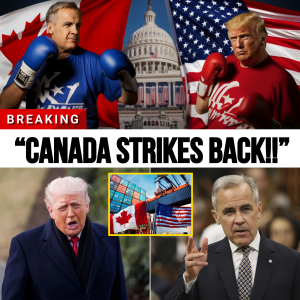
Every single morning, Canada seems to wake up to a new threat from Donald Trump.
New day. New target. New headline.
But today, something changed.
This time, Trump didn’t just threaten Canada.
He embarrassed himself in front of the world.
His latest move, aimed directly at Canada’s aviation sector, was supposed to intimidate Ottawa into compliance. Instead, it backfired spectacularly — exposing legal limits, economic contradictions, and a growing reality Trump can no longer control.
Donald Trump’s threats are losing their power.
They are losing their credibility.
And against Mark Carney’s Canada, they are losing their sting.
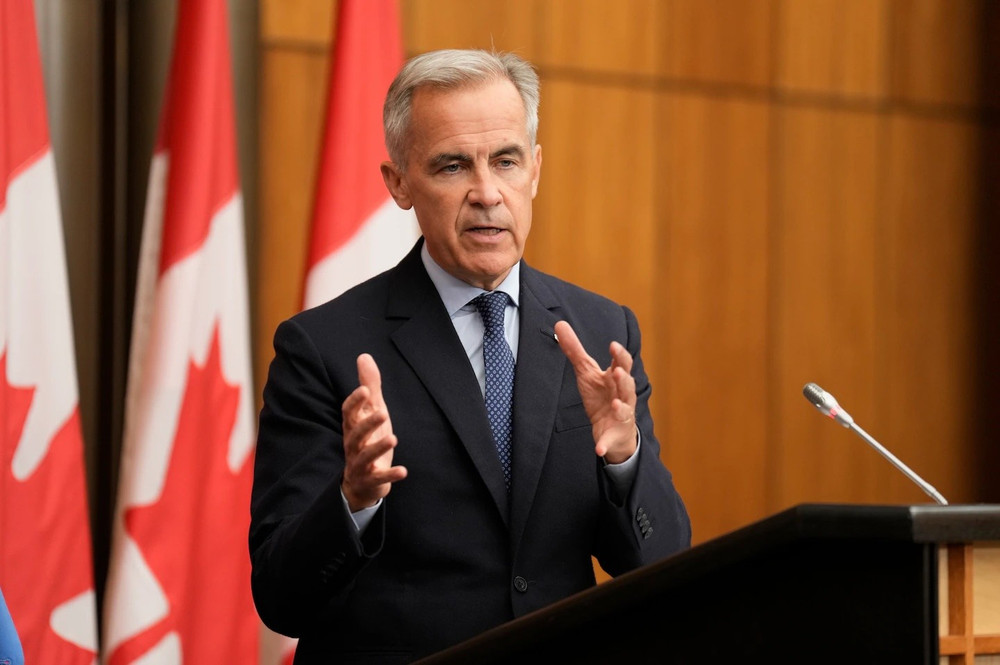
Trump’s Ultimatum: Certify U.S. Jets — Or Face a 50% Tariff
Late Thursday night, Trump took to Truth Social with a dramatic announcement. Unless Canada agreed to certify several models of Gulfstream business jets — luxury aircraft produced by a Georgia-based American company — his administration would impose a 50% tariff on all Canadian-made aircraft.
He went even further, suggesting that Canadian aircraft operating inside the United States could lose their certification altogether.
On paper, it sounded aggressive. Aviation is one of Canada’s most strategically important industries. Any disruption could have serious economic consequences. The message was blunt and unmistakable:
Comply — or pay the price.
Trump clearly believed this would put Prime Minister Mark Carney on the defensive.
It didn’t.
The White House Backtracks — Almost Immediately
Within hours, the White House began walking the threat back.
Officials quietly clarified that existing Canadian aircraft would not be grounded and that any potential measures would apply only to future deliveries. The dramatic threat that had dominated headlines only moments earlier was suddenly diluted.
This retreat was not accidental.
It was an admission.
Grounding Canadian-built aircraft would have crippled the U.S. aviation system. Thousands of planes would have been affected. Delta Airlines alone operates 46 Airbus A220 aircraft, assembled in Quebec. In total, roughly 5,400 Canadian-made aircraft currently fly in U.S. airspace.
Ground them, and the American travel industry collapses overnight.
Trump’s advisers understood this immediately. So before Canada even responded, the threat had already been weakened.
That is not leverage.
That is leverage collapsing in real time.
An Economic Self-Inflicted Wound
As analysts examined the situation more closely, another problem became impossible to ignore:
Trump’s threat would hurt the United States more than Canada.
Bombardier, one of Canada’s flagship aerospace companies, employs over 3,000 workers across nine U.S. facilities. Nearly 40% of its aircraft components are manufactured in America. Any hit to Bombardier’s business would directly translate into reduced orders, slowed production, and job losses in multiple U.S. states.
The Airbus A220 program follows the same model — deeply integrated supply chains spanning both countries.
This is not a one-sided trade relationship.
It is a shared industrial ecosystem.
By targeting Canadian aircraft, Trump would be targeting American factories, American workers, and American communities.
Few policies illustrate economic self-sabotage more clearly than this one.
The Legal Reality Trump Can’t Ignore
Then came the legal reality check.
Aircraft certification is not a presidential power.
It belongs to independent regulators.
In the United States, that authority rests with the Federal Aviation Administration (FAA). In Canada, it lies with Transport Canada. These agencies operate on technical and safety standards — not political pressure.
Using certification as a diplomatic weapon would be unprecedented. It would almost certainly violate international aviation agreements, trigger lawsuits, and face swift challenges in U.S. courts.
In other words, Trump was threatening an action that was legally fragile at best and impossible at worst.
And a threat that cannot realistically be carried out is no threat at all.
Mark Carney’s Strategic Silence
While Trump escalated and then retreated, Mark Carney did something far more effective.
He did nothing.
No emotional response.
No public outrage.
No rushed press conference.
Ottawa remained calm. Trade protections stayed in place. Regulatory systems continued operating normally. Businesses carried on without disruption.
This restraint was deliberate.
Carney understands power. And he understands that when an opponent is overreaching, silence can be the strongest response of all.
The more Trump talked, the weaker his position became.
Why This Was Never About Aircraft
At its core, this dispute was never really about jets or certification.
It was about control.
Under Carney, Canada has steadily reduced its reliance on the United States. It has diversified trade, strengthened European partnerships, and expanded strategic relationships beyond Washington. These moves were not symbolic — they were structural.
And they limited America’s ability to apply pressure.
From Trump’s perspective, that loss of leverage is intolerable. When influence slips away, he defaults to confrontation — not because it works, but because it’s familiar.
In the past, Trump’s threats dominated global headlines. Governments scrambled. Markets reacted. Media amplified the chaos.
This time, none of that happened.
Canada didn’t panic.
Markets stayed relatively stable.
Allies observed quietly.
Attention shifted — not to Trump’s power, but to his limitations.
The roles had reversed.
A Pattern of Diminishing Authority
This episode fits a broader pattern.
Trump is locked in conflicts with the Federal Reserve. He has attempted to pressure independent institutions. He faces growing resistance within his own party. Investors are increasingly cautious.
Each confrontation chips away at confidence.
Each retreat erodes credibility.
Authority without trust is ineffective — especially on the international stage.
When a U.S. president issues a sweeping economic threat, only to have his own government dilute it within hours, the message is unmistakable.
This is not strength.
It is a failed show of force.
Conclusion: One Side Walked Away Stronger
Trump entered this confrontation expecting compliance.
He walked away weaker.
Mark Carney didn’t need to escalate. He didn’t need to retaliate. By simply allowing economic reality, legal constraints, and institutional stability to speak for themselves, he secured a strategic victory without lifting a finger.
In diplomacy, perception is power.
Trump looked impulsive and isolated.
Carney looked disciplined, prepared, and credible.
Trump will almost certainly issue more threats. That pattern is unlikely to change. But each one now carries less weight than the last. Each failed confrontation reduces his influence. Each retreat strengthens Canada’s position.
Power is cumulative.
So is credibility.
And right now, only one side is accumulating it.