JUST IN: TRUMP’S CANADA TARIFF THREATS COLLAPSE — MARK CARNEY TURNS EMPTY BLUFFS INTO A STRATEGIC WIN
Donald Trump’s long-running tariff threats against Canada have officially been exposed as hollow posturing rather than real economic policy. From 25% blanket tariffs to shocking 100% duties tied to China and even a sudden 50% aircraft tariff threat, every single move has either been delayed, watered down, exempted, or quietly abandoned. Wall Street noticed the pattern first, but Canada understood something deeper: Trump’s tariffs were negotiation theater, not enforceable strategy.
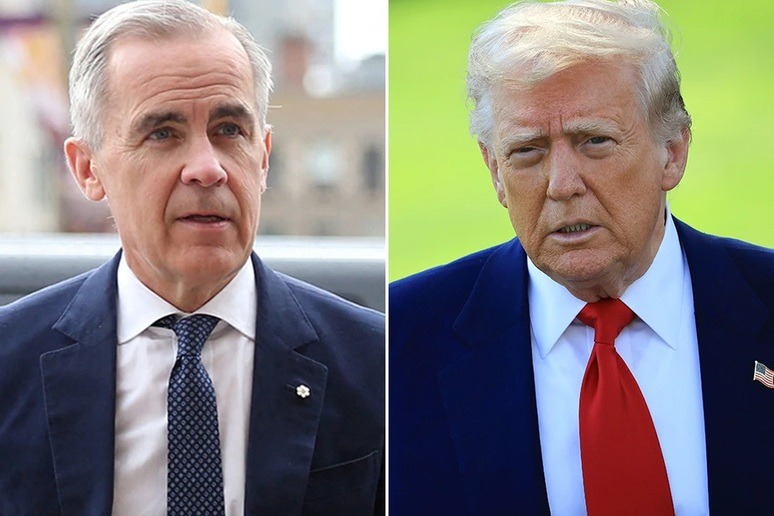
Rather than panic or rush into concessions, Canadian Prime Minister Mark Carney chose a radically different approach. While Trump posted threats on social media, Carney went to Davos and told global leaders that the old U.S.-led rules-based order was no longer reliable. Instead of reacting to Washington’s noise, Canada began preparing for a future where economic independence was no longer optional, but essential.
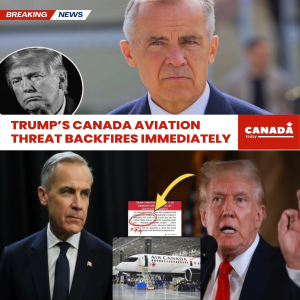
The clearest example came with Trump’s threat to impose 50% tariffs on all Canadian aircraft and decertify Bombardier jets. The announcement briefly rattled markets, sending Bombardier stock down and alarming jet owners across the United States. Within 24 hours, however, the White House walked it back, quietly exempting all aircraft already flying. The reason was simple: Bombardier employs thousands of American workers and relies on suppliers across 47 U.S. states, meaning the threat hurt Americans more than Canadians.
The same pattern played out with Trump’s earlier 25% tariff threat on all Canadian goods. While the rhetoric was aggressive, the reality was a maze of exemptions for USMCA-compliant products, energy, and agriculture. As the actual economic impact shrank week by week, Canada used the political cover to launch a massive “Buy Canadian” push, redirecting $70 billion in federal procurement away from U.S. suppliers and accelerating domestic production.

Trump’s most dramatic move — a threat of 100% tariffs over Canada’s China trade deal — turned out to be the moment that permanently changed Ottawa’s mindset. Canada had already finalized the agreement, sending canola to China and allowing controlled electric vehicle imports. No executive order followed, no timeline was set, and the tariffs never materialized. The message was clear: Canada could trade with the world without U.S. approval.
Energy remains the silent leverage behind Canada’s confidence. The United States imports roughly 3.8 million barrels of Canadian crude oil per day, feeding nearly a quarter of U.S. refinery capacity. These refineries are engineered specifically for Canadian heavy crude and cannot easily switch sources. Any serious energy tariffs would spike fuel prices overnight in the United States, a risk Trump has repeatedly avoided, forcing yet another retreat.
Carney’s strategy of patience has reshaped public opinion at home. Each failed threat reinforced the idea that Canada does not need to submit to pressure. Provincial leaders openly backed diversification toward China and Europe, while infrastructure projects like the Trans Mountain pipeline and LNG terminals strengthened access to Asian markets. What once sounded radical is now mainstream: reducing dependence on the United States is a matter of national security.

As the USMCA review approaches in July 2026, the balance of power looks nothing like Trump expected. After a year of empty threats and walk-backs, Canada enters negotiations with alternatives, public support, and growing leverage. Trump believed intimidation would force concessions. Instead, every bluff strengthened Canada’s hand. The final scorecard is clear — Trump made noise, Wall Street made trades, and Canada built a future.