Respect Is Not Asked For — It Is Enforced
“My grandfather used to say something that never left me,” a Mexican official recalled recently. “Respect isn’t something you ask for. It’s something you demand.”
For a year, Mexico endured threats, insults, visa cancellations, tariff ultimatums, and even talk of military intervention from Donald Trump. Many predicted Mexico would eventually submit. Many said it had no choice.
They were wrong.
Today, Mexico is not responding with rhetoric or outrage. It is responding with tariffs, laws, industrial policy, and a long-term economic strategy that has left Trump reacting instead of controlling. What is unfolding is not a diplomatic dispute — it is a structural shift in power.
Trump’s Return and the Strategy of Intimidation
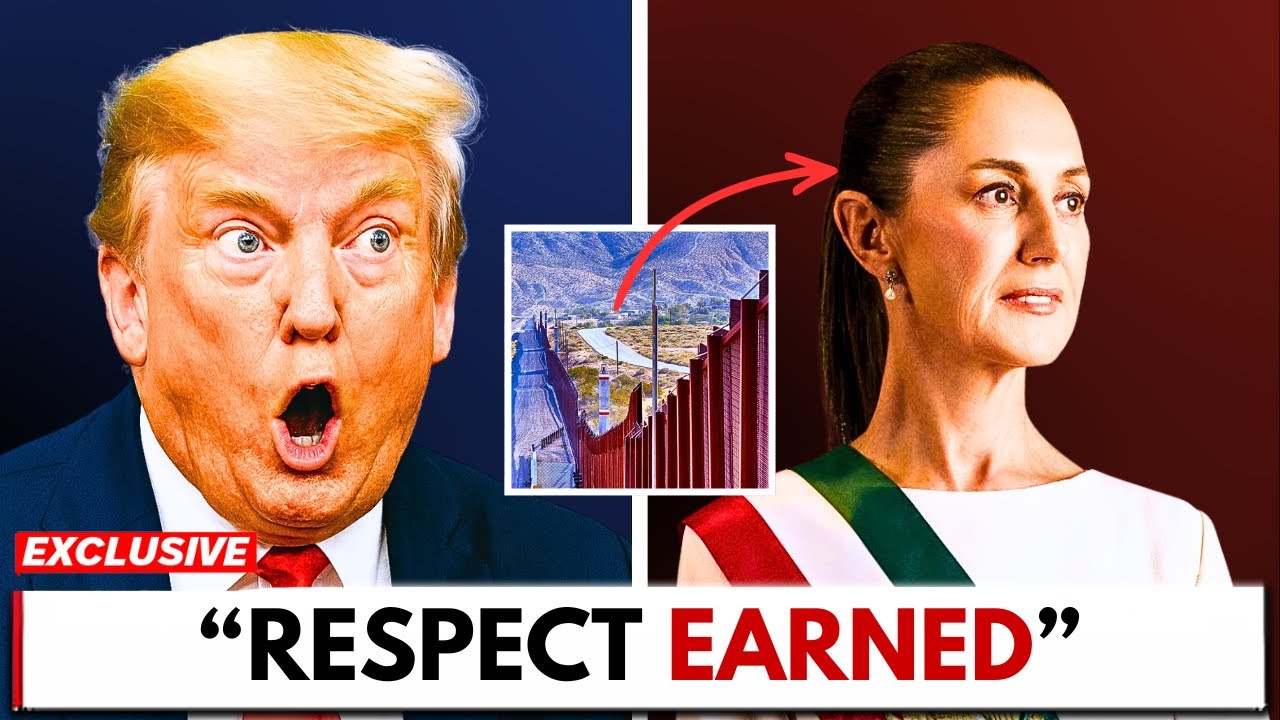
On January 20, 2025, Donald Trump returned to the White House with a familiar objective: dominate Mexico. Within days, he announced a 25% tariff on Mexican goods, labeled eight cartels as foreign terrorist organizations, threatened military action on Mexican soil, and even floated renaming the Gulf of Mexico.
The message was unmistakable. Trump wanted Mexico to bend. He wanted President Claudia Sheinbaum to lower her head. He wanted Mexico treated as a subordinate neighbor — economically dependent, politically intimidated, strategically constrained.
What Trump misjudged was who he was dealing with.
Claudia Sheinbaum’s Calculated Response
Claudia Sheinbaum is not a traditional politician. She is a scientist, engineer, and energy expert who built her career on data, systems, and long-term planning. Where Trump reacts emotionally, Sheinbaum calculates. Where Trump escalates rhetorically, Sheinbaum builds policy.
The contrast became visible early.
On January 8, 2025, after Trump announced plans to rename the Gulf of Mexico, Sheinbaum stood before a map during a press conference and calmly asked: “Why not call it Mexican America?” She reminded audiences that large portions of the modern United States — California, Texas, Arizona, New Mexico, Nevada, Utah, and Colorado — were Mexican territory until 1848.
She followed with a formal protest to Google, noting that the Gulf of Mexico has been recognized internationally since the 17th century. It was not mockery. It was a lesson in history — and a signal that Mexico would no longer stay silent.
From Words to Action: The Tariff Shock
Trump escalated on March 4, 2025, imposing a 25% tariff on all Mexican products. Markets reacted immediately. Businesses panicked. Analysts predicted Mexico would cave.
Instead, on March 9, Sheinbaum convened a massive assembly in Mexico City’s Zócalo. Governors, business leaders, and citizens filled the square. Standing before them, she delivered the line that would define her presidency:
“Cooperation, yes. Coordination, yes. Subordination, never.”
Two days earlier, Trump had already called her — and shortly after that call, the tariffs were paused. The reason was simple: Trump realized Mexico was not backing down.
Plan Mexico: Economic Independence by Design
Sheinbaum did not trust pauses or temporary reversals. On April 3, 2025, she unveiled Plan Mexico, an ambitious strategy built around 18 concrete programs aimed at economic independence.
The plan targets food security, infrastructure, and employment. It includes increasing corn production to 25 million tons by 2030, expanding bean and milk output, building 1,700 kilometers of road infrastructure, and creating an estimated 500,000 jobs by 2026.
While Trump talked about walls, Mexico began building roads. While Trump weaponized tariffs, Mexico invested in production. While Trump relied on pressure, Mexico relied on planning.
Protecting Industry With Strategic Tariffs
In December 2025, Mexico took another decisive step. New tariffs came into force on January 1, 2026, modifying 1,463 tariff categories across 17 sectors. Auto parts, textiles, appliances, footwear, furniture, cosmetics, paper, and toys were included.
Tariff rates ranged from 5% to 50%, with the automotive sector receiving the strongest protection. Imported vehicles now face tariffs of up to 50%, up from 20%. The policy primarily targets countries without trade agreements with Mexico, including China, India, South Korea, Vietnam, Indonesia, and Brazil.
The message was direct: Mexico will protect its industry and its workers.
The Reality Behind the Phone Calls
Since Trump’s return, Sheinbaum and Trump have spoken by phone 15 times — an unusually high number for two neighboring leaders. Each call follows a familiar pattern: Trump threatens, Sheinbaum negotiates, Trump backs down.
If Trump truly held the dominance he claims, he would not need to negotiate so frequently. The reality is that Mexico is now the United States’ largest trading partner. Trump cannot damage that relationship without harming the U.S. economy — and he knows it.
That is why the invasion threats never materialized.
Sovereignty and Security
When Trump designated six Mexican cartels as foreign terrorist organizations, Sheinbaum responded firmly. Mexico, she said, is governed by its people.
Then she acted. In January 2026, Mexico extradited 37 cartel members to the United States — at Washington’s request, but as a sovereign decision. At the same time, Mexico rejected any presence of foreign troops on its soil, and Trump had to accept it.
Security cooperation continued — subordination did not.
The Balance Sheet After One Year
After a year of threats, the results are clear. Mexico implemented Plan Mexico. Mexico imposed protective tariffs. Mexico rejected foreign military intervention. Mexico reduced fentanyl trafficking by an estimated 50%. Claudia Sheinbaum’s approval rating stands near 80%, according to international media.
Trump, meanwhile, faces rising prices at home, manufacturing contraction, and declining public confidence. Polls show a majority of Americans believe he is focused on the wrong priorities. His tariffs have backfired.
Diversifying Beyond the United States
Looking ahead, Mexico is preparing for the 2026 review of the USMCA trade agreement. Trump has already called the treaty irrelevant. Mexico is not waiting.
Sheinbaum renewed trade ties with Brazil, signed a new agreement with the European Union, and opened the door to negotiations with China, India, and South Korea. Mexico is diversifying its economic future — deliberately.
Conclusion: A Country That No Longer Kneels
Trump believed intimidation would force submission. Instead, it produced resistance, unity, and strategy.
Mexico did not close its doors to Americans. It closed its doors to humiliation, contempt, and intimidation. It chose dignity over fear, action over noise, sovereignty over submission.
Respect, as one grandfather once said, is not asked for. It is demanded.
And Mexico is finally demanding it — not with threats, but with strength, history, and resolve.