The global industrial map is shifting fast — and the political shockwaves are growing louder. As nearly 40,000 manufacturing and energy-related jobs disappear across North America, former U.S. President Donald Trump is reportedly furious, watching Japan’s auto giants Nissan and Subaru scale back operations tied to the American market. At the same time, Canada is quietly positioning itself as a winner in the next phase of the global energy transition, backed by Europe’s decisive move toward green hydrogen.
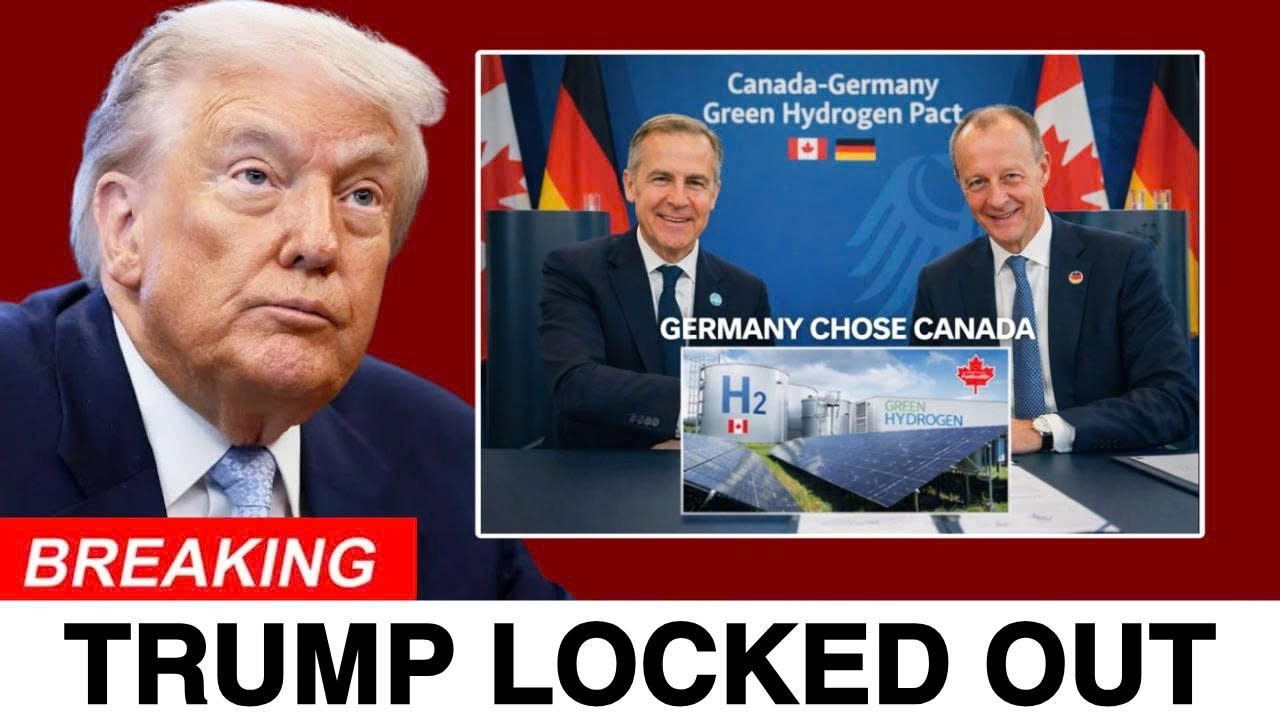
The turning point came on January 15, 2026, when the European Commission approved a €400 million green hydrogen partnership between Germany and Canada. The deal signals a fundamental change in Europe’s energy strategy: long-term climate compliance now outweighs proximity or short-term political alliances. While the United States once served as Europe’s emergency energy supplier through LNG exports, it was notably absent from the list of approved clean-energy partners — a message that did not go unnoticed in Washington.

For Europe, the logic is brutally clear. Under the EU’s Renewable Energy Directive and RFNBO standards, hydrogen must be produced entirely from renewable electricity, following strict rules on additionality, timing, and geography. Most U.S. hydrogen, derived from natural gas with carbon capture, simply does not qualify. Canada, by contrast, offers vast wind and hydro resources, political stability, and a regulatory framework increasingly aligned with Brussels’ climate rules — making it a safer bet for 20- to 30-year industrial contracts.
This policy divide is already reshaping global industry. As uncertainty grows around U.S. climate commitments — especially after Washington’s renewed withdrawal from the Paris Agreement — multinational firms are reassessing where future investments belong. Nissan and Subaru’s pullback reflects a deeper concern: markets tied to volatile climate policy risk becoming less competitive as Europe hardens its green trade barriers.
Canada,