By XAMXAM
DAVOS, Switzerland — The laughter came first. Sharp, knowing, and unmistakably international. In recent days, clips from Canadian television skewering Donald Trump ricocheted across social media, portraying the former U.S. president as a collector of imaginary awards, a braggart trapped in his own exaggerations. It was satire, exaggerated by design, and it landed because it drew from a familiar source: Trump’s own voice.
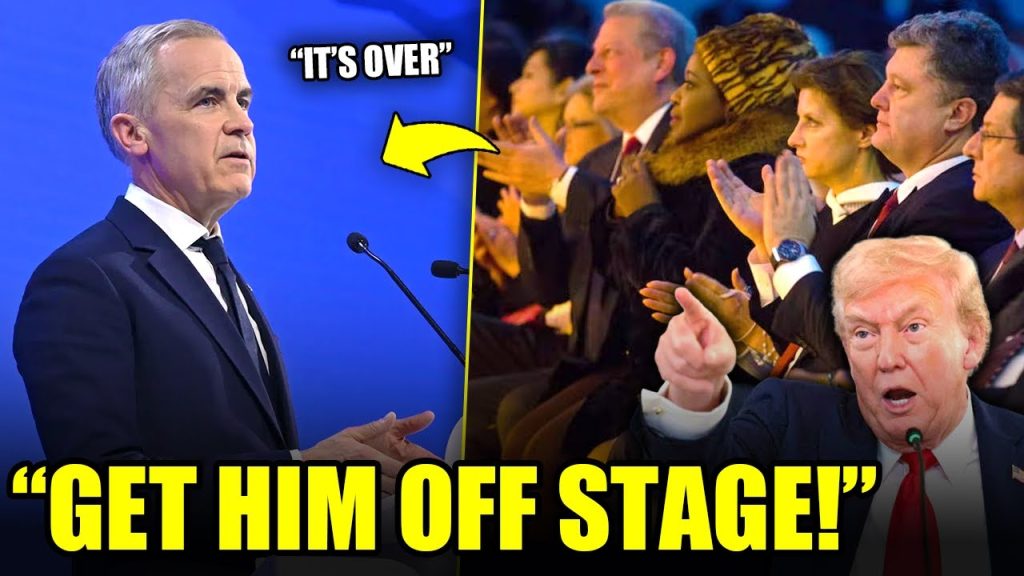
But the more consequential reaction did not unfold on a comedy stage. It happened here, in the Alpine calm of Davos, inside the austere halls of the World Economic Forum, where laughter gave way to something rarer — sustained applause.
The contrast could not have been sharper. As Trump was being lampooned abroad, Canada’s prime minister, Mark Carney, stood before presidents, finance ministers, and corporate leaders and delivered a speech that was neither theatrical nor mocking. It was measured, dense, and deliberately unsparing. When it ended, the audience rose.
Standing ovations are not customary currency in Davos. Polite nods, murmured approval, and quick exits are the norm. This response signaled recognition — not of showmanship, but of clarity.
Carney’s argument was straightforward and unsettling. The postwar assumption that economic integration would naturally produce stability, he said, no longer holds. Trade, finance, and supply chains have become tools of pressure rather than cooperation. Tariffs, once technical instruments, are now weapons. Silence, once prudence, has become complicity.
Without naming Trump directly, Carney described a style of power politics that relies on intimidation and spectacle — a description that required little interpretation. The room understood who, and what, he meant.
What made the moment resonate was not simply criticism of an American president. European leaders have voiced concerns about Trump before. What set this apart was posture. Carney did not plead for restraint or call for a return to an idealized past. He argued that middle powers must adapt by building resilience, diversifying partnerships, and refusing to normalize coercion. “Nostalgia is not a strategy,” he said, a line that drew audible reaction.
For many in the room, the timing mattered as much as the content. Trump’s renewed threats — on trade, on NATO obligations, on territorial questions like Greenland — have unsettled allies already navigating economic slowdown and geopolitical fragmentation. In that context, Carney’s speech sounded less like rhetoric and more like a framework others had been searching for.
The earlier satire, circulating widely on Canadian television and online, primed the atmosphere. It punctured the aura of inevitability that often surrounds Trump. By reducing him to a caricature, it exposed how much of his influence depends on deference and fear of escalation. Humor, in this case, softened the ground.
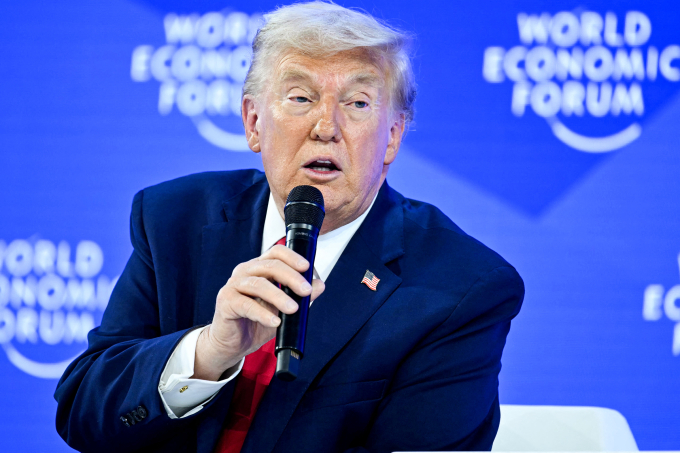
Then came the serious response. Where satire mocked excess, Carney supplied an alternative: discipline instead of drama, coordination instead of confrontation. The juxtaposition was striking. Trump appeared reactive and self-referential; Carney spoke in systems, alliances, and long horizons.
Diplomats in attendance noted that the applause was not about Canada alone. It reflected a broader mood among countries that feel squeezed between great-power rivalry and domestic pressures at home. For them, Carney articulated something they could safely endorse without sounding anti-American: a rejection of intimidation as normal statecraft.
None of this means Trump’s influence has evaporated. The United States remains the world’s largest economy and a central security actor. But the Davos reaction suggested a shift in tone. The reflexive caution — the instinct to downplay or accommodate Trump’s provocations — appeared weaker.
In private conversations afterward, officials spoke less about managing Trump and more about insulating themselves from him. Trade diversification, alternative security arrangements, and tighter regional cooperation were recurring themes. The speech did not create those ideas, but it gave them public voice.
The laughter that greeted Trump’s caricature was fleeting. The applause that followed Carney’s speech lingered. Together, they marked a subtle but meaningful turn: ridicule stripped away mystique, and resolve filled the space it left behind.
For Trump, whose political power has long relied on commanding attention and bending rooms to his will, the image was inverted. He was absent, yet omnipresent — discussed, dissected, and, for once, answered. Not with outrage, but with strategy.
The world did not cheer because Trump was mocked. It cheered because, for a moment, it saw a path beyond him.