By XAMXAM
When the European Commission approved a €400 million public funding package for a transatlantic green hydrogen corridor linking Canada to Germany, the decision barely registered in Washington. There were no emergency meetings, no dramatic statements. Yet the implications for Europe’s energy future — and for the United States’ role in it — are profound.
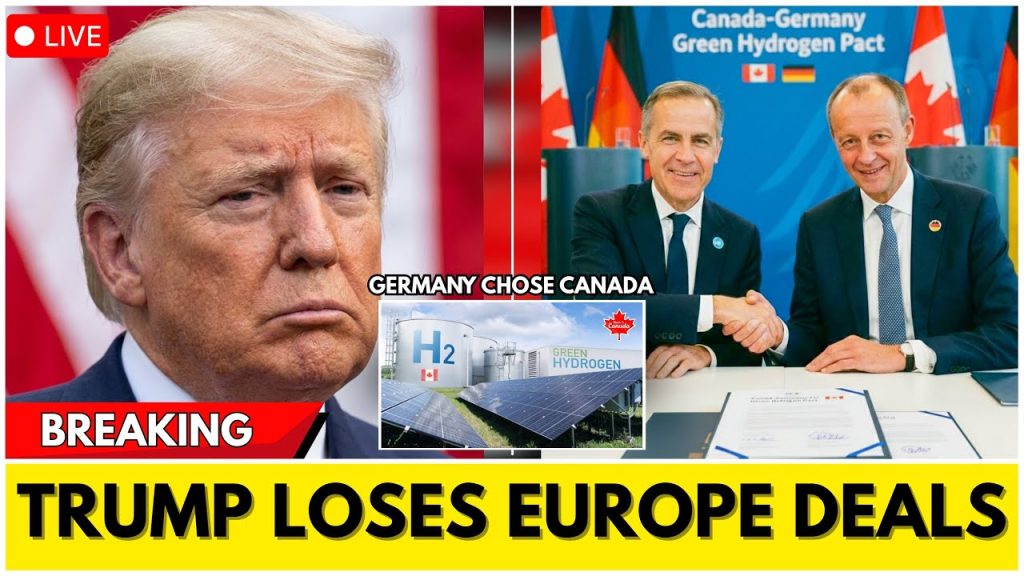
The deal is simple in outline and radical in consequence. Germany and Canada will each commit roughly €200 million to develop 300 megawatts of renewable hydrogen production capacity in Newfoundland and Labrador. Using the province’s vast hydroelectric resources, water will be split into hydrogen and oxygen, the hydrogen converted into ammonia for transport, and then shipped across the Atlantic to German ports. From there, it will be reconverted and fed directly into steel mills and chemical plants racing to meet Europe’s tightening climate mandates.
What makes the agreement striking is not only its scale, but what it excludes. There is no American technology involved, no U.S. energy intermediary, and no reliance on liquefied natural gas from the Gulf Coast. For European policymakers, that absence is increasingly a feature, not a bug.
Since Russia’s invasion of Ukraine shattered assumptions about pipeline gas, Europe has scrambled to secure energy that is both reliable and politically safe. American LNG played a crucial stopgap role, preventing shortages during the crisis winters of 2022 and 2023. But LNG remains a fossil fuel, and Europe’s regulatory direction is clear. Under binding European Union law, a growing share of industrial hydrogen must be renewable — 42 percent by 2030, rising further thereafter. Gas-derived hydrogen, even with carbon capture, does not qualify.
Canada’s proposal does. Newfoundland’s power grid is already almost entirely hydroelectric, delivering the rare combination of scale, reliability, and zero-carbon generation. For German industry, that matters more than slogans. Steelmakers like Salzgitter and Thyssenkrupp, and chemical giants such as BASF, are redesigning production processes around hydrogen-based inputs. They need long-term supply contracts that regulators will recognize as compliant — and that investors will view as stable.
Geography helps. Newfoundland sits closer to northern Europe than much of North America, shaving days off shipping routes and lowering transport costs. Existing ports and chemical-handling infrastructure mean ammonia exports can begin without the decade-long delays that plague greenfield projects. Once terminals in Wilhelmshaven and Brunsbüttel come online later this decade, the corridor will function as a dedicated industrial artery, not an experiment.
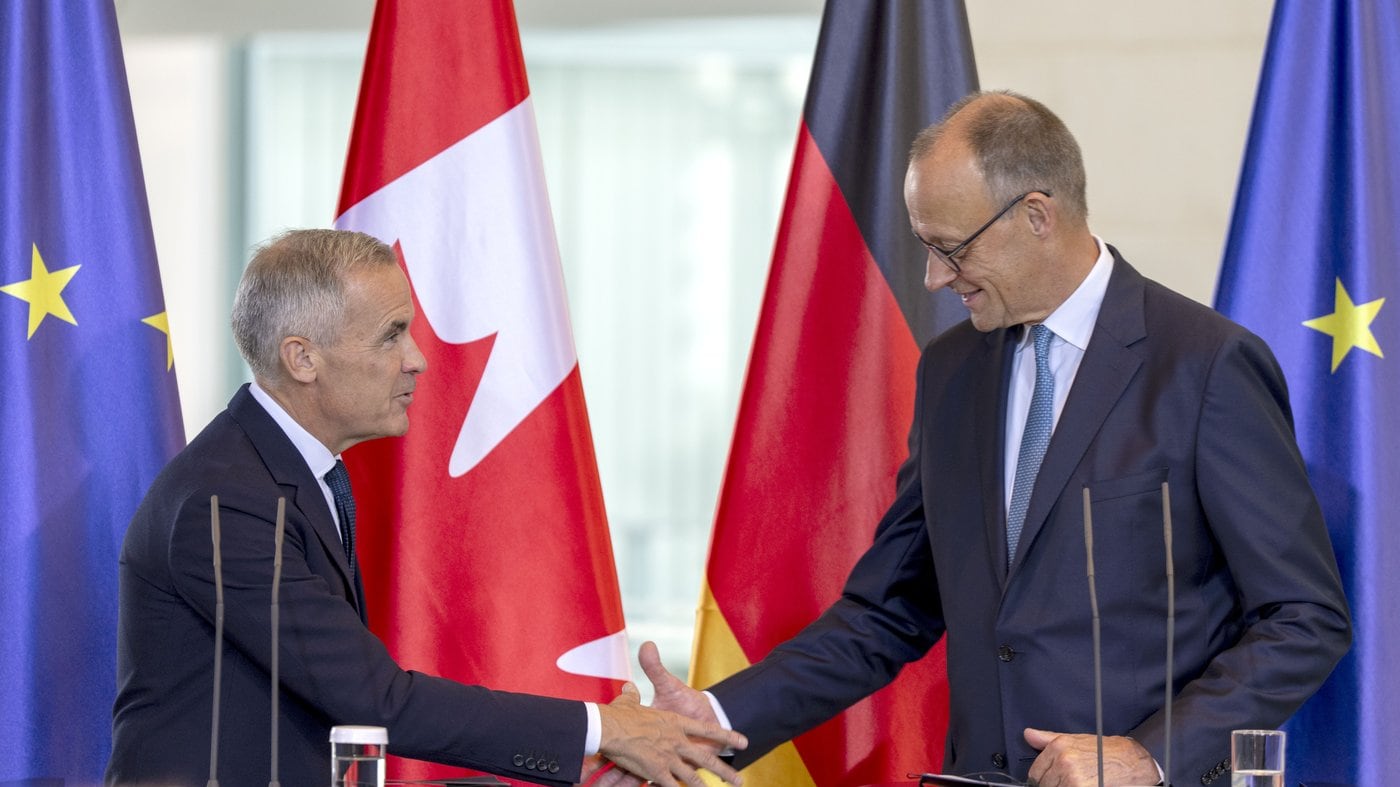
The political context is equally important. For years, European officials have spoken of “strategic autonomy” — reducing dependence not just on Russia, but on any single external supplier. Recent tensions with Washington, including tariff threats and unpredictable trade rhetoric under President Donald Trump, have reinforced that instinct. Energy planners in Berlin and Brussels are acutely aware that infrastructure investments lock in relationships for decades. Betting on renewable hydrogen from a stable, treaty-aligned partner like Canada is as much a geopolitical choice as an environmental one.
Ottawa, for its part, sees opportunity where it once saw periphery. Atlantic Canada has long struggled with outmigration and declining traditional industries. Green hydrogen offers a new export sector aligned with global climate policy rather than fighting it. Construction jobs will be temporary, but operations, maintenance, and logistics roles promise longer-term employment. Just as importantly, the project embeds Canada into Europe’s industrial transition, creating leverage that commodity exports rarely provide.
The United States is not barred by decree from participating in Europe’s hydrogen future. In theory, American producers could develop renewable hydrogen at scale and meet Europe’s stringent certification rules. In practice, regulatory uncertainty, grid constraints, and political volatility make long-term contracts difficult. European buyers are wary of tying critical supply chains to a country where climate policy can swing sharply with each election.
Once built, the Canadian-German corridor will be hard to displace. Steel plants converted to hydrogen cannot easily revert to coal or gas. Ports and storage terminals will be optimized for specific supply routes. Thirty-year offtake agreements, common in energy markets, create path dependence that outlasts political cycles on both sides of the Atlantic.
That is why this €400 million decision matters. It is not about a single project or even hydrogen alone. It signals a broader European judgment about where its future energy security lies. Clean power, backed by public investment, sourced from partners seen as predictable and aligned with climate goals, is displacing the old logic of cheapest-available fossil fuel.
For Washington, the shift is sobering. American energy dominance in Europe once seemed assured, built on shale gas abundance and existing trade ties. Yet dominance erodes quietly, through regulatory choices and infrastructure investments made elsewhere. By the time the consequences are obvious, the market has already moved on.
Canada and Germany are not making a statement about the United States. They are making plans. In energy, as in geopolitics, plans tend to matter more.