Federal Power, State Resistance, and the Minnesota Flashpoint
MINNEAPOLIS — The investigation announced this week by the Justice Department into Minnesota Governor Tim Walz and Minneapolis Mayor Jacob Frey marks one of the most aggressive escalations yet in the Trump administration’s campaign to assert federal authority over immigration enforcement, and it has sharpened a constitutional confrontation that now extends well beyond immigration policy itself.
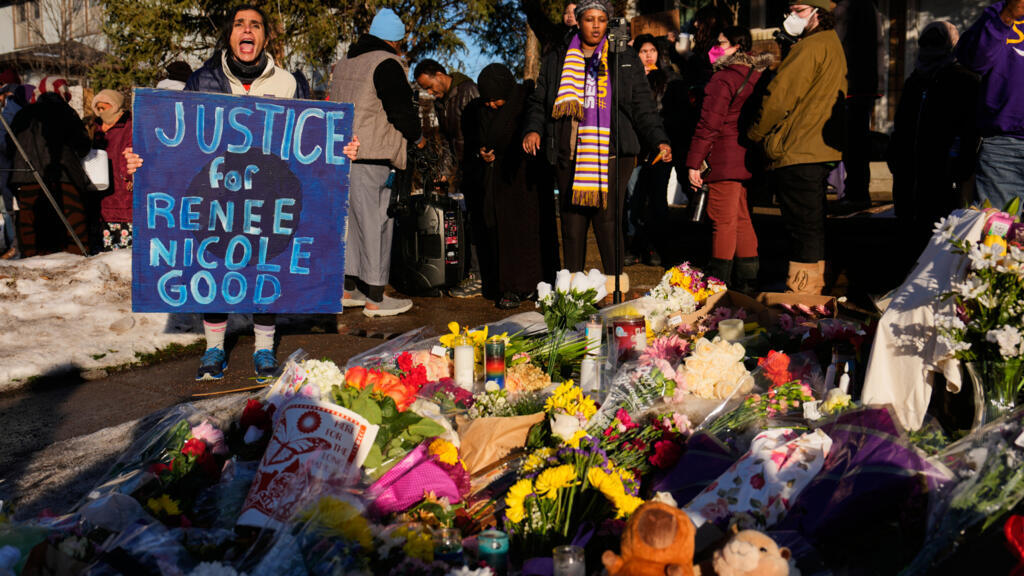
The inquiry, confirmed by sources to CNN and other major outlets, centers on allegations that Walz and Frey obstructed federal law enforcement following the fatal shooting of Renee Good by an Immigration and Customs Enforcement officer during a federal operation in Minneapolis. Grand jury subpoenas have reportedly been issued, though neither the governor’s office nor the mayor’s office had received formal notice at the time journalists contacted them for comment.
What has inflamed the controversy is not only who is being investigated, but who is not. The Justice Department has made clear that it is not pursuing a civil rights investigation into the officer who shot Good. Deputy Attorney General Todd Blanche said earlier this week that there was “currently no basis for a criminal civil rights investigation,” a statement that diverges from past DOJ practice, where fatal shootings by law enforcement are routinely scrutinized by the Civil Rights Division.
Instead, federal prosecutors appear to be examining the public statements and actions of state and local leaders who have openly criticized the administration’s response to Good’s death and the broader federal enforcement surge in Minnesota. That surge, dubbed “Operation Metro Surge” by federal officials, has involved roughly 3,000 ICE agents, DHS officers, and Customs and Border Protection personnel deployed across the Minneapolis–St. Paul area.
For Walz and Frey, the investigation has reinforced their central claim: that the Trump administration is weaponizing federal law enforcement to intimidate political opponents and chill dissent. In a statement, Walz accused the administration of “weaponizing the justice system and threatening political opponents,” calling it “a dangerous authoritarian tactic.” Frey, in a sharply worded response, described the probe as “an obvious attempt to intimidate me for standing up for Minneapolis, our local law enforcement, and our residents against the chaos and danger this administration has brought to our streets.”
The immediate spark for the investigation appears to be rhetoric rather than conduct. Frey had urged federal agents to leave Minneapolis in the early days of the deployment, and Walz encouraged residents to record ICE activity and to call 911 if they felt threatened. Federal officials have argued that such statements created a “hostile environment” for agents on the ground. Legal experts, however, note that criticism of federal action, even sharp criticism, is squarely protected by the First Amendment.
“This is not obstruction in any conventional legal sense,” said Jeffrey Toobin, a former federal prosecutor and legal analyst, in an MSNBC appearance. “What’s being investigated are words — political speech — not physical interference. That’s what makes this so alarming.”
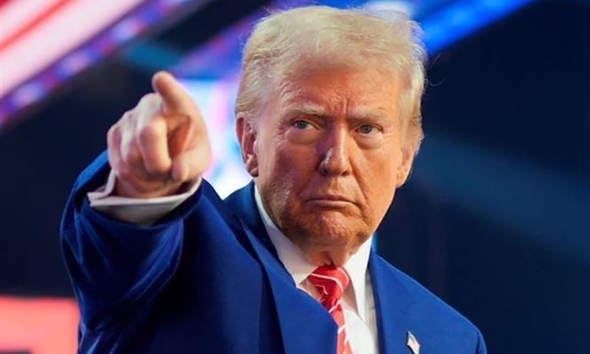
The administration’s posture has been reinforced by President Trump himself, who has repeatedly attacked Minnesota’s leadership in public statements and on social media. On Thursday, Trump threatened to invoke the Insurrection Act in Minnesota, a rarely used statute that allows the president to deploy active-duty military forces domestically. “It’s been used a lot,” Trump told reporters. “And if I needed it, I’d use it.”
That threat came even as a federal judge delivered a significant setback to the administration’s operation. On Friday, U.S. District Judge Katherine Menendez issued a preliminary injunction ordering federal law enforcement participating in Operation Metro Surge to stop pepper spraying, detaining, or pulling over peaceful protesters. The ruling applies broadly to ICE, DHS, and other federal personnel operating in Minneapolis.
Civil liberties advocates hailed the injunction as a rebuke to what they describe as a pattern of intimidation and excessive force. “This ruling draws a clear line,” said an attorney with the American Civil Liberties Union of Minnesota. “Federal agents are not above the Constitution, and protest is not a crime.”
The events in Minnesota have reverberated far beyond the state. On cable news and across social media platforms such as X, Instagram, and TikTok, commentators have framed the confrontation as a test case for the balance of power between federal authority and state sovereignty. Prominent legal scholars have warned that investigating governors and mayors for criticizing federal policy risks eroding foundational norms.
“What we’re seeing is the normalization of using criminal investigations as a political weapon,” wrote one constitutional law professor on X. “Once that line is crossed, it’s very hard to go back.”
Critics of the administration also point to what they see as selective enforcement. If the stated goal were truly public safety, they argue, federal authorities would focus on violent offenders and would rely on warrants and targeted investigations. Instead, they say, agents have conducted highly visible operations in immigrant neighborhoods, including restaurant raids that have drawn particular outrage.
One widely circulated account described federal agents eating at a local restaurant before arresting workers inside — a detail that, for critics, symbolized the performative nature of the crackdown. “If there was real urgency, real intelligence, you wouldn’t see that kind of behavior,” said one former DHS official in an interview shared widely online. “That’s not how serious law enforcement operates.”
Supporters of the administration counter that state and local leaders have undermined federal law and endangered agents by encouraging resistance. “No one is above the law, including governors and mayors,” a senior administration official said, speaking on background. “If their actions crossed the line into obstruction, that deserves investigation.”
Yet even some Republicans have expressed quiet unease, according to reporting from major news organizations, worried that the precedent could eventually be turned inward. Business leaders, largely silent so far, face growing pressure from activists to speak out, particularly given the economic disruptions caused by large-scale enforcement actions.
As the investigation unfolds, Minnesota has become a focal point in a broader national debate about the nature of federal power in the Trump era. Is the administration enforcing immigration law, or redefining it as a tool of political control? Are state leaders fulfilling their duty to protect residents, or unlawfully interfering with federal authority?
For now, the answers remain contested. What is clear is that the conflict has moved into a new phase — one in which courts, not just streets and statehouses, will play a decisive role. And as Judge Menendez’s injunction suggests, the judiciary may yet prove to be the most significant check on an administration increasingly willing to test the outer limits of its power.
As one observer wrote on social media this week, echoing a warning often attributed to James Baldwin, “The danger is not that people don’t see what’s happening. It’s that they’re taught to accept it.” In Minnesota, acceptance is far from assured.