By XAMXAM
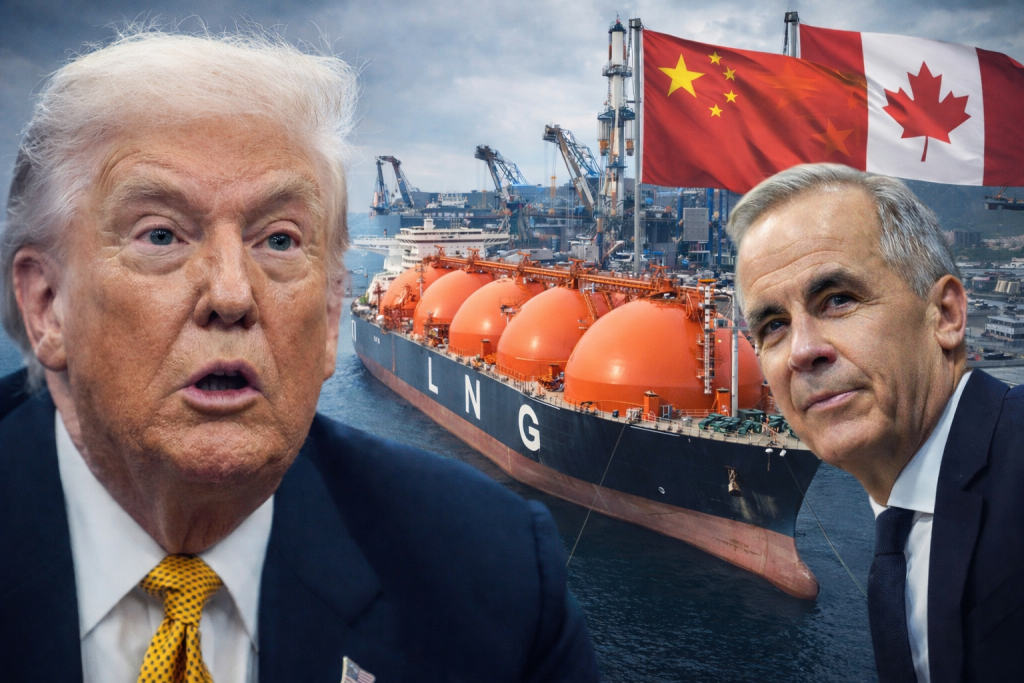
The announcement came not from Ottawa or Washington, but from Beijing. Standing before reporters after signing a memorandum of understanding on energy cooperation with China, Canada’s energy minister described a future that would have been nearly unthinkable a decade ago: tens of billions of dollars in liquefied natural gas investment, all aimed westward across the Pacific, and none of it destined for the United States.
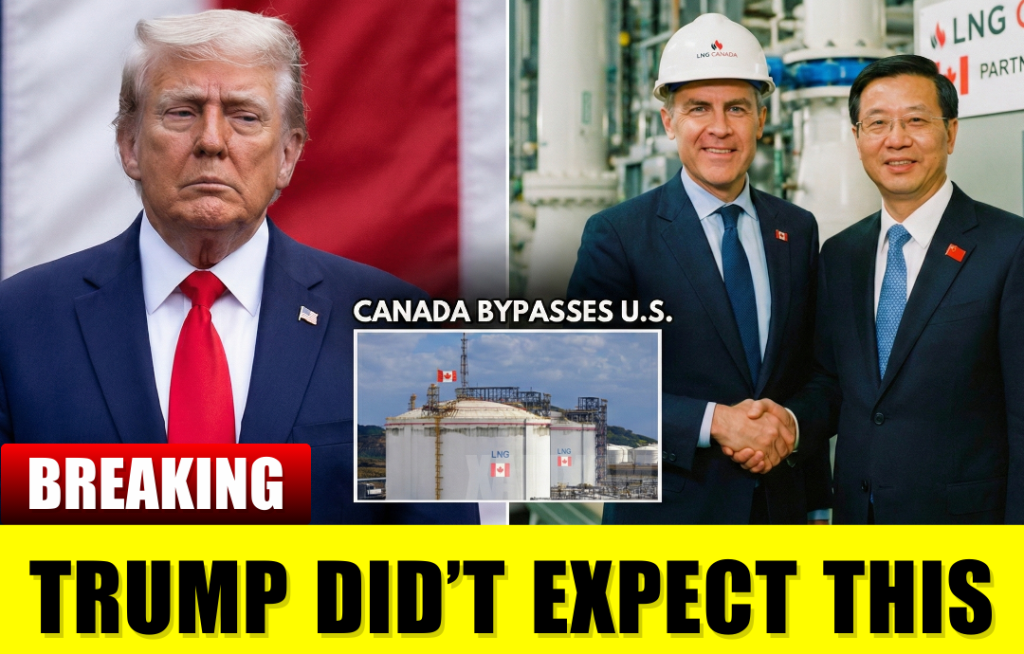
The scale of the shift is difficult to overstate. Canada is preparing to build as much as $109 billion worth of LNG infrastructure, capable of exporting roughly 50 million tons of gas annually by the end of the decade. Every ton is earmarked for Asian markets. The United States, long the default destination for Canadian energy, is not part of the plan.
For Washington, the implications are unsettling.
For generations, geography and pipelines ensured that Canadian natural gas flowed south. The United States was not just Canada’s largest customer; it was effectively the only viable one. That reality granted Washington leverage, especially during periods of political tension. Trade threats carried weight because alternatives were limited. Infrastructure made dependency feel permanent.
That assumption no longer holds.
The pivot is the product of years of groundwork, but it accelerated under Prime Minister Mark Carney, whose government has prioritized diversification over deference. While U.S. leaders, including Donald Trump, relied on tariffs and threats to extract concessions, Canada invested in something less visible and far more durable: export capacity.
The anchor is the LNG Canada facility in Kitimat, British Columbia, which began shipping cargoes to Asia in 2025. Backed by an international consortium that includes Shell, Mitsubishi, and Chinese state-owned firms, the terminal represents the first large-scale realization of Canada’s Pacific energy ambitions. It will not be the last. Six additional export projects are in various stages of development along the British Columbia coast, all designed for direct shipping to Asia’s fastest-growing energy markets.
China sits at the center of this transformation. As the world’s largest importer of LNG, it has both the demand and the capital to shape supply chains. By investing directly in Canadian liquefaction facilities, Chinese firms are not merely buying fuel; they are securing ownership stakes in production that will operate for decades. That integration all but guarantees that Canadian LNG will flow west, regardless of political shifts elsewhere.
The appeal is mutual. Canada offers political stability, rule of law, and an energy product marketed as among the lowest-carbon LNG in the world, thanks to British Columbia’s hydroelectric-powered liquefaction process. China, under pressure to reduce coal use while sustaining economic growth, needs large volumes of cleaner-burning gas. The alignment is strategic, not symbolic.

What makes the shift particularly consequential is its permanence. Energy infrastructure is not easily repurposed. Liquefaction plants, export terminals, and long-term shipping contracts are built around specific routes and customers. Once capital is committed and construction completed, reversing direction becomes economically irrational. A terminal facing the Pacific cannot simply be turned toward the Atlantic, nor can supply contracts spanning 20 or 30 years be unwound without severe cost.
This is where Washington’s influence erodes. Tariffs can be raised or lowered. Diplomatic tones can soften or harden. But infrastructure, once in place, defines reality. By the time Canada reaches its target of 50 million tons of annual LNG exports, Asian buyers will be locked in, and American leverage will have little left to grip.
The shift also reflects a deeper loss of trust. Canadian energy executives watched as trade became a political weapon, subject to sudden announcements and unpredictable reversals. Long-term projects, particularly those expected to operate for half a century, cannot be financed on the assumption that today’s political goodwill will survive tomorrow’s election cycle. Asia, by contrast, offered long-term contracts, equity investment, and a clear signal that energy would be treated as commerce rather than coercion.
For the United States, the consequences extend beyond Canada. Asian LNG demand is projected to grow sharply over the next decade, driven by China and India. Losing access to Canadian supply does not create an immediate shortage, but it narrows options in a market where flexibility increasingly matters. It also signals to other energy producers that diversification is not merely prudent, but achievable.
From Ottawa’s perspective, the calculation is straightforward. Diversification reduces vulnerability. By ensuring that Canadian energy can reach multiple markets, the country insulates itself from political pressure and economic shocks. It is not abandoning the United States so much as ending its exclusivity.
The irony is difficult to ignore. Policies intended to reinforce American dominance may have accelerated its decline in precisely the domain where leverage once seemed assured. Canada did not retaliate with countermeasures or confrontational rhetoric. It built alternatives.
Those alternatives are now becoming concrete—steel, pipelines, terminals, and contracts stretching far into the future. When the first generation of these facilities reaches the end of its lifespan around mid-century, the political battles that helped inspire them will be long forgotten. The infrastructure will remain.
In energy, as in geopolitics, the most consequential moves are often the quietest. By the time their effects are fully visible, the window to reverse them has usually closed.