Canada Turns to China as Trump’s Trade Threats Reshape Global Alliances
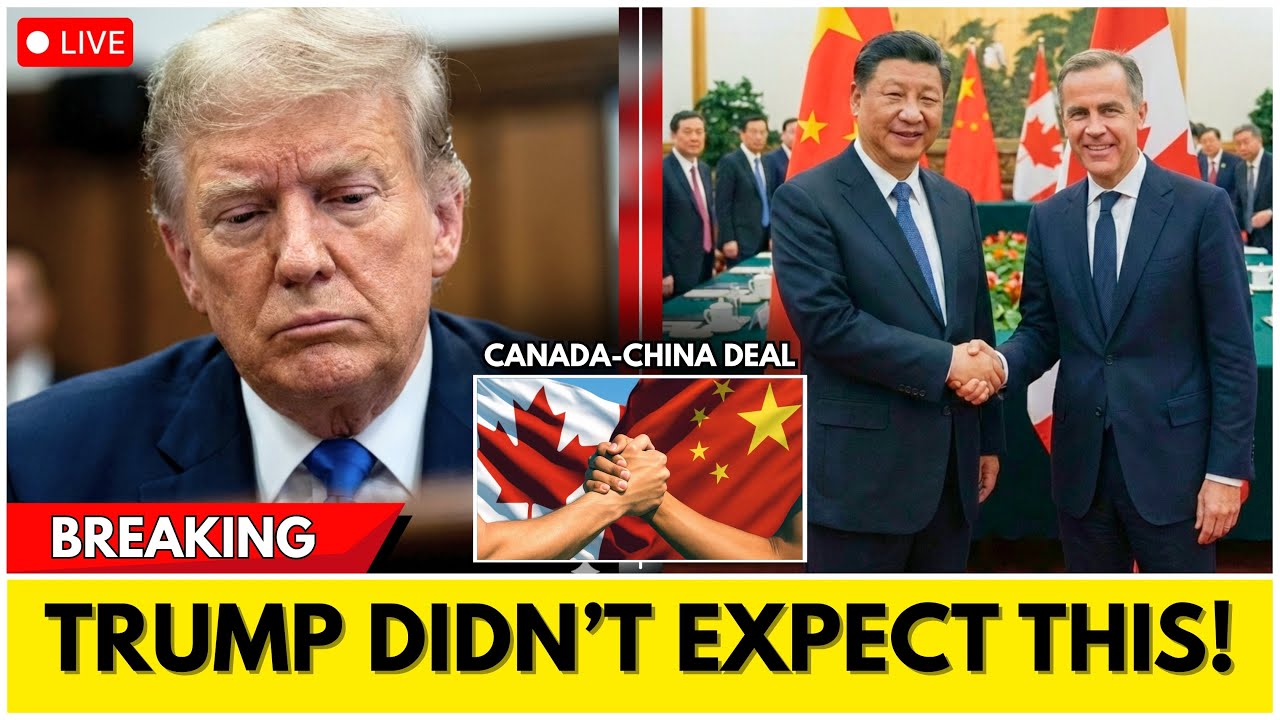
Beijing, Jan. 13, 2026 — When Prime Minister Mark Carney stepped off Air Canada One onto the tarmac in Beijing on Monday, it marked more than the resumption of a long-frozen diplomatic relationship. It signaled a strategic pivot in Canada’s economic and foreign policy—one driven less by ideology than by necessity.
Carney’s visit, the first by a Canadian prime minister to China in eight years, comes as Ottawa accelerates efforts to reduce its overwhelming dependence on the United States as a trading partner. For decades, roughly three-quarters of Canadian exports flowed south of the border. Now, amid escalating tariff threats and political hostility from President Donald Trump, Canada is seeking alternatives.
China, the world’s second-largest economy and Canada’s second-largest trading partner, has emerged as the most consequential option.
“We are forging new partnerships around the world to build an economy that is stronger and more resilient to global shocks,” Carney said before departing for Beijing, framing the trip as part of a broader plan to double Canada’s non-U.S. exports over the next decade.
A Relationship Frozen by Politics
The Canada–China relationship has been largely dormant since late 2018, when Canadian authorities arrested Huawei executive Meng Wanzhou at the request of the United States. Beijing retaliated by detaining two Canadian citizens, triggering a diplomatic crisis that lasted more than three years.
Trade relations deteriorated further in October 2024, when Canada imposed 100 percent tariffs on Chinese electric vehicles, aligning itself with U.S. trade policy. China responded with sweeping punitive measures: 100 percent tariffs on Canadian canola oil and meal, steep duties on canola seed, and 25 percent tariffs on seafood and pork.
The impact on Canadian producers was severe. Saskatchewan’s canola exports to China collapsed by more than 75 percent year-over-year by mid-2025. Manitoba pork producers reported losses exceeding $19 million annually. For farmers across the Prairies, China—once their second-largest export market—vanished almost overnight.
Trump Changes the Calculation
What ultimately altered Ottawa’s approach was not Beijing, but Washington.
As President Trump escalated tariff threats against Canada and repeatedly suggested annexation or economic coercion, Carney concluded that reliance on a single trade partner had become a strategic liability.
“The United States under Trump has shown it is willing to weaponize trade,” said a senior Canadian official familiar with the talks. “That forced a reassessment of long-standing assumptions.”
Carney’s first meeting with President Xi Jinping, on the sidelines of the Asia-Pacific Economic Cooperation summit in South Korea in October 2025, marked the initial thaw. Xi invited Carney to Beijing, setting the stage for this week’s visit.
What’s on the Table
At the center of the Beijing talks is a potential trade reset.
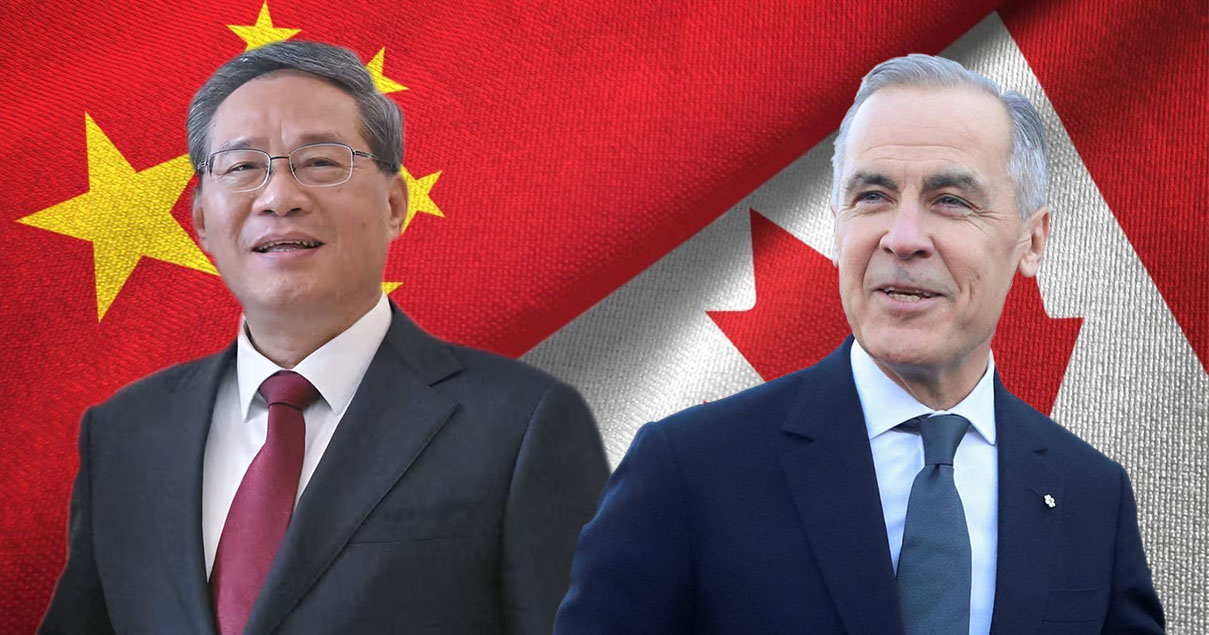
According to people briefed on the discussions, China has offered to lift tariffs on Canadian canola, pork, and seafood if Canada agrees to roll back its tariffs on Chinese electric vehicles. Bloomberg reported that Chinese officials planned to formally present the proposal during Carney’s visit.
For Ottawa, the trade-off is politically delicate. Ontario Premier Doug Ford has warned that Chinese EV imports could threaten Canada’s auto manufacturing base. But leaders in Western Canada, where agriculture dominates, have pressed for relief.
“This has become a two-front trade war that disproportionately harms the Prairies,” Manitoba Premier Wab Kinew said in a recent statement.
Energy Reshapes the Relationship
Beyond agriculture, energy has quietly become the most transformative factor in Canada–China ties.
Since the Trans Mountain pipeline expansion entered service in mid-2024, Canada has dramatically increased crude oil exports to Asian markets. Shipments to China surged more than 240 percent during the first three quarters of 2025, according to government data.
The shift accelerated after the Trump administration redirected Venezuelan oil supplies to the United States, cutting off one of China’s primary sources of heavy crude. Canadian oil filled the gap.
“Once refineries adapt to Canadian specifications, switching suppliers is costly,” said an energy analyst in Calgary. “That creates long-term lock-in.”
Canada is also exploring liquefied natural gas projects aimed at Asian buyers. With the world’s fourth-largest natural gas reserves, Canada sees China as a stable, long-term customer as Beijing seeks to reduce coal consumption.

Strategic Autonomy, Not Alignment
Canadian officials are careful to frame the pivot as diversification, not defection.
“This is not about choosing China over the United States,” Carney said during a briefing. “It’s about ensuring Canada is not economically captive to any one partner.”
The strategy mirrors Australia’s response to Chinese trade restrictions earlier in the decade: diversify markets, build infrastructure, and wait for leverage to shift.
Ottawa is simultaneously deepening ties with Europe, India, Japan, and Southeast Asia. The government has allocated $159 million over three years to support trade financing for firms entering new markets.
Risks and Calculations
The risks are real. China has a history of using economic dependence for political leverage, and concerns over human rights and national security remain unresolved. Canadian officials insist that safeguards for sensitive technologies and critical infrastructure will remain in place.
Still, the logic driving Carney’s strategy is clear. If Canada has multiple major export markets, no single power can dominate its economic future.
President Trump is unlikely to welcome the shift. His administration has repeatedly warned allies against deepening trade ties with China. Retaliation remains a possibility.
But Canadian officials believe Trump’s leverage is limited. The United States depends heavily on Canadian energy, minerals, and agricultural imports, and cutting them off would raise costs for American consumers and industries.
A Turning Point
If successful, the Beijing visit could normalize a relationship that has been dysfunctional for nearly a decade. Agreements on agriculture, energy cooperation, and critical minerals are expected. Chinese firms have expressed interest in investing in Canadian infrastructure and manufacturing, including electric vehicle supply chains.
More importantly, regular high-level dialogue would resume, reducing the risk of sudden tariff wars and political escalation.
“This is pragmatic engagement,” said a former Canadian diplomat. “Not trust, not naivety—just realism.”
For more than a century, Canada’s foreign policy has been anchored in automatic alignment with Washington. That era, Canadian officials now acknowledge privately, is ending.
Trump’s confrontational approach forced the issue. In Beijing this week, Canada made clear that it intends to chart its own course—even if that means standing between two superpowers rather than firmly behind one.
Whether that strategy succeeds will define Canada’s economic and diplomatic future for decades to come.