By XAMXAM
When Prime Minister Mark Carney stepped off a government jet in Beijing this week, it marked more than the first visit by a Canadian leader to China in eight years. It signaled a recalibration of Canada’s place in the global economy — one driven less by ideological warmth toward Beijing than by a hard reassessment of risk in an era of aggressive American trade policy.
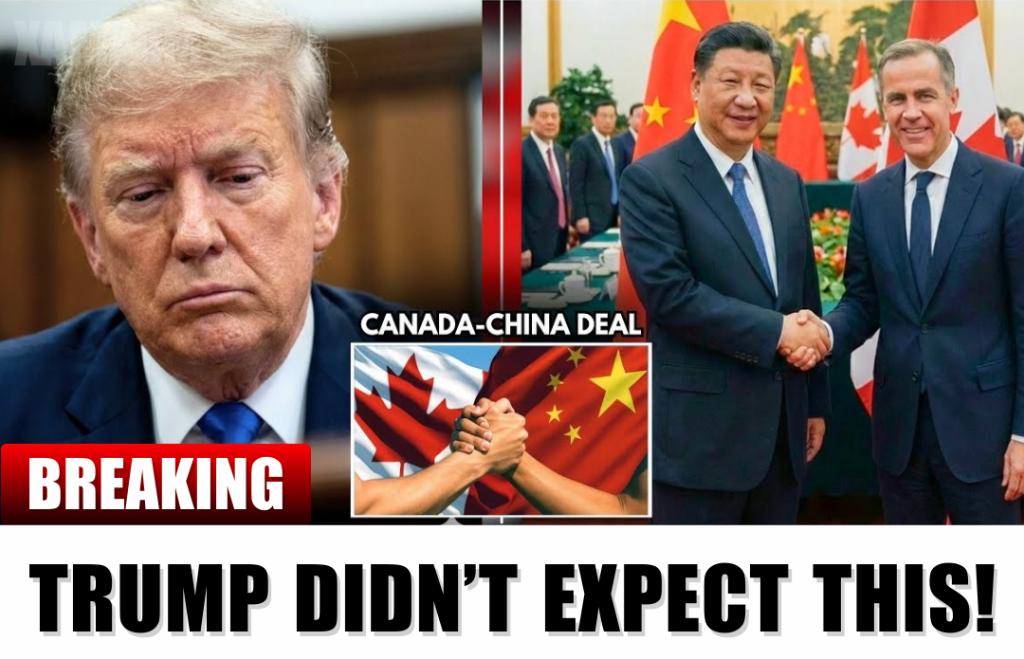
Carney’s message was explicit before he left Ottawa: Canada is forging new partnerships to reduce dependence on a single trading partner and build resilience against global shocks. The unspoken subtext was just as clear. Under Donald Trump, the United States has become an unpredictable anchor, willing to weaponize tariffs and rhetoric even against its closest allies. For Canada, that reality has forced a search for alternatives — and China, for all its complications, is the largest available option.
The bilateral relationship had been frozen since 2018, when Canada detained a senior Huawei executive at Washington’s request and Beijing responded by jailing two Canadians and choking off trade. The damage was real. China imposed sweeping tariffs on Canadian canola, pork, seafood, and other agricultural products, wiping out billions in exports and inflicting acute pain on prairie farmers. By the summer of 2025, Saskatchewan’s canola shipments to China had fallen by more than 70 percent year over year, while pork producers in Manitoba reported losses approaching $20 million annually.
What changed was not a sudden thaw in trust but a shift in leverage. Trump’s return to office brought a cascade of tariff threats, talk of annexation, and a broader strategy that treated trade as coercion rather than coordination. For Carney, the lesson was blunt: dependence on a single market had become a strategic liability. China, already Canada’s second-largest trading partner, offered both scale and immediacy.
The visit to Beijing is built around a transactional core. Chinese officials have indicated a willingness to lift punitive tariffs on Canadian agricultural products if Ottawa reconsiders its own 100 percent duties on Chinese electric vehicles — tariffs Canada imposed in late 2024 largely in step with Washington. For Canadian farmers, the stakes are existential. Restoring access to China would revive a market that once absorbed massive volumes of canola and protein exports. For Beijing, access to the Canadian EV market — and potentially Canadian manufacturing capacity — would soften the blow of American restrictions.
Energy looms even larger. Since the Trans Mountain pipeline expansion came online, Canadian crude exports to Asia have surged, with shipments to China rising sharply in 2025. Trump’s move to seize control of Venezuelan oil flows redirected supplies toward the United States and left Chinese refiners scrambling for heavy crude. Canada filled the gap. Once refineries adapt to a new supplier, those relationships tend to stick, creating long-term dependency that is difficult to unwind.
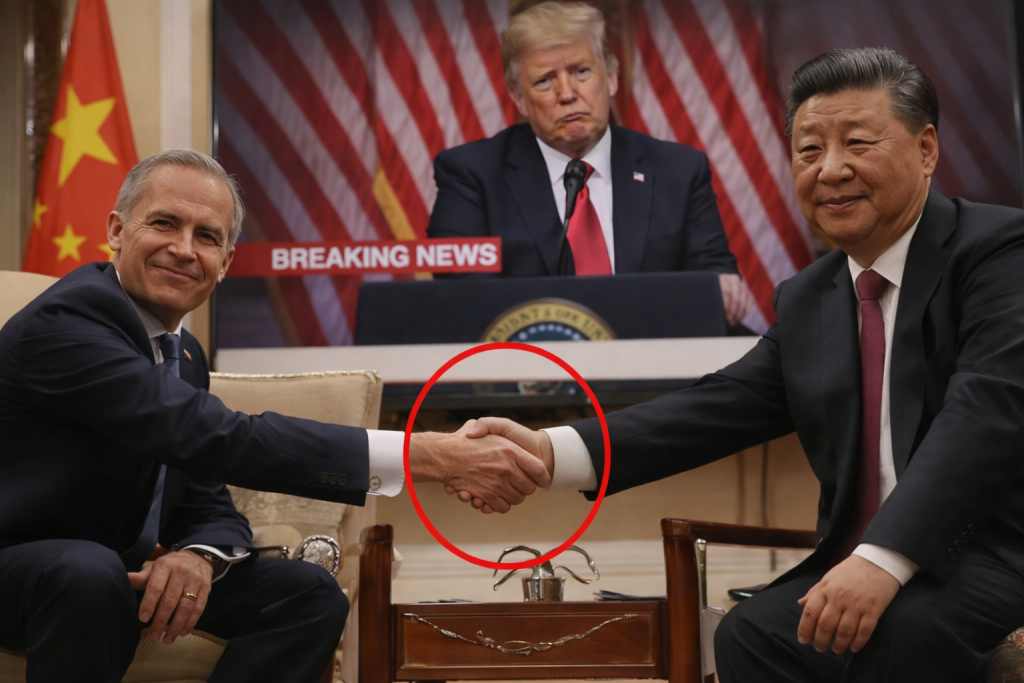
Carney’s ambition extends beyond patching old wounds. He has set a goal of doubling Canada’s non-U.S. exports over the next decade — a structural reorientation for an economy that has long sent roughly three-quarters of its goods south of the border. The government has backed the strategy with new trade financing, infrastructure spending, and a push to reopen channels across Europe and Asia. China is the centerpiece not because it is easy, but because it is large enough to matter.
The risks are substantial. Beijing has a record of using economic dependence as political leverage, and any deepening of ties raises concerns about human rights, security, and technology transfer. Carney has been careful to frame engagement as pragmatic rather than trusting: cooperate where interests align, protect sensitive sectors, and avoid creating a new dependency to replace the old one.
Still, the broader implication is hard to miss. For decades, Canada’s foreign economic policy rested on automatic alignment with Washington. That assumption has fractured. By reopening trade with China over U.S. objections, Ottawa is testing whether it can chart an independent course without being crushed between rival powers.
History suggests diversification can work. Australia endured years of Chinese trade retaliation by cultivating alternative markets, only to see Beijing quietly lift restrictions when it needed Australian resources again. Canada’s resource base — energy, agriculture, critical minerals — gives it similar leverage, provided it invests in the infrastructure to reach multiple buyers.
From Washington’s perspective, the pivot looks like erosion of influence. Tariffs meant to discipline allies have instead encouraged them to build exits. Once new routes, contracts, and relationships are established, they rarely disappear even if policy shifts. Infrastructure creates habits, and habits shape power.
Carney’s Beijing visit will not produce a single dramatic deal. Its success will be measured in quieter ways: reopened channels, phased tariff relief, long-term supply agreements, and the normalization of dialogue after years of silence. If those pieces fall into place, Canada will have gained something more valuable than a headline — options.
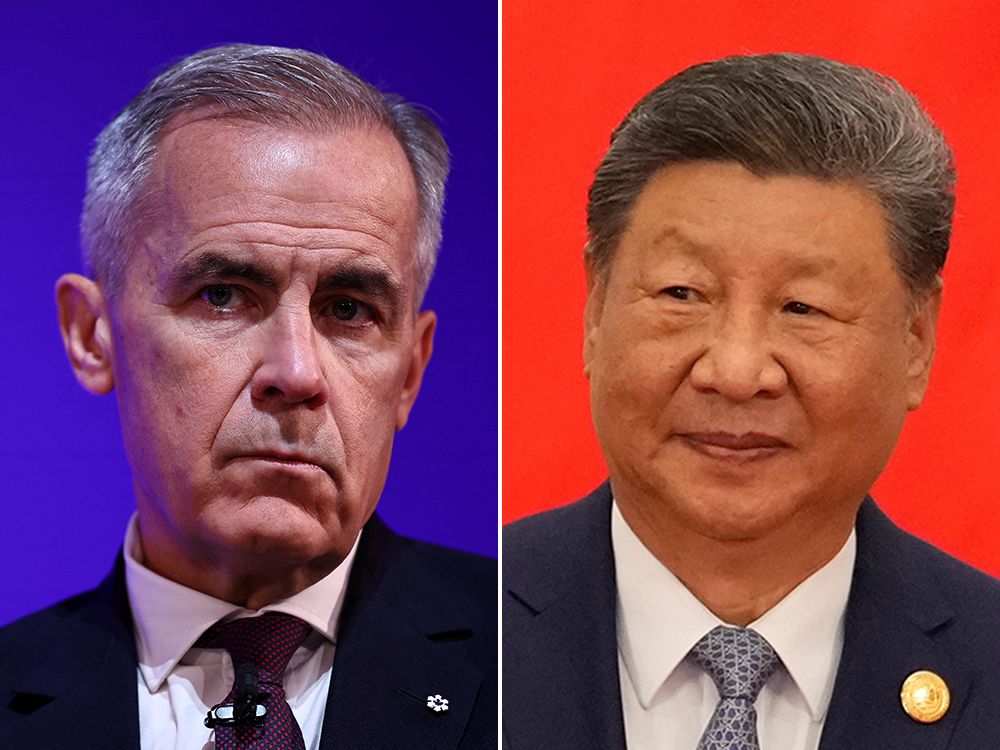
In an increasingly volatile world, options are leverage. And leverage, Ottawa has concluded, is the only reliable defense against a partner that no longer plays by predictable rules.