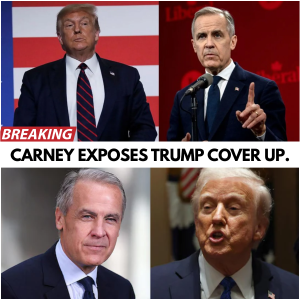
Justice Department Charges Trump Under Espionage Act, Forcing a Reckoning for American Politics
WASHINGTON — The Department of Justice has taken one of the most consequential legal steps in modern American history, formally charging former President Donald J. Trump with violations related to the Espionage Act, a statute reserved for the most serious breaches of national security.
The charges, unveiled after months of quiet but intense investigation, expose Mr. Trump to potential decades in prison if prosecutors succeed on the most severe counts. Legal analysts say the maximum exposure could approach 40 years, depending on how the charges are structured and proven in court.
But the significance of the moment extends far beyond one defendant or one election cycle. The indictment places the American political system itself under strain, forcing unresolved questions about presidential power, accountability, and the durability of democratic institutions into the open.
“This is not a symbolic case,” said one former federal prosecutor familiar with national security law. “This is the government asserting that the rules governing classified information apply to everyone, including former presidents.”

From Investigation to Prosecution
For years, Mr. Trump has faced a cascade of investigations stemming from his conduct after leaving office: his role in the events of January 6, his business dealings, his fundraising operations, and most prominently, the discovery of classified documents at his Mar-a-Lago residence in Florida.
That documents case has unfolded slowly and methodically under Special Counsel Jack Smith, whose deliberate approach frustrated cable news commentators but reassured legal experts. Prosecutors moved incrementally, gathering evidence, interviewing witnesses, and negotiating document returns before escalating to subpoenas and, ultimately, charges.
According to people familiar with the prosecution’s theory, the case is not centered on accidental possession or bureaucratic mishandling. Instead, prosecutors allege that Mr. Trump knowingly retained national defense information, refused to return it when demanded, and engaged in conduct consistent with obstruction.
Most damaging, investigators believe there is evidence that Mr. Trump discussed or showed sensitive materials to individuals lacking authorization—conduct that transforms the dispute from an archival matter into a potential national security crime.
That distinction is critical. Once intent and obstruction enter the equation, legal defenses narrow considerably.
The Limits of Presidential Power
Mr. Trump has long argued—publicly and privately—that his status as a former president endowed him with sweeping authority over classified materials. His allies have echoed claims of presidential privilege and unilateral declassification powers.
But legal scholars note that presidential authority does not extend indefinitely beyond office, nor does it override statutory obligations governing the handling of national defense information.
“Presidential privilege is not a personal property right,” said a constitutional law professor at a major university. “It does not permit the storage of sensitive material in unsecured locations, nor does it nullify subpoenas or excuse obstruction.”
Photographic evidence, witness testimony, and communications referenced in court filings suggest prosecutors believe they can demonstrate both knowledge and intent—two elements essential for Espionage Act convictions.

Political Shockwaves
The charges have sent tremors through the Republican Party, which remains deeply tethered to Mr. Trump as its dominant political figure. Elected officials now face an unenviable choice: defend a leader accused of serious national security violations or risk alienation from his loyal base.
The dilemma is particularly acute for candidates in swing districts and battleground states, where voters may tolerate political chaos but draw sharper lines around national security.
Some Republican officials have already begun adjusting their rhetoric, shifting from blanket denunciations of the Justice Department to more conditional defenses. Others have doubled down, accusing prosecutors of political persecution and weaponization of the law.
Mr. Trump, for his part, has escalated his attacks on the Justice Department, Attorney General Merrick Garland, and the broader legitimacy of the legal system—an approach that has energized supporters but hardened institutional resolve.
A Warning Beyond Politics
Adding to the gravity of the moment, Warren E. Buffett—who rarely intervenes in political controversies—issued a public warning touching both democracy and markets. While not weighing in on guilt or innocence, Mr. Buffett cautioned that institutional instability carries economic consequences.
Markets, he has long argued, depend on predictable rules and trusted institutions. When legal systems lose legitimacy in the eyes of large portions of the public, uncertainty spreads.
“Democracies don’t collapse overnight,” said one economist. “They erode when institutions stop being believed.”
The Espionage Act, unlike many statutes invoked in political disputes, occupies a distinct place in American law. Its invocation signals a heightened level of seriousness and shifts the case beyond electoral considerations.
A Test With Lasting Consequences
The immediate political fallout is unavoidable. Mr. Trump’s campaign is increasingly intertwined with his legal defense. Court filings and hearing schedules threaten to dominate media cycles. Down-ballot Republicans must navigate the gravitational pull of a leader under prosecution.
But the deeper implications reach further.
The case tests whether the United States is willing—and able—to enforce its most sensitive national security laws against its most powerful former officials. If former presidents are functionally exempt, critics warn, the classification system becomes advisory rather than binding.
That erosion, intelligence officials say, would weaken trust among allies, compromise intelligence-sharing relationships, and degrade the credibility of American safeguards.
“This is about whether the guardrails hold,” said a former intelligence official. “Once you carve out exceptions at the top, the entire structure weakens.”
An Unavoidable Question
At its core, the prosecution forces the country to confront a question it has postponed for generations: Is a former president above the law?
If the answer is yes, then the legal system operates selectively. If the answer is no, then this moment—however destabilizing—was inevitable.
The Justice Department has now crossed a threshold from investigation to prosecution under one of the most serious frameworks in American law. Mr. Trump is responding by challenging the legitimacy of the institution itself. Republicans are caught between loyalty and survival. Markets and allies are watching closely.
What happens next—in courtrooms, on the campaign trail, and within political parties—will shape not only the 2024 election but the long-term boundaries of presidential power.
Once such precedents are set, they do not fade quickly. They define the rules for generations.
And for that reason, this case is not merely another political scandal. It is a stress test of the American system itself.