By XAMXAM
When Donald Trump publicly floated the possibility of sending American troops into Mexico, the reaction across much of Washington focused on whether the threat was real, rhetorical, or simply another escalation designed to dominate the news cycle. In Ottawa, the response was quieter—and far more serious.
For Canada, the issue was never just Mexico.
The threat landed after a pattern had already formed: military action in Venezuela, repeated annexation rhetoric about Greenland, and earlier suggestions that Canada itself might someday be treated as something less than fully sovereign. Taken together, the message was unmistakable. The United States, under Trump, was increasingly willing to treat force not as a last resort, but as a policy option—especially toward its neighbors.
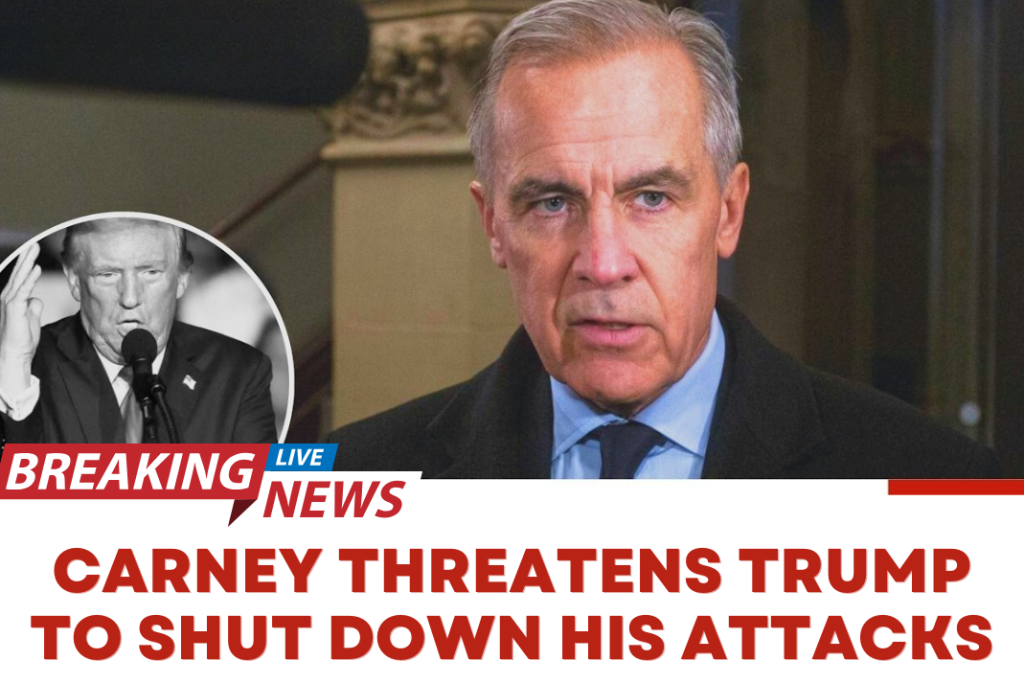
Canada’s prime minister, Mark Carney, did not answer Trump’s remarks with outrage or theatrical condemnation. Instead, his government moved with deliberation. Diplomatic lines hardened. Coordination with allies accelerated. And Canada’s posture—long built on the assumption that restraint would ultimately prevail in Washington—shifted.
The concern in Ottawa is not that American tanks will roll north tomorrow. It is something subtler and more dangerous: the erosion of assumptions that have governed North America for decades. Consent. Multilateralism. The idea that borders are fixed and sovereignty non-negotiable.
Trump’s language toward Mexico matters because it follows a logic that does not stop at one country. Venezuela was framed as a security problem. Greenland as a strategic necessity. Mexico as a counterterrorism challenge. Different justifications, same underlying principle: that American force is legitimate wherever U.S. interests are declared urgent.
Canada sits squarely inside that logic.
For years, Trump has spoken of North America as a single pressure zone. When he talks about drugs, borders, or trade enforcement, Canada and Mexico are routinely bundled together, regardless of scale or evidence. That framing suggests not partnership, but hierarchy—a region managed rather than negotiated with.

In that context, a threat against Mexico is not an isolated crisis. It is a test case.
Canadian security analysts worry less about invasion than about precedent. Increased U.S. military patrols justified as “shared security.” Expanded American authority in Arctic airspace or waters. Decisions taken unilaterally and presented after the fact. Sovereignty, in such scenarios, does not vanish overnight. It thins.
Carney’s response reflects an understanding of that risk. Canada has moved quickly to ensure it is not isolated. European allies have been engaged early. France and other NATO partners have publicly rejected annexation rhetoric and warned that threats against allies undermine the global order itself. Canada’s Arctic commitments—long underfunded—are being reinforced, not as provocation, but as presence.
This is not the Canada Trump encountered during his first term.
Pressure works best when applied to a country standing alone. Canada has taken steps to ensure that any pressure applied now would immediately reverberate far beyond bilateral channels. A threat to Canada would no longer be framed as a disagreement with a neighbor, but as a challenge to alliances and norms.
Mexico’s rejection of U.S. military intervention only sharpens the stakes. Trump has already demonstrated a willingness to act without consent, citing urgency and morality rather than law. For Canada, that confirms a shift it can no longer afford to ignore: restraint is no longer assumed.
The deeper danger is systemic. Canada depends on a rules-based international order not as an abstraction, but as a practical shield. When borders are treated as conditional and force as flexible, smaller and middle powers bear the cost first. Canada, as a stabilizing actor in the Western Hemisphere, becomes both a defender of that system and—inevitably—a target of pressure.
Carney has avoided framing this moment as a crisis. Instead, he has treated it as a recalibration. Alliances tightened before threats peak. Positions clarified before ambiguity hardens. Visibility replacing silence.
Trump’s threat against Mexico may never materialize into military action. But it has already changed the equation. It signals that coercion is now openly discussed, not whispered. And once that door opens, neighbors must decide whether to wait—or to prepare.
Canada has chosen preparation.
The message from Ottawa is not confrontational, but firm: Canada will not face this kind of pressure alone. Any attempt to extend coercion northward would not project American strength. It would expose recklessness—and trigger consequences far beyond the bilateral relationship.
In geopolitics, the most effective resistance often happens before a crisis fully arrives. By the time Trump’s threat against Mexico reached the headlines, Canada had already begun adjusting its footing.
That, more than any speech, is how lines are drawn.