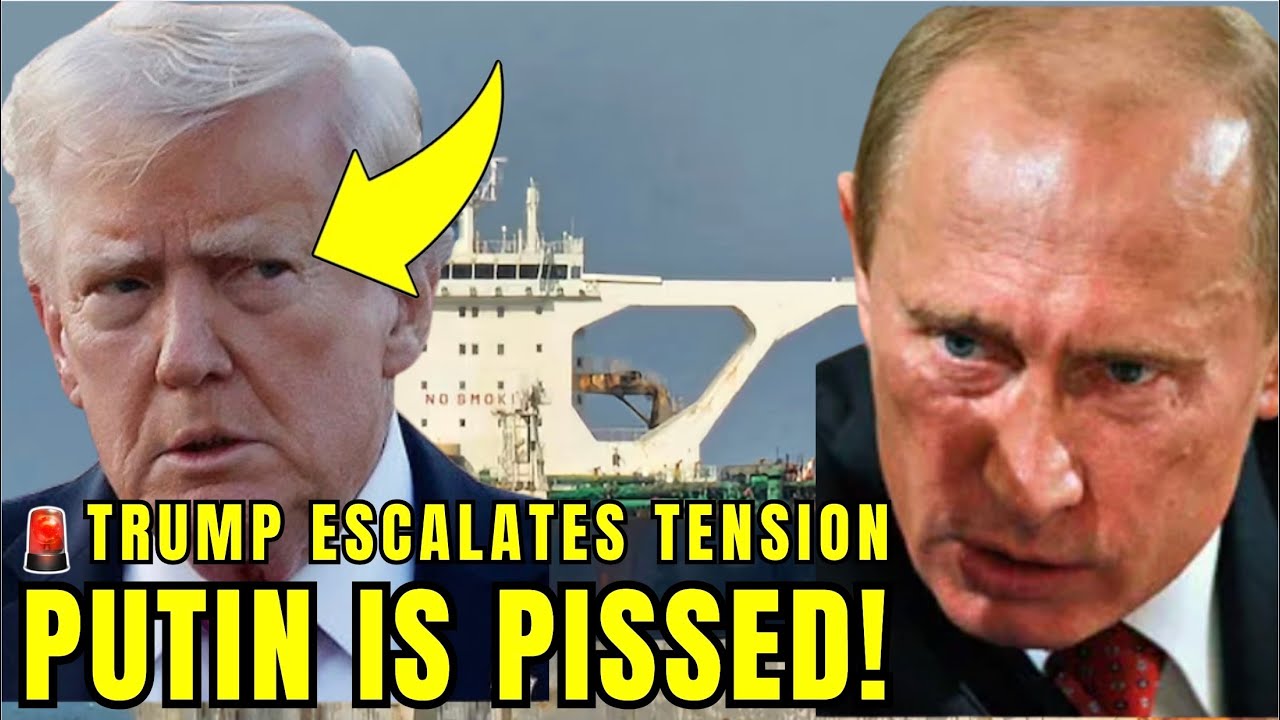
The seizure of a Russian-backed oil tanker near Venezuela has ignited a fresh wave of global tension, thrusting Donald Trump’s foreign policy back into the spotlight—this time with warnings of a far wider conflict. U.S. forces moved to intercept the vessel, allegedly carrying sanctioned oil under a false flag, in waters reportedly monitored by Russian naval assets, including a submarine. What might appear as another aggressive enforcement action has rapidly escalated into a high-stakes geopolitical flashpoint, raising fears that brinkmanship at sea could spiral into something far more dangerous.
At the heart of the controversy lies Trump’s long-standing approach to power: treating international relations as an extension of corporate deal-making, where force and pressure replace diplomacy and restraint. Critics argue that this mindset ignores the cascading consequences of unilateral action when applied to a world of nuclear-armed rivals. Seizing oil tankers linked to Venezuela, Iran, or Russia may play well to a domestic audience eager for displays of toughness, but it risks provoking responses from adversaries who do not view such moves as symbolic, but as direct challenges to sovereignty.
China’s reaction has been swift and sharp. Beijing condemned Washington’s redirection of Venezuelan oil shipments away from Chinese buyers, framing it as economic coercion and a violation of international law. Chinese officials emphasized that cooperation with Venezuela is a matter between sovereign states, protected by global legal frameworks. Russia, meanwhile, has remained outwardly restrained, but analysts warn that Moscow views interference with its energy-linked operations as crossing a red line—especially when naval forces are involved.
The incident has fractured opinion even within the United States. Some legal experts and political figures have described the seizure as bordering on piracy under international law, while pro-Ukraine activists and hardline commentators celebrated it as a decisive blow against what they see as Russia’s illicit oil trade. This divide underscores a deeper uncertainty: whether such actions represent strength through enforcement, or recklessness that invites retaliation from multiple fronts simultaneously.

What makes this moment particularly volatile is the convergence of adversaries. Venezuela, already under heavy U.S. sanctions, sees the move as another act of bullying. China views it as a threat to its energy security. Russia perceives it as a direct challenge to its strategic interests. Together, these reactions form a combustible mix, where miscalculation could trigger economic retaliation, military posturing, or worse—an uncontrollable escalation.
For ordinary Americans, the stakes are far from abstract. Trade retaliation, energy market shocks, and rising global instability tend to hit farmers, workers, and consumers first. History has shown that great-power conflicts rarely begin with dramatic declarations; they often start with incremental actions that test limits. As Trump once again pushes those boundaries, the central question looms larger than ever: how much risk can the world absorb before consequences arrive that no headline can contain?