ICE Agent Fatally Shoots Woman in Minneapolis; Officials and Community Leaders Clash Over Circumstances

MINNEAPOLIS — A 37-year-old Minneapolis woman was fatally shot on Wednesday morning by an agent from U.S. Immigration and Customs Enforcement (ICE) during a large federal immigration enforcement operation that drew immediate national outrage and intensified a bitter political debate over law enforcement tactics and federal authority.
The woman has been identified as Renee Nicole Good, a Minneapolis resident and mother, who was inside her vehicle when an ICE agent fired multiple rounds, striking her at close range. The incident occurred in a residential neighborhood near East 33rd and Portland Avenue in south Minneapolis and was captured in multiple videos shared widely on social media and obtained by news organizations. (Reuters)
Conflicting Narratives: Federal and Local Officials
Homeland Security and ICE officials issued statements almost immediately after the shooting, asserting that federal agents were conducting “targeted operations” when they were obstructed by “violent rioters,” and that one of the agents fired in self-defense after the driver “weaponized her vehicle” in an apparent attempt to run over law enforcement officers. That narrative was echoed by Department of Homeland Security Secretary Kristi Noem, who described the incident as an “act of domestic terrorism.” (opb)
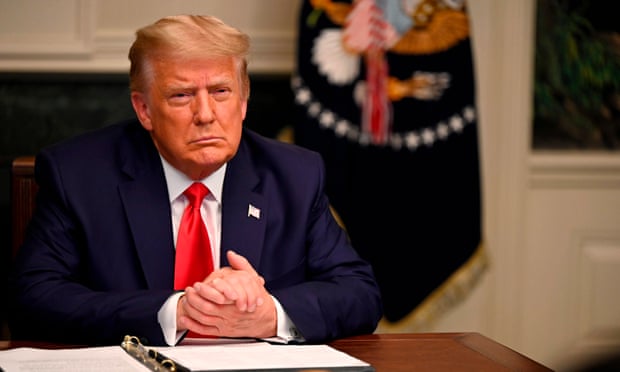
In a social media post, President Donald Trump defended the ICE agents involved, saying that the agent shot the woman after she “violently, willfully, and viciously ran over” an officer, causing injury, and that the officer acted to protect himself and others. “The situation is being studied, in its entirety,” Mr. Trump wrote, underscoring federal support for the law enforcement response. (The Washington Post)
Minneapolis city leaders sharply disputed the federal account. Mayor Jacob Frey held a press conference in the afternoon, calling the federal narrative “false” and saying he had viewed video of the confrontation that did not support the claim that the woman posed a deadly threat to ICE officers. “This was an agent recklessly using power that resulted in somebody dying,” Mr. Frey said, demanding that ICE withdraw its agents from the city. “I have a message for ICE: Get the f— out of Minneapolis.” (minneapolismn.gov)
Minnesota Governor Tim Walz also condemned the shooting, saying state officials would seek a full, fair, and expeditious investigation to ensure accountability and justice. (Reuters)
What the Video Footage Shows
Bystander videos circulating online show a red SUV stopped sideways in the middle of Portland Avenue with federal agents standing nearby. According to news outlets that have verified the footage, multiple ICE agents approached the vehicle on foot as it appeared to block traffic, and conflicting orders are audible in some clips. The driver is then seen in the vehicle as it begins to move; at least two shots are fired in quick succession. (WBUR)
One recording shows an ICE officer in front of the SUV as it moves forward, then firing his weapon at very close range. The vehicle then traveled a short distance — appearing to crash into parked cars — before coming to a stop. Emergency medical crews arrived and attempted to save the woman before transporting her to a hospital, where she was pronounced dead. (WBUR)
Local law enforcement officials said it was unclear from the footage whether the vehicle made contact with an officer. Minneapolis Police Chief Brian O’Hara noted that the woman was found outside the vehicle and that local police were cooperating with state and federal investigators. (opb)
Eyewitness Accounts and Community Reaction
Residents near the scene expressed shock and sorrow following the shooting. One witness told local reporters that she heard agents telling the driver to move and that the vehicle was slow to turn around. “She was trying to turn around and the ICE agent was in front of her, and he pulled out a gun and shot her multiple times,” the witness recounted. (Wikipedia)
The incident prompted immediate protests in Minneapolis and solidarity demonstrations in cities including New York City, where hundreds gathered to call for ICE to be removed from communities and to protest the use of deadly force. Chants of “ICE out of Minnesota!” and “Justice for Renee Good” echoed through crowd gatherings, reflecting deep frustration with federal immigration enforcement policies. (CBS News)
Healthcare workers expressed alarm at the shooting. National Nurses United, the country’s largest nurses’ union, released a statement condemning the killing and demanding justice, underscoring that the tragedy had reverberated far beyond Minnesota. (National Nurses United)
Legal and Political Context
The shooting occurred amid a broad federal immigration enforcement surge in Minnesota and other states, with the Department of Homeland Security deploying thousands of agents as part of efforts officials describe as necessary to address immigration violations and fraud. Local leaders and immigrant advocacy groups have criticized the deployment as heavy-handed, claiming it has created fear and tension in communities that are not the intended focus of enforcement. (opb)
Civil liberties organizations, including the American Civil Liberties Union (ACLU) and its Minnesota affiliate, issued statements calling for the immediate withdrawal of ICE and an end to aggressive immigration enforcement operations. The ACLU’s executive director called the killing “further proof that ICE is out of control, endangering our communities,” and urged Congress to reconsider funding policies that enable such deployments. (American Civil Liberties Union)
The incident has already sparked legal scrutiny. Local prosecutors and civil rights attorneys have called for full transparency and independent investigations, including a review of any body-worn camera or surveillance footage that might clarify the sequence of events leading to the shooting.
Broader Implications
Experts say the Minneapolis case underscores long-standing tensions in American policing and immigration enforcement — particularly in jurisdictions where local authorities have sought to limit collaboration with federal agents. It also raises difficult questions about the use of deadly force by federal officers when confronting unarmed civilians amid protests or civil disturbances.
For many in Minneapolis, the shooting reopened wounds from earlier incidents of law enforcement violence in the city, including the 2020 police killing of George Floyd, which sparked nationwide protests and renewed debates over policing and accountability.
Ongoing Investigations
Federal, state, and local authorities have launched parallel investigations into the shooting. The FBI and the Minnesota Bureau of Criminal Apprehension are expected to review all available footage, witness statements, and physical evidence. Minneapolis city officials have also demanded that any findings be made public to ensure transparency with the community. (CBS News)
As the city mourns and the nation watches, the unresolved questions about what exactly happened in the moments before the shots were fired highlight deep divides — not just over this singular event, but over broader questions about federal power, the use of force, and the balance between law enforcement and civil liberties in a deeply polarized America.