Melania Trump’s attempt to outmaneuver a high-profile defamation lawsuit has hit a serious obstacle, turning what was meant to be a strategic legal move into a potential courtroom humiliation. The case, brought by journalist Michael Wolff in New York, seeks to preempt Melania Trump’s $1 billion defamation threats related to reporting about her alleged connections discussed by Jeffrey Epstein. Instead of shutting the case down early, Melania’s legal tactics have drawn sharp scrutiny from the court and opened the door to deeper legal exposure.
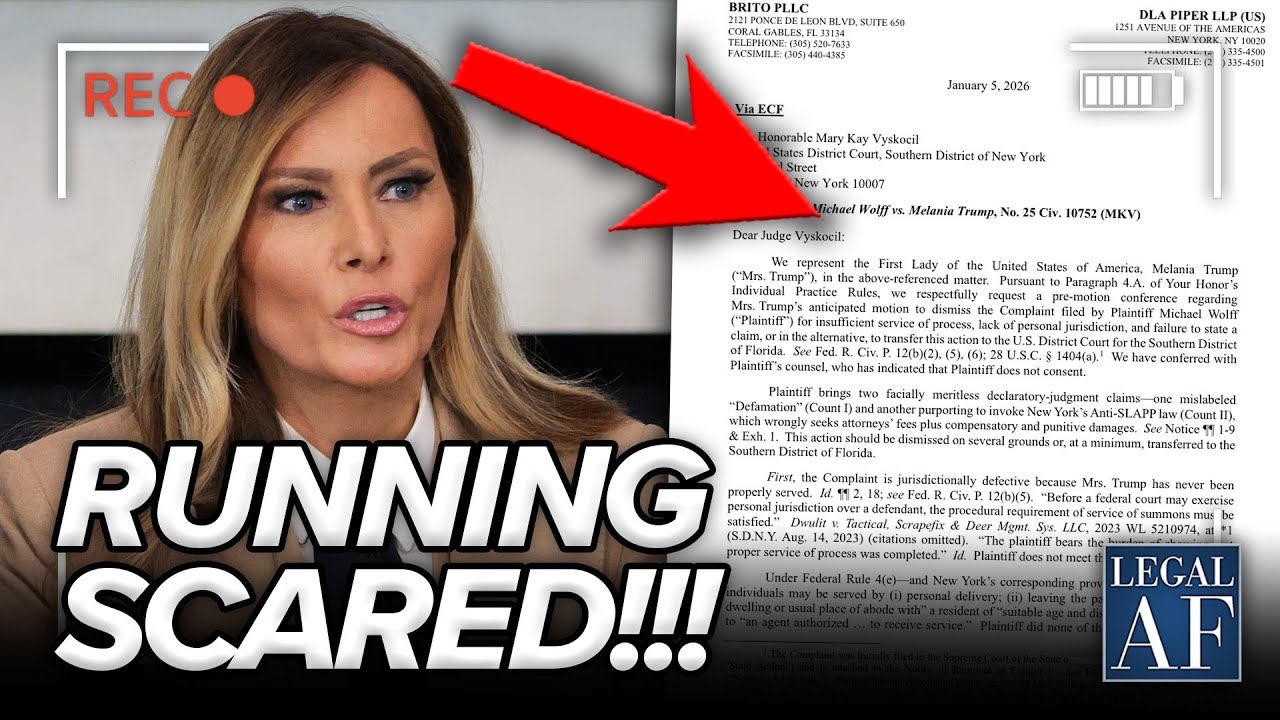
At the center of the controversy is Melania Trump’s effort to dodge formal service of the lawsuit. Process servers were reportedly unable to serve her directly, leading to substituted service through the doorman at Trump Tower in New York. Her legal team now argues that service was improper, but federal courts—especially in New York—are notoriously hostile toward defendants who evade service. Judges have wide latitude to approve alternative methods, and legal experts warn that “ducking service” often backfires, increasing costs and judicial skepticism.
Melania’s lawyers are also pushing to move the case out of New York and into Florida, claiming she is not a New York resident and therefore outside the court’s jurisdiction. That claim may prove risky. Evidence suggests Melania spends substantial time at Trump Tower, while her son attends school nearby, raising serious questions about her true domicile. If residency becomes contested, the court could order jurisdictional discovery, forcing Melania to testify under oath about where she lives, how she spends her time, and her ties to New York.
The jurisdiction argument faces another hurdle: specific jurisdiction. Wolff’s lawsuit is rooted in a demand letter sent by Melania’s attorneys into New York, threatening massive defamation damages over reporting published by New York-based outlets. Legal precedent strongly supports the idea that sending such a letter into the state can establish jurisdiction, especially when it is the triggering event for the lawsuit. That makes dismissing the case on jurisdictional grounds far from certain.

Adding to the complexity is the legal team Melania assembled. While her attorneys include firms closely tied to Donald Trump’s corporate and defamation battles, critics argue they lack deep expertise in First Amendment and defamation law. Their filing has already raised eyebrows by simultaneously claiming improper service while engaging the court as if service were valid—an approach that could be interpreted as a partial waiver of their own argument.
Looking ahead, the judge is expected to schedule a pre-motion conference, after which full briefing on dismissal and jurisdiction will follow. If the case is transferred to Florida, it would be randomly assigned to a judge, not handpicked—making the outcome unpredictable. For now, what was meant to be a power play to control the forum and narrative has instead amplified scrutiny of Melania Trump’s residency, credibility, and legal strategy. Rather than shutting the case down, her maneuver may have ensured it becomes far more invasive and damaging than originally anticipated.