U.S. Military Operation in Venezuela Ignites Legal, Political and Global Backlash
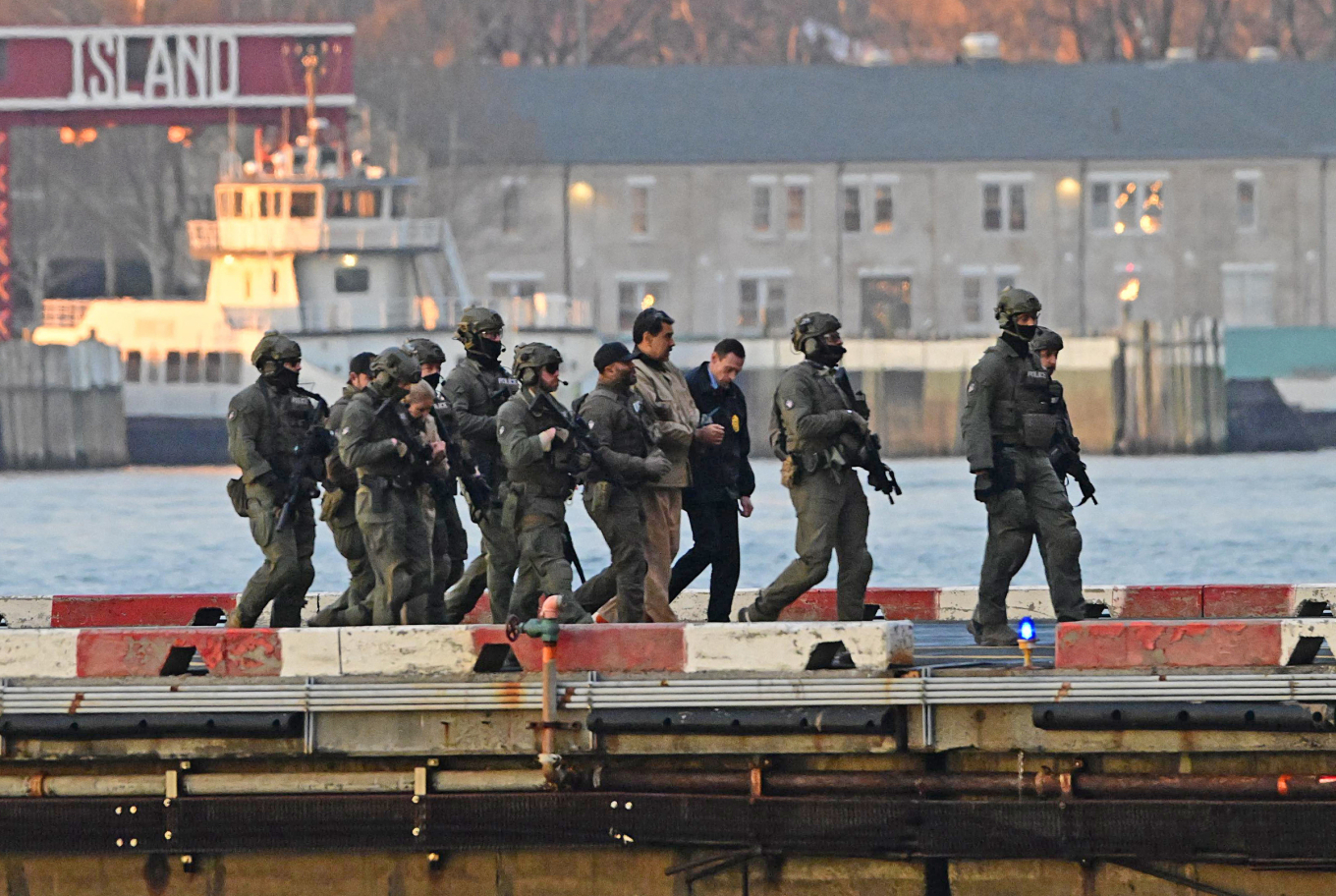
In an extraordinary and unprecedented move that has roiled global diplomacy and intensified debate over presidential authority, the United States conducted a military operation in Venezuela on Jan. 3 that culminated in the capture of President Nicolás Maduro and the seizure of his wife, Cilia Flores. The dramatic development — the most significant U.S. military action in Latin America in decades — has triggered widespread debate about international law, constitutional limits on executive power and the future of U.S. foreign policy. (AP News)
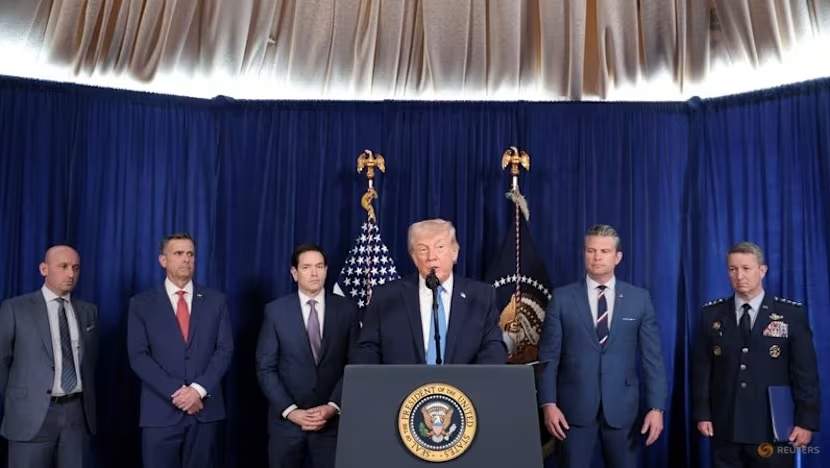
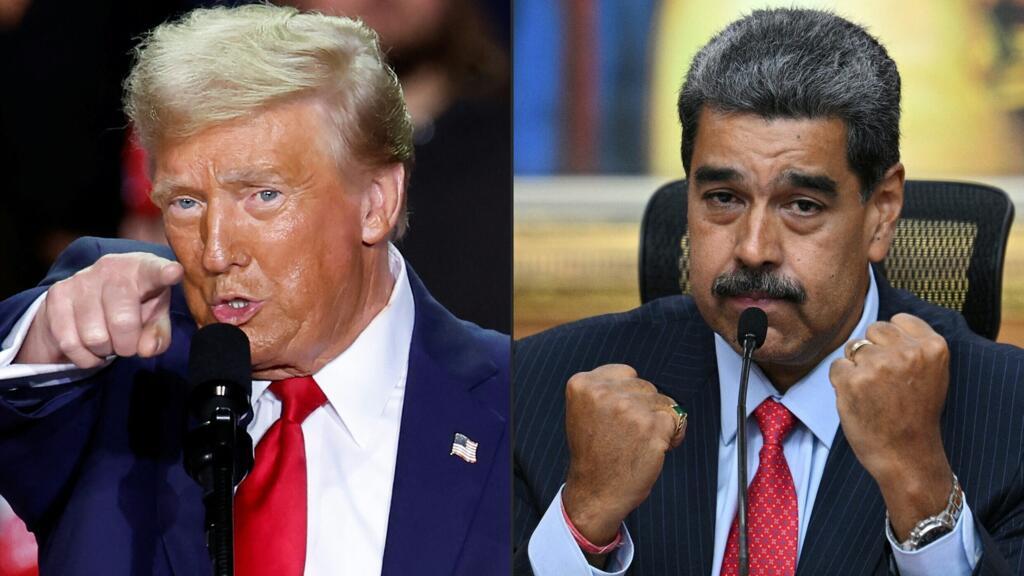
President Donald Trump announced the operation from Mar‑a‑Lago, describing it as a decisive strike against criminality and corruption in Venezuela and asserting that the United States would “run” the country temporarily to facilitate a transition and exploit its vast oil resources. “We are in charge,” Mr. Trump said, asserting that the mission was justified by foreign indictments against Mr. Maduro for narco‑trafficking and related crimes. (CBS News)
Inside a Manhattan courtroom this week, Mr. Maduro pleaded not guilty to federal drug trafficking charges, insisting that he had been “kidnapped” and accusing the United States of violating Venezuelan sovereignty. (The Washington Post)
Ambiguous Mission, Intense Debate
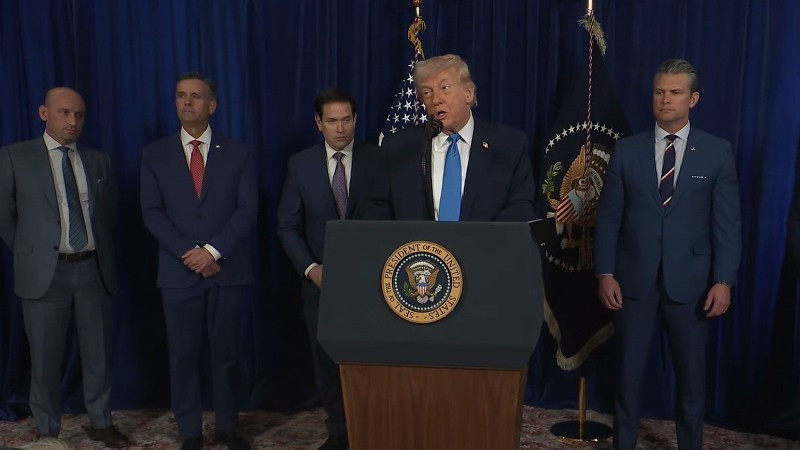
U.S. officials have tried to frame the operation as a targeted law‑enforcement action rather than a traditional invasion, a distinction that critics reject as semantic at best and dangerous at worst. Secretary of State Marco Rubio and other administration representatives told congressional leaders the strike was necessary to deliver Mr. Maduro to justice and dismantle criminal networks operating from Venezuelan soil. (AP News)
Yet the core questions raised by lawmakers and legal scholars focus on something far broader: whether a president can unilaterally order military strikes inside a sovereign nation without explicit authorization from Congress, and whether the capture of a sitting head of state constitutes an act of war under both U.S. constitutional law and international norms. (DW عربية)
Under the U.S. Constitution, Congress holds the exclusive power to declare war. Over decades, presidents have relied on broad interpretations of their authority as commander in chief to initiate military actions without declarations of war, but critics say the Venezuela operation crosses a bright constitutional line. The 1973 War Powers Resolution requires the president to notify Congress within 48 hours of deploying U.S. forces into hostilities and limits ongoing involvement without congressional authorization — conditions that were not satisfied in this instance. (WUSF)
Representative Jim McGovern, a Democrat who introduced a war powers resolution intended to curtail the operation, called the strike “illegal and unjustified,” arguing that it violated both U.S. and international law. A narrowly defeated War Powers Resolution vote in the House exposed deep political divisions and underscored the absence of broad bipartisan consensus even within Mr. Trump’s own party on how to proceed. (ABC7 Los Angeles)
Global Outcry and Legal Concerns
International reaction has been swift and overwhelmingly critical. At an emergency session of the United Nations Security Council, numerous countries — including Brazil, China, Russia, Colombia and South Africa — condemned the U.S. action as a violation of the U.N. Charter’s prohibition of the use of force against the territorial integrity of states, and as an affront to sovereignty and customary international law. U.N. Secretary‑General António Guterres warned that the operation risked destabilizing the region and eroding longstanding norms against unilateral military interventions. (The Guardian)
Beijing and Moscow specifically accused Washington of overreach and “hegemonic behavior,” while Latin American neighbours expressed alarm at what they characterized as a return to Cold War‑style interventions that had once marred the region. China’s Foreign Ministry insisted that the operation had “no legal basis under international law,” and Russia warned that the precedent could be invoked by other powers to justify unilateral actions elsewhere. (ynetglobal)
South Africa, speaking for many in the Global South, described the U.S. strikes and capture of Mr. Maduro as a “manifest violation” of the U.N. Charter, calling on the Security Council to take action. (The Wire)
Domestic Reaction: Partisan Lines and Constitutional Questions
Domestically, Republican leaders have largely backed the president’s actions, framing the operation as a necessary measure against a corrupt and undemocratic regime. But dissent has emerged from unexpected quarters: a small but notable minority of Republicans expressed unease about the broader implications of the president’s unilateral use of force. (ABC News)
Democrats, while acknowledging the Maduro regime’s contested legitimacy and history of allegations including corruption and human rights abuses, have been uniformly critical of the manner in which the United States executed the operation. Senate and House Democratic leaders stressed that military action without congressional approval undermines constitutional checks and balances and risks entangling the United States in open‑ended conflict. (CBS News)
“For all his rhetoric about ‘America First,’ this operation does not make America safer or stronger,” said one senior Democratic senator. “It disregards constitutional norms, and it leaves the American people on the hook for decisions that should be made by their representatives, not unilaterally by one man.” (CBS News)
Venezuela’s Future: A Power Vacuum and Uncertain Orders
Back in Caracas, the Constitutional Chamber of Venezuela’s Supreme Court designated Delcy Rodríguez as acting president following Mr. Maduro’s removal. Rodríguez has both condemned the U.S. operation as an illegal act of aggression and expressed a willingness to engage in dialogue on governance and stability. However, Venezuelan institutions are fractured and deeply mistrusted by broad sectors of the population, leaving the country in a state of perilous uncertainty. (Wikipedia)
Venezuelan civil society groups and diaspora communities have responded with a mix of reactions — some celebrating the end of Maduro’s rule, others warning that foreign military intervention can only exacerbate suffering and chaos. Human rights organizations have raised alarms about civilian casualties reported during the operation, and advocates have called for independent investigations into the conduct and legality of the raid. (AP News)
Regional and Global Implications
The international community is now bracing for broader geopolitical repercussions. Legal analysts warn that if the United States asserts a purported right to seize foreign leaders accused of criminal offenses, major powers like China and Russia could cite the precedent to justify their own military actions in regions such as Taiwan or Eastern Europe. Critics argue that such a breakdown of long‑standing norms could usher in a more unstable and militarized global order. (ynetglobal)
Latin American governments, weary of historical U.S. interventions, fear renewed instability in their neighbourhood. Some policymakers have suggested that the operation could fuel migration pressures and deepen regional tensions rather than alleviate them. (TIME)
Looking Ahead
In Washington, the coming days and weeks are likely to focus on congressional efforts to assert oversight through war powers authorities, potential legal challenges over executive authority, and refined diplomatic strategy to address a divided global response. For many lawmakers across the political spectrum, the critical question is not only whether to end the current military involvement, but how to prevent future unilateral actions that could embroil the United States in international conflicts without democratic consent. (WUSF)
At issue — and hotly contested — are foundational principles: respect for national sovereignty, adherence to constitutional processes, and the role of the United States in an increasingly fractured world order. The operation in Venezuela, extraordinary in its audacity and consequences, has left those principles — and their defenders — squarely in the spotlight. (The Guardian)