A Quiet Warning From the Supreme Court: John Roberts Signals Unease as Trump Tests the Constitution
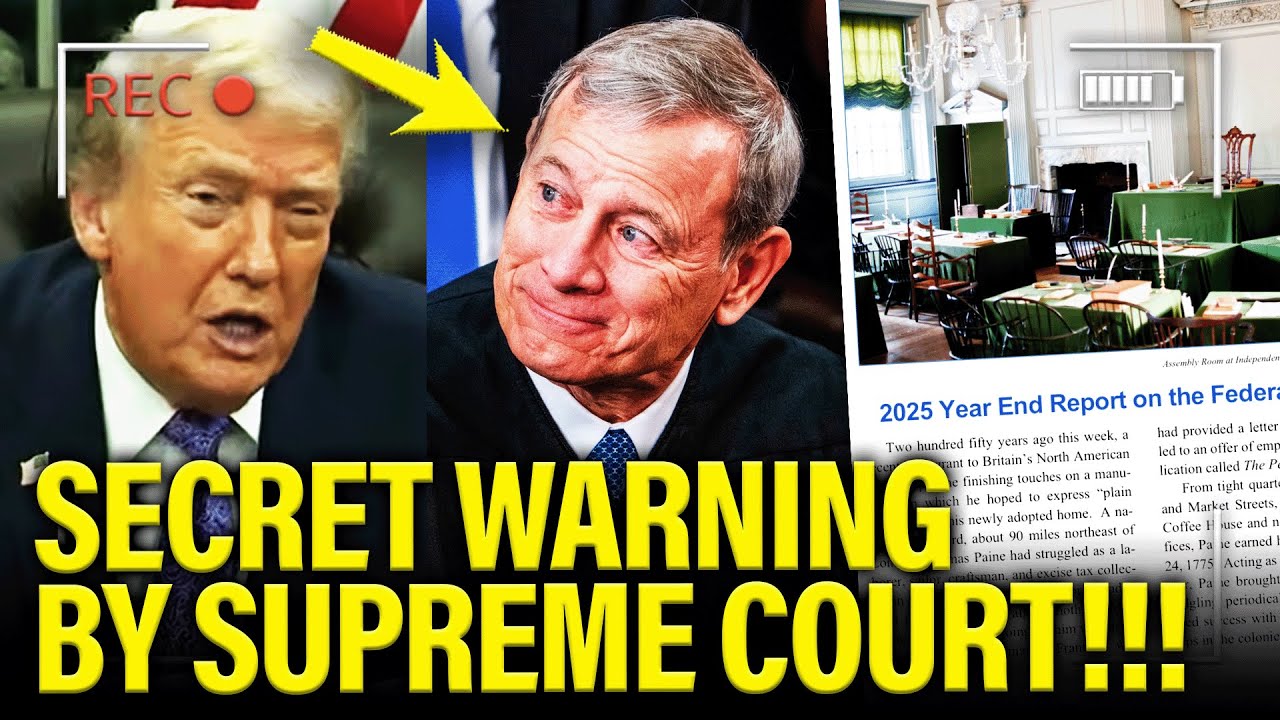
In his annual year-end report on the federal judiciary, Chief Justice John G. Roberts Jr. did not mention Donald Trump by name. He did not reference the torrent of court rulings blocking Trump-era policies, nor the escalating rhetoric from the White House attacking judges as illegitimate. Yet to many legal observers, Roberts’s 2025 report reads less like a neutral historical reflection and more like a carefully coded warning—one aimed squarely at a political moment defined by unprecedented strain on the rule of law.
The report, released as the nation approaches the 250th anniversary of the Declaration of Independence, departs sharply from the typically dry, administrative tone of such documents. Instead of focusing on caseload statistics or funding needs, Roberts offers a sweeping meditation on the philosophical roots of American democracy, tracing a line from Thomas Paine and the Declaration of Independence to the Constitution and the modern judiciary. The message, understated but unmistakable, is about endurance—of institutions, of principles, and of judicial independence itself.

Roberts frames the Declaration and the Constitution as twin pillars that have guided the country through moments of crisis for nearly two and a half centuries. He emphasizes that the Declaration listed grievances against a king who had made judges “dependent on his will alone,” a direct nod to the Founders’ fear of executive domination over the courts. The Constitution, he writes, answered that danger by enshrining judicial independence as a safeguard against tyranny.
For critics of the current Supreme Court, the irony is hard to ignore. Just a year earlier, Roberts’s 2024 report explicitly warned of a looming constitutional crisis should an executive branch refuse to follow court orders or undermine judicial legitimacy. Since then, lower federal courts have repeatedly blocked Trump administration actions on immigration, protest restrictions, and executive authority—often using unusually sharp language to describe what they see as constitutional overreach. Meanwhile, the Supreme Court’s conservative supermajority has been accused of enabling Trump through procedural maneuvers, emergency rulings, and its landmark decision granting broad presidential immunity from criminal prosecution.
That immunity ruling looms large over Roberts’s reflections, even in its absence. During oral arguments, the Court’s liberal justices warned that granting such sweeping protection would invite abuse, effectively placing the president above the law. Trump has since leaned heavily on that decision, reinforcing concerns that executive power is being stretched to its breaking point. Against that backdrop, Roberts’s insistence that America’s “great charters of freedom and justice remain firm and unshaken” reads as both reassurance and self-defense.
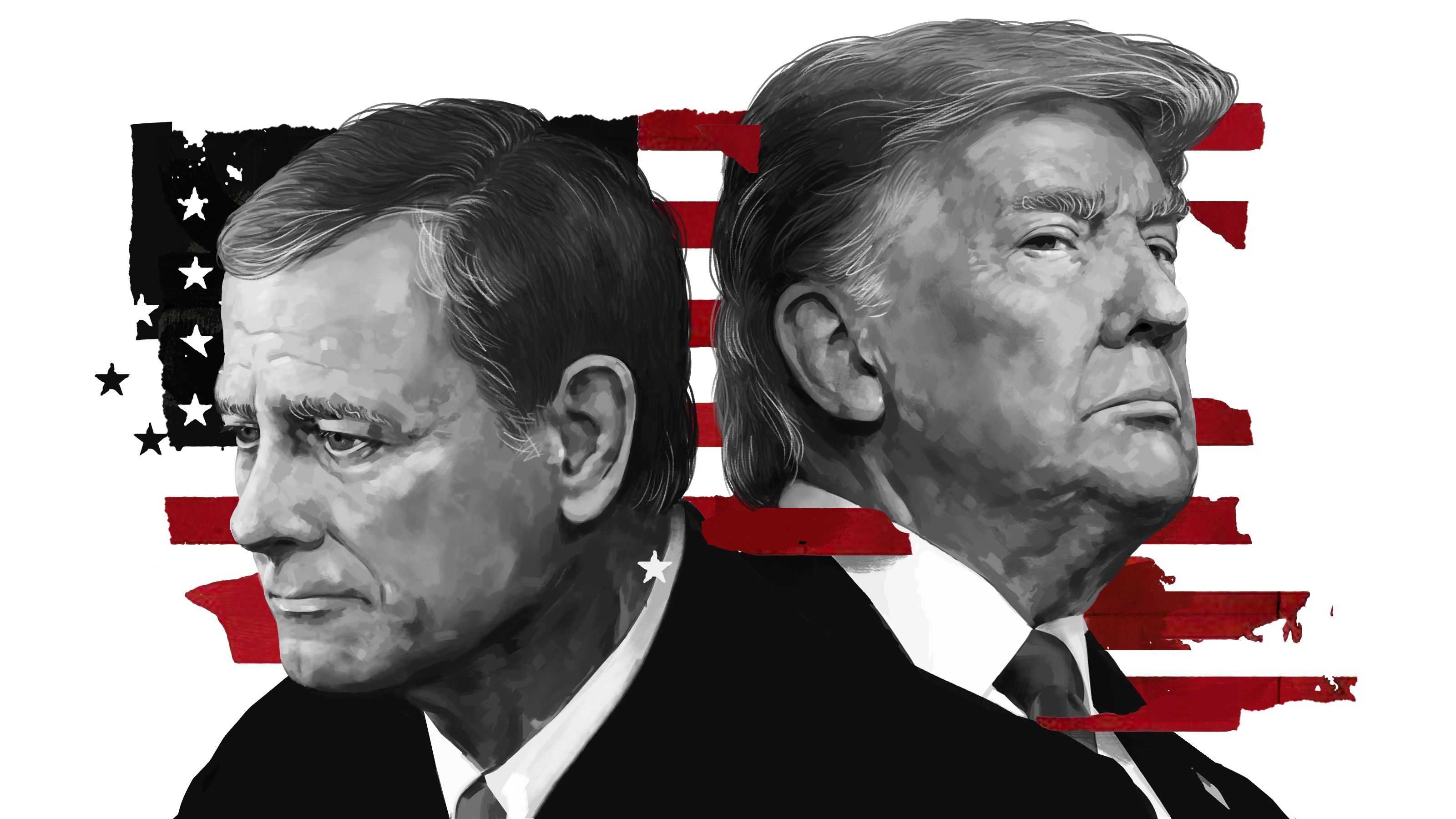
The literary tone of the report has drawn mixed reactions. Supporters argue that Roberts is signaling, in the idiom of history and Enlightenment ideals, that the Court understands what is at stake. The emphasis on Thomas Paine—an immigrant, a radical democrat, and a fierce critic of unchecked power—strikes some as a subtle re-centering of popular sovereignty over authoritarian impulse. The closing quotation from President Calvin Coolidge, invoking national unity amid partisan turmoil, further suggests an awareness of today’s political fractures.
Others are less charitable. To them, the report feels evasive at a moment that demands clarity. While district and appellate judges have issued blunt warnings about constitutional breakdown, Roberts offers parables and historical flourishes. Critics argue that poetic language cannot substitute for accountability, especially from a Court that has relied heavily on its “shadow docket” to reshape policy with minimal explanation. By refusing to confront present dangers directly, they say, the Chief Justice risks reinforcing the perception that the Supreme Court is detached from political reality.
That perception has consequences. Public confidence in the Court has declined sharply in recent years, fueled by controversial rulings, ethical scandals, and the sense that law is being bent to accommodate power. Roberts appears acutely aware of this erosion. His report repeatedly stresses legitimacy—not as a partisan weapon, but as a fragile asset sustained only by public trust in the judiciary’s independence.
Whether the report represents genuine resolve or institutional self-soothing remains an open question. As legal analyst Harry Litman has noted, the tone is unusual enough to suggest unease within the Court itself. And recent decisions, including a narrow ruling against the Trump administration in a high-profile federal dispute, hint that the justices may not move in lockstep when the constitutional stakes are unmistakable.
Still, the central tension persists. Can a Supreme Court that has expanded presidential immunity convincingly position itself as a bulwark against executive abuse? And can symbolic reaffirmations of founding ideals hold back a president openly hostile to judicial constraint?
Roberts’s report offers no definitive answers. Instead, it leaves readers with an implicit promise: that when the Constitution is truly on the line, the judiciary will remember the lessons of its own history. Whether that promise will be kept—or whether it will dissolve into elegant words unmoored from action—may determine how future generations judge this moment in American democracy.